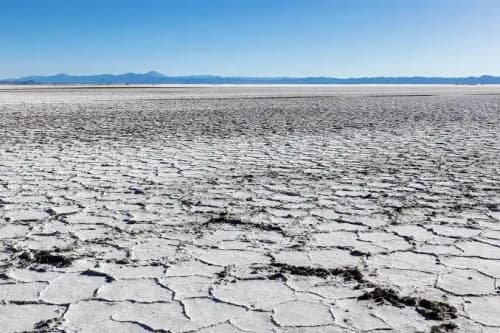
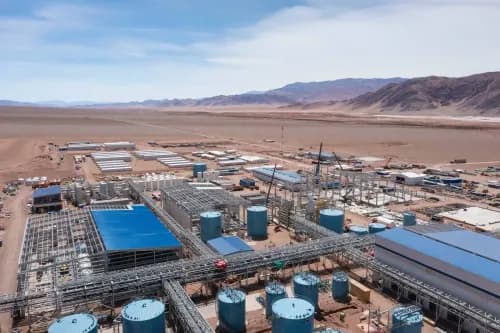
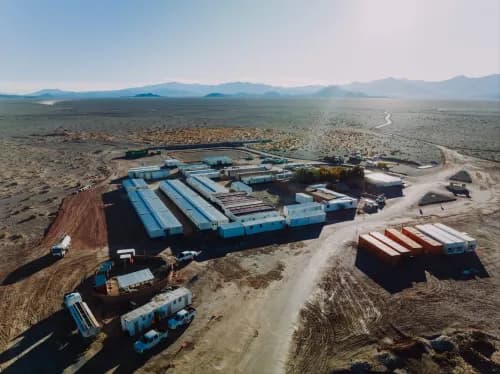
Neo Lithium Corp. filed a technical report in connection with the release of the results of its preliminary economic assessment («PEA») for the production of lithium carbonate from its wholly owned Tres Quebradas lithium brine project («3Q Project») in Catamarca Province, titled Preliminary Economic Assessment (PEA) 3Q Project NI 43-101 Technical Report.
The Technical Report was prepared by GHD Chile SA («GHD»), a leading independent engineering services firm with extensive experience in the design and construction requirements for some of the largest and lowest cost lithium brine processing facilities in Chile and Argentina. The estimation was prepared to a Class 4 level and completed to an accuracy range of ±30%.
Subsequent to the October 30, 2017 news release announcing the PEA, GHD was able to further optimize the layout of the 3Q Project with the consequent positive impact on the 3Q Project’s economics. There were no changes in the assumptions for the processing costs, lithium market and price, process studies and engineering, the lithium resource or the environmental or permitting considerations of the project.
«After we published the initial numbers of the PEA we continued working with GHD to understand the main variables and we identified pond location as a major cost factor» stated Waldo Perez, President and CEO of Neo Lithium Corp. «We were pleased to discover with GHD that a modification in the pond layout provided significant savings in the total CAPEX.»
Updated Capital Costs
The total capital costs of the 3Q Project are now estimated to be US$490.2 million, previously being estimated to be US$588.7 million. The majority of the savings of US$98.5 million, or 16% of the original total capital costs estimate, was obtained through relocating all evaporation ponds into the salar (previously half the ponds were in the salar and half in the alluvial cone). There were additional costs in regards to infrastructure and others, indirect costs and a larger contingency that are now included in the current capital costs estimate that GHD considered prudent. Building the ponds in the salar is less expensive because it requires less earth movement and there are extra savings in the construction of roads and power generation and distribution.
Description News Release October 30, 2017 (US$ Million) Current (US$ Million)
Direct Costs
Evaporation Ponds and Wells $323.0 $178.4
Plant Facilities and Equipment $67.3 $62.8
Infrastructure and Others $59.7 $80.2
Direct Costs Subtotal $450.1 $321.4
Indirect Costs $70.8 $88.5
Contingency $67.8 $80.3
Total Initial Capital Costs $588.7 $490.2
The 3Q project envisages an average production rate of 35,000 tonnes of lithium carbonate per year, during a mine life of 20 years with a 3 year ramp up period starting 2021.