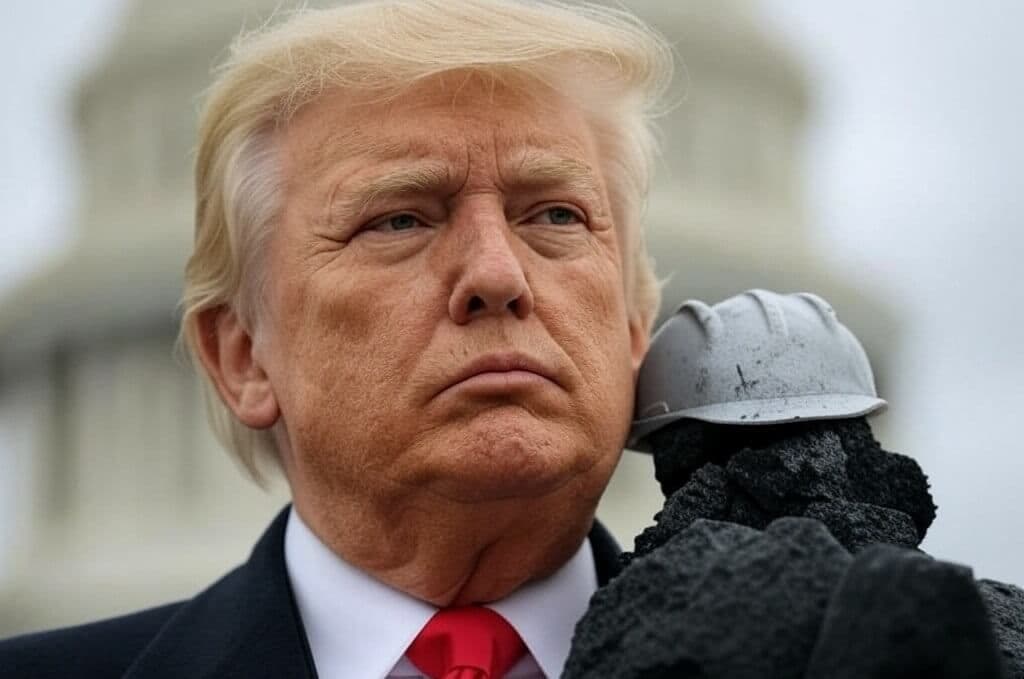
Donald Trump was inaugurated as the 47th President of the United States on January 20, marking the beginning of his non-consecutive second term. His return to power has sparked expectations and debates around key policies such as international trade and mining, both of which hold strategic importance for the years ahead. Argentine President Javier Milei’s attendance at the inauguration underscores potential ties between the new administration and Argentina, a pivotal player in supplying essential resources for the energy transition.
Por Agustín López Muñoz, Panorama Minero
Among Trump’s first actions was the announcement of the U.S. withdrawal from the Paris Agreement and the World Health Organization (WHO). These decisions, reminiscent of his first term, reinforce his nationalist approach and skepticism of international institutions, with potentially significant implications for global cooperation dynamics.
Make America Great Again? Trump’s Return and Its Impact on the Energy Transition
Trump has been an outspoken critic of climate policies and global commitments related to the energy transition. During his first term, he withdrew from the Paris Agreement and promoted fossil fuel development over renewable energy. His recent decision to exit the agreement once again could slow global adoption of clean technologies and reshape markets for strategic minerals like lithium, copper, and nickel.
However, a notable development in this administration is the appointment of Elon Musk, CEO of Tesla and SpaceX, to lead the newly created Department of Government Efficiency (DOGE). Musk’s focus on electric vehicles and sustainable energy may influence Trump’s energy policies, potentially balancing the president’s traditional stance with initiatives geared toward technological innovation and energy efficiency.
Argentina’s Role in This Context
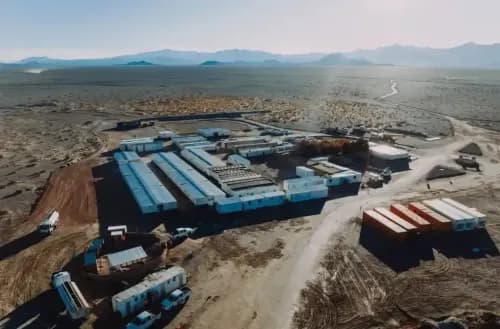
Javier Milei’s presence at Trump’s inauguration was not merely ceremonial; it signaled potential alliances on economic and strategic matters. As one of the world’s leading lithium producers and with vast copper mining projects, Argentina could play a significant role in future U.S. policies if they shift toward self-sufficiency in critical resources for technology and energy. Furthermore, bilateral relations could strengthen commercially, with the potential to increase Argentine mineral exports to the U.S.
Trump’s decision to reignite geopolitical tensions with China could also drive transformations in the regional mining sector, altering the current demand dynamics where China remains one of the primary consumers of Argentina’s mineral output.
It is worth noting that if Trump reinforces his nationalist stance, he is likely to emphasize domestic mineral extraction and/or processing in the United States. This could lead to new regulations aimed at reducing reliance on imports, potentially benefiting strategic allies like Argentina, provided they meet the safety and sustainability standards that Washington may impose.
At the same time, this trend could accelerate investment in mining projects within key players in the global supply chain, such as Australia, Chile, and Argentina, which hold the resources necessary for batteries and other critical technologies. In this context, Argentina could emerge as one of Latin America’s best-positioned players, particularly after the Republican leader’s comments on neighboring Brazil, stating that "they need the United States, but the United States does not need Brazil."
As is evident, the global mining sector, including Argentina, faces a critical dilemma: how to meet the growing demand for essential minerals for the energy transition while addressing environmental and social sustainability requirements and navigating the geopolitical reshaping of the world as we know it. The position of the New York magnate, now head of state, could alter global commitments on these issues, impacting both markets and public perception of the mining industry.
The international context shaped by Trump’s policies presents Argentina with a crucial opportunity. The combination of vast natural resources, a global market eager for critical minerals, and the potential to deepen trade ties with the U.S. could position the country as a central player in mining and the global energy transition. However, this will also depend on national policies that ensure stability, sustainability, and competitiveness in the sector, as well as achieving broad political consensus.
Thus, Donald Trump’s return to the White House raises questions about the direction of the energy transition, U.S. policies, and the future of strategic minerals. For Argentina, this new scenario brings both challenges and concrete opportunities. With a privileged position as a supplier of essential resources and the potential to strengthen its regional leadership, the country has the opportunity to leverage this moment to consolidate its role in an increasingly competitive global landscape.
Success will depend on clear strategies, international cooperation, and an approach that integrates economic development with sustainability, sovereignty, and, above all, the foresight needed to position Argentina within a productive, dynamic, and globally integrated framework aligned with the demands of a constantly evolving world.