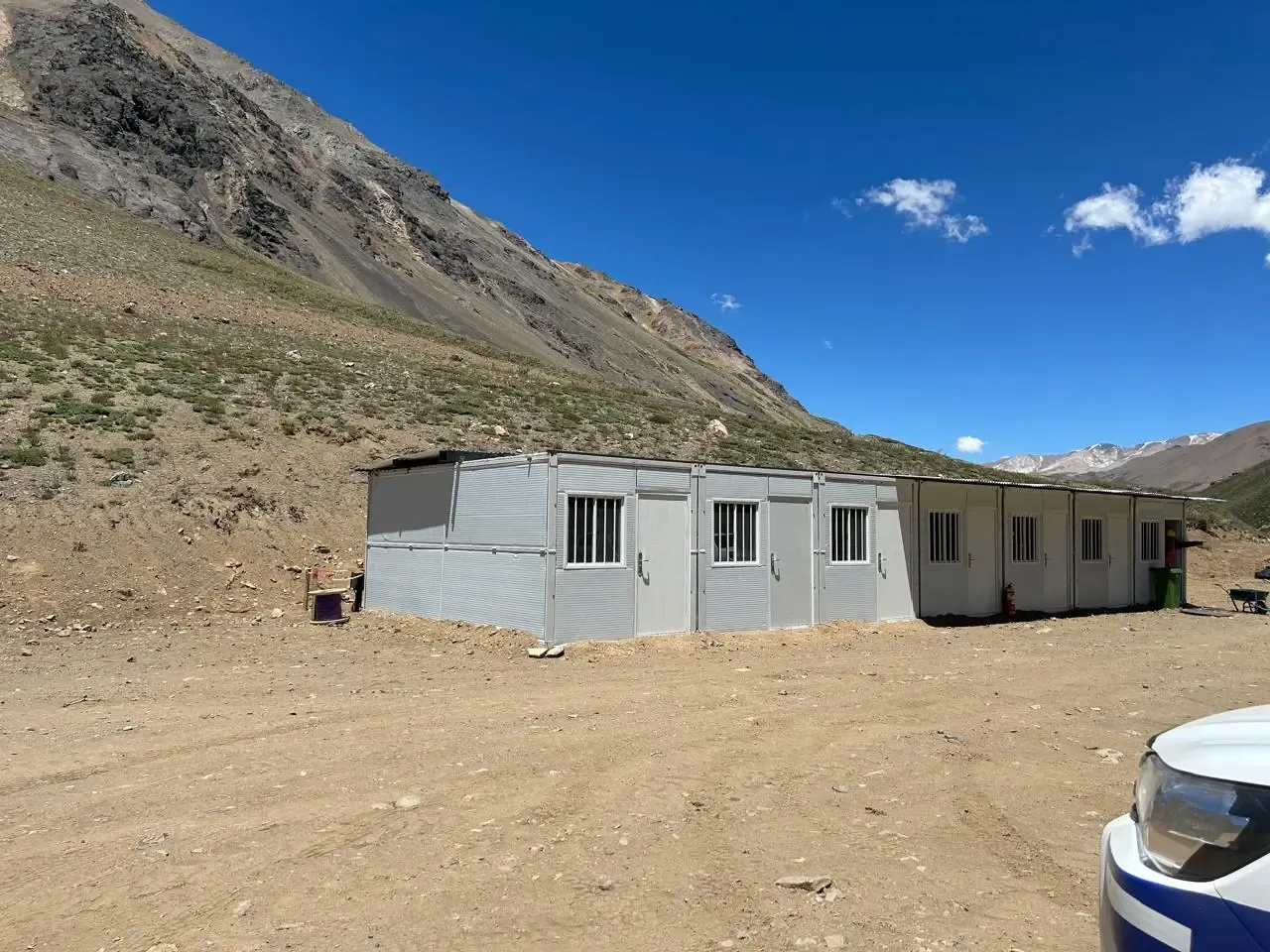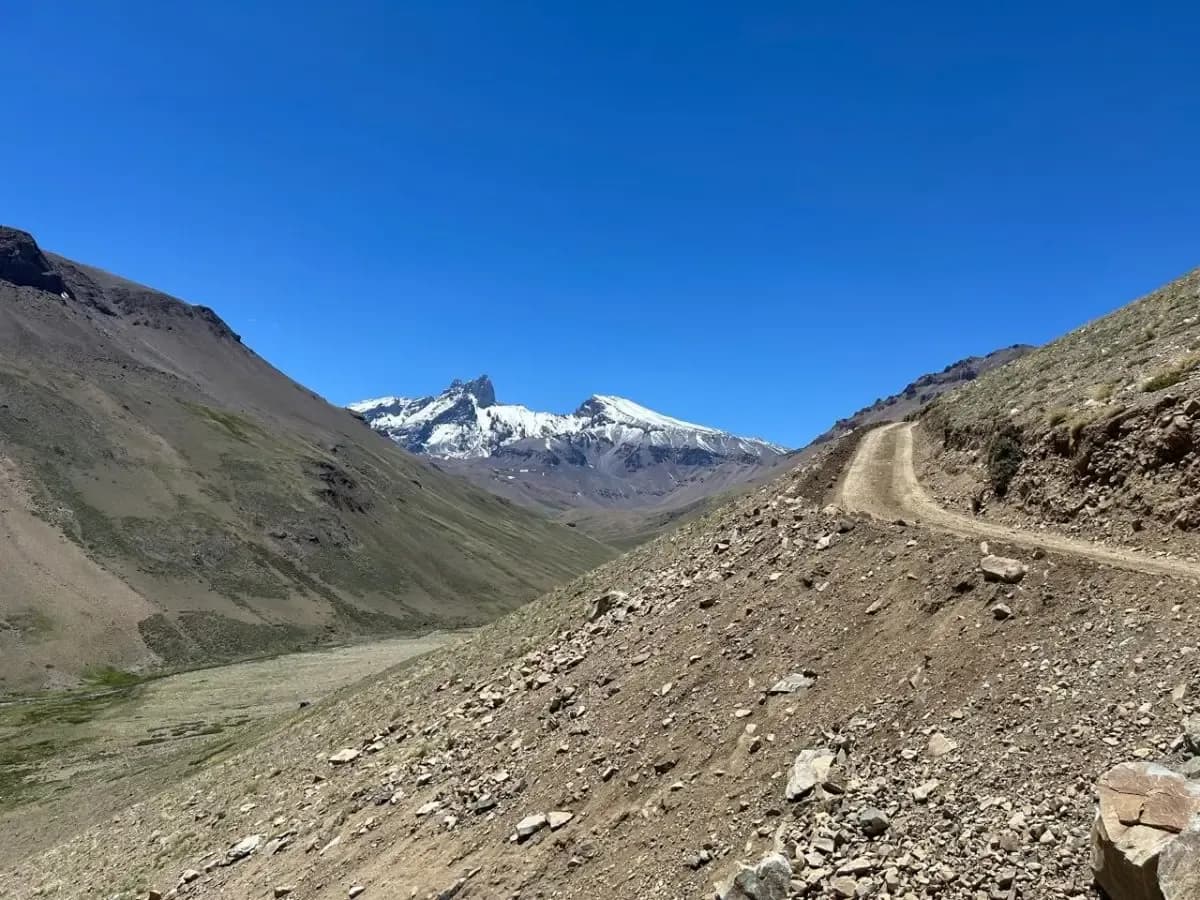
The multi-agency oversight body verified technical and environmental compliance at the most advanced project within MDMO I, during the critical phase prior to diamond drilling.
By Panorama Minero
The Environmental Management Unit (UGA) of the Malargüe Western Mining District I (MDMO I) carried out a comprehensive technical inspection at the El Perdido project, the most advanced exploration initiative within the district and the project poised to become the first to initiate drilling under the mining framework implemented in southern Mendoza.
The inspection was particularly significant not only due to its scope, but also because of its timing. El Perdido is currently in the final stage prior to mobilizing the drill rig, following progress on the construction of the access road—one of the most sensitive works in high-altitude exploration projects from an environmental, technical, and logistical standpoint.
The site visit was conducted by the UGA together with technical staff from the Mining Directorate, the Environmental Management and Oversight Directorate, the Mining Environmental Police (PAM), and the Municipality of Malargüe, as part of the province’s multi-agency oversight framework established for active projects within the district.
The most advanced project in the district
The El Perdido project is being developed by Canadian company Kobrea and is located in the Malargüe Department, Mendoza Province, within the portfolio of copper projects that make up the Malargüe Western Mining District.
Covering an area of 6,878 hectares, El Perdido corresponds to a copper porphyry system that has not yet been drill-tested. The company has already obtained the necessary permits for road construction and diamond drilling and has contracted Mendoza-based firm Conosur Drilling S.A. to execute the drilling program.
During the inspection, technical teams audited the progress of the access road construction, verifying the advance of the alignment up to the area known as Los Caracoles. The works were found to be in compliance with the approved technical parameters and the environmental commitments set forth in the Environmental Impact Report (EIR).
According to the company, the final segment of the road is the most complex from a construction standpoint, due to both topographic conditions and the need to reinforce environmental control measures. This explains a slight adjustment to the original schedule: while drilling was initially planned for December, the first drill hole is now expected in January, once access works are completed and the camp is fully installed.
Environmental oversight at a critical stage
The UGA inspection included a detailed review of key aspects of the project’s environmental and operational management, including waste management, erosion control, and protection of sensitive areas, signage and speed controls, safety protocols, and the safeguarding of archaeological heritage, in line with the updated Environmental Impact Report.
Technical criteria applied in the most recent submission of the Road Opening Management Plan were also assessed. This document is central at this stage, as proper execution of access infrastructure directly conditions not only the start of drilling, but the overall development of the exploration campaign.
In November, Kobrea had formally announced the start of access road construction as a prerequisite for camp installation—an essential infrastructure component for advancing copper porphyry exploration through diamond drilling.
Geological potential: new data expands the system
In parallel with on-site progress, Kobrea released new technical results that significantly expand the geological potential of the El Perdido project. Recent studies indicate that the porphyry system is more extensive than initially interpreted.
Airborne magnetometry results show that the system extends eastward beneath colluvial cover, defining a mineral footprint of approximately 2 kilometers by 2 kilometers, suggesting a larger-scale system within the exploration area.
Additionally, analysis of ASTER satellite imagery (Advanced Spaceborne Thermal Emission and Reflection Radiometer) indicates that hydrothermal alteration—a key indicator of mineralization—extends to the east and southeast, beyond the system’s previously defined boundaries.
One of the most relevant findings is the identification of a hydrothermal breccia unit measuring approximately 1,700 meters by 250 meters, interpreted as the core of the El Perdido porphyry system. Such breccias are characteristic features of major Andean copper deposits and further reinforce the project’s geological significance.
Investment and drilling campaign
For this initial drilling campaign, Kobrea is planning an investment of approximately US$5 million, allocated to diamond drilling aimed at testing the mineralized system at depth and defining the project’s resource potential.
Completion of this phase will position El Perdido as a benchmark project within MDMO I, as it will be the first to transition from surface work to subsurface exploration, fully activating the district’s environmental, technical, and social oversight framework.
UGA and Mendoza’s oversight model
The inspection at El Perdido reinforces the role that the UGA has begun to play within Mendoza’s mining governance framework. The UGA is a participatory, multi-agency body created to coordinate and supervise inspections, evaluate technical information, and strengthen on-the-ground oversight, complementing the work of the Mining Environmental Police.
Within the context of the Malargüe Western Mining District I, verification of the most advanced project marks a key milestone: the oversight model moves beyond theory and begins to be tested on a real project—with executed works, committed investment, and drilling activities on the immediate horizon.