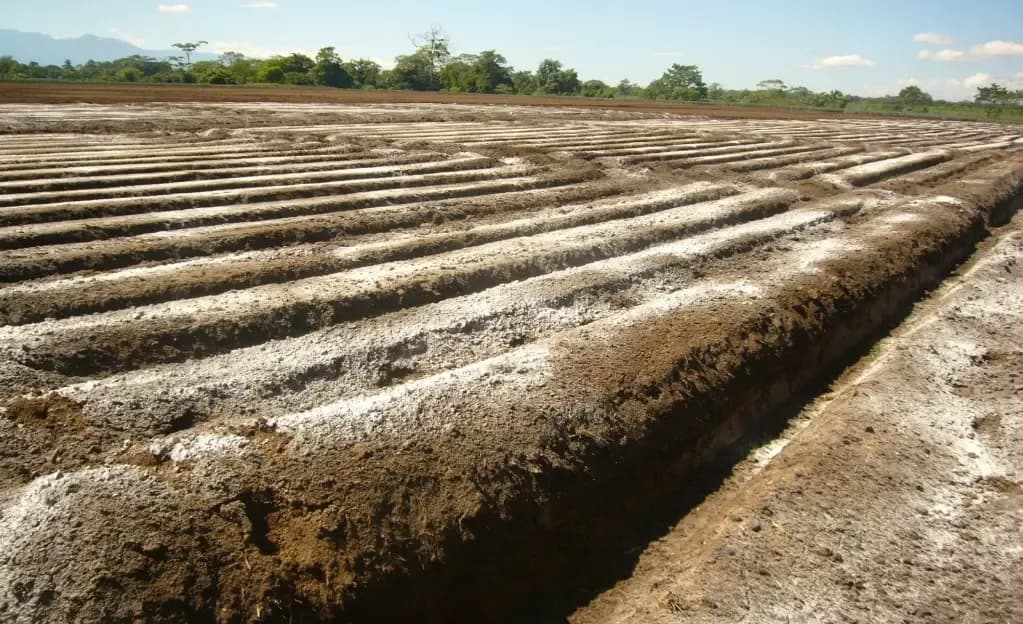
Soil remineralization is emerging as a largely undeveloped opportunity for Argentina’s non-metallic mining sector. The use of natural mineral amendments to restore degraded agricultural soils could create a significant new demand base while strengthening the link between mining and high-intensity crop production.
By Panorama Minero
Agricultural engineer Carlos González, former professor and researcher at the National University of San Juan, argues that agrominerals represent a pending business segment for both mining producers and the agricultural sector. Intensive farming practices have progressively depleted essential nutrients, increasing the need for structural soil recovery alternatives.
Soil remineralization involves the application of natural mineral inputs such as rock powders, gypsum, calcium sulfate, limestone and dolomite to replenish mineral content. According to Argentina’s National Institute of Agricultural Technology, these practices can improve soil structure, regulate pH levels and enhance long-term crop productivity.
Policy Background and Market Discontinuity
In 2005, Argentina launched a National Soil Amendment and Remineralization Program aimed at promoting mineral-based agricultural inputs through coordination with public technical agencies. Although the initiative generated initial awareness, it was not sustained over time, and remineralization remains marginal in current agricultural practices.
The primary demand potential lies in Argentina’s core agricultural region, including Buenos Aires, Santa Fe, Córdoba, Entre Ríos and La Pampa. In these areas, agrominerals could address soil deficiencies, improve yields and optimize root development processes.
Competition with Synthetic Fertilizers
One of the key challenges is competition with conventional synthetic fertilizers such as nitrogen, phosphorus and potassium, which benefit from established distribution networks and standardized application practices.
Unlike chemical fertilizers typically sold in kilograms and priced in US dollars, natural mineral amendments are applied in larger volumes and commercialized in local currency. In certain cost scenarios, this could improve economic efficiency for producers.
Scale Potential for Non-Metallic Mining
For the mining sector, agrominerals represent a high-volume segment within non-metallic production. Provinces such as San Juan have carbonate resources capable of supplying agricultural-grade materials that could be integrated with phosphate or potassium inputs.
Industrial processes such as milling and pelletizing would allow the production of ready-to-apply soil amendments. Limestone and dolomite are among the most promising materials due to their slow dissolution rates, which provide multi-year soil correction benefits compared to short-cycle synthetic fertilizers.
According to González, the absence of a consolidated market remains the main barrier for producers considering investment in this segment. Coordinated efforts between public agencies, agricultural stakeholders and mining operators would be required to stimulate demand and position agrominerals as a technically and economically viable alternative.
Soil remineralization could therefore represent not only an agricultural productivity tool, but also a strategic diversification pathway for Argentina’s non-metallic mining industry.