The Province of Catamarca has enacted a new Communication and Prevention Protocol for Mining Projects, updating the regulatory framework governing transport operations linked to mining activity. The measure, effective January 26, introduces mandatory escort requirements across strategic corridors and establishes stricter technical standards for vehicles and cargo.
By Panorama Minero
The protocol, issued by the Ministry of Mining and formally communicated to companies operating in the sector, modifies previous regulations and expands the number of road segments where escorted convoys are now compulsory. The update aims to reinforce operational safety and logistical control along routes that concentrate traffic serving lithium and metal mining projects in the province’s interior.
Corridors Subject to Mandatory Escort
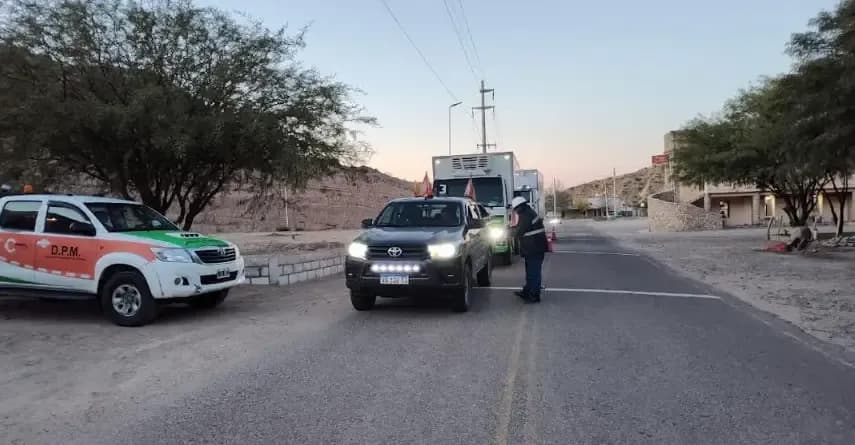
Under the new framework, escort vehicles are now required along specific segments of National Routes 60, 40, 43 and 157. These include RN60 from the Paso de San Francisco border crossing; RN40 entering from Tucumán; RN43 from Salta toward the Antofagasta de la Sierra department; and the corridors connecting Cerro Negro with Tinogasta and Fiambalá.
The regulation also applies to the RN40 at Los Nacimientos in Belén heading toward Bajo de la Alumbrera and Farallón Negro; the junction with Provincial Route 43 in El Eje toward Antofagasta de la Sierra; the intersection with Provincial Route 47 at Cuesta de Capillitas; and RN60 at its connection with Provincial Route 46 toward the Pomán and Andalgalá departments.
Mining operators must coordinate the necessary logistical measures to ensure compliance with the escort regime along these corridors.
Escort Service Requirements
Companies must provide one escort vehicle for every one to three transport units, whether carrying cargo or passengers, circulating within provincial territory. Escort vehicles may carry only two occupants, a driver and an assistant driver, and the service must be outsourced to third parties.
Convoys transporting mineral or chemical substances, including lithium salts or reagents, are not permitted to mix with other types of cargo.
Technical Vehicle Standards
Vehicles traveling to or from mining operations located in interior departments, whether operated by concessionaires, contractors, private entities or public authorities, must be four-wheel drive units equipped with all-terrain tires and rollover protection bars, either internal or external, depending on the vehicle model and airbag configuration.
Passenger capacity must align with available seat belts and headrests. Vehicles must carry safety equipment including shovels, tow straps, chains and reflective tape, and be fitted with communication systems, either radio or satellite, clearly identifying communication channels between the escort vehicle, transport unit and operational base.
The protocol also requires first aid kits, winter equipment where applicable, climate control systems suited to high-altitude conditions, and visible identification of the company name and its linkage to mining operations.
Cargo And Weight Limits
The maximum Gross Vehicle Weight permitted under the protocol is 52.5 metric tons.
Specific limits include up to 20 tons for two-axle rigid trucks transporting general cargo; between 25 and 27 tons for three-axle rigid trucks carrying mineral raw materials; 31 tons for four-axle rigid trucks; and up to 32 tons for units equipped with dual steering axles, air suspension and dual wheels.
Through this regulatory update, Catamarca strengthens operational oversight of mining logistics in a context of expanding lithium and metal mining activity, reinforcing safety standards and transport traceability along key corridors serving strategic projects.