With active operations in silver and gold, DLE technology in lithium, and a strengthening bilateral relationship, the United States is advancing its positioning across the region, from Jujuy to Santa Cruz, with mining as one of its key anchors.
By Panorama Minero
As President Javier Milei recalibrates Argentina’s foreign policy toward Washington and Donald Trump calls for critical minerals to supply strategic industries and national defense, the U.S. presence in Argentina continues to strengthen.
Operations in silver, gold and lithium are combined with growing diplomatic backing, which is expected to deepen in the coming months in the context of Argentina Week, the commercial and institutional mission that Argentina will lead in New York with the endorsement of U.S. Treasury Secretary Scott Bessent. On Monday, the Treasury Secretary stated that one of the world’s largest mining companies is evaluating investments in Argentina of between US$10 billion and US$12 billion, adding that “Argentina is a key piece for the United States.”
At the diplomatic level, government-to-government ties between the United States and Argentina are expanding, with mining at the center of the agenda, particularly lithium, copper, gold, rare earths and uranium. Over the past year, official delegations and major companies have consolidated a project map that stretches from the country’s northwest to Patagonia, while Argentina’s Large Investment Incentive Regime (RIGI) has emerged as a key tool to attract investment and provide long-term predictability.
Although still limited, the U.S. presence is tangible and diverse. Jujuy and Salta concentrate silver, lead and zinc operations; Catamarca and Salta host key lithium projects; and Santa Cruz maintains gold production at Cerro Negro, operated by Newmont.
Silver, Lead and Zinc: Consolidated Operations
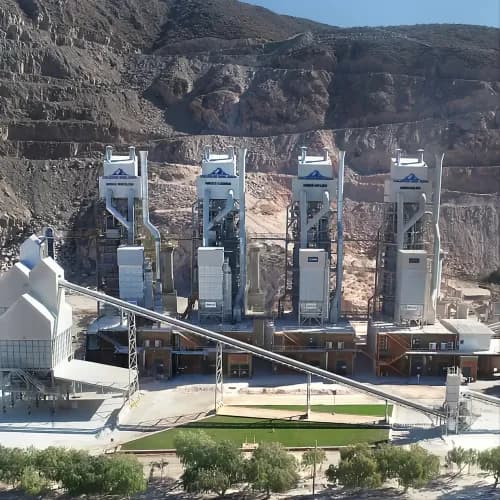
Puna Operations, a business unit owned by SSR Mining (100% U.S. capital), comprises the Chinchillas mine and the mineral processing facilities at Pirquitas, in Jujuy.
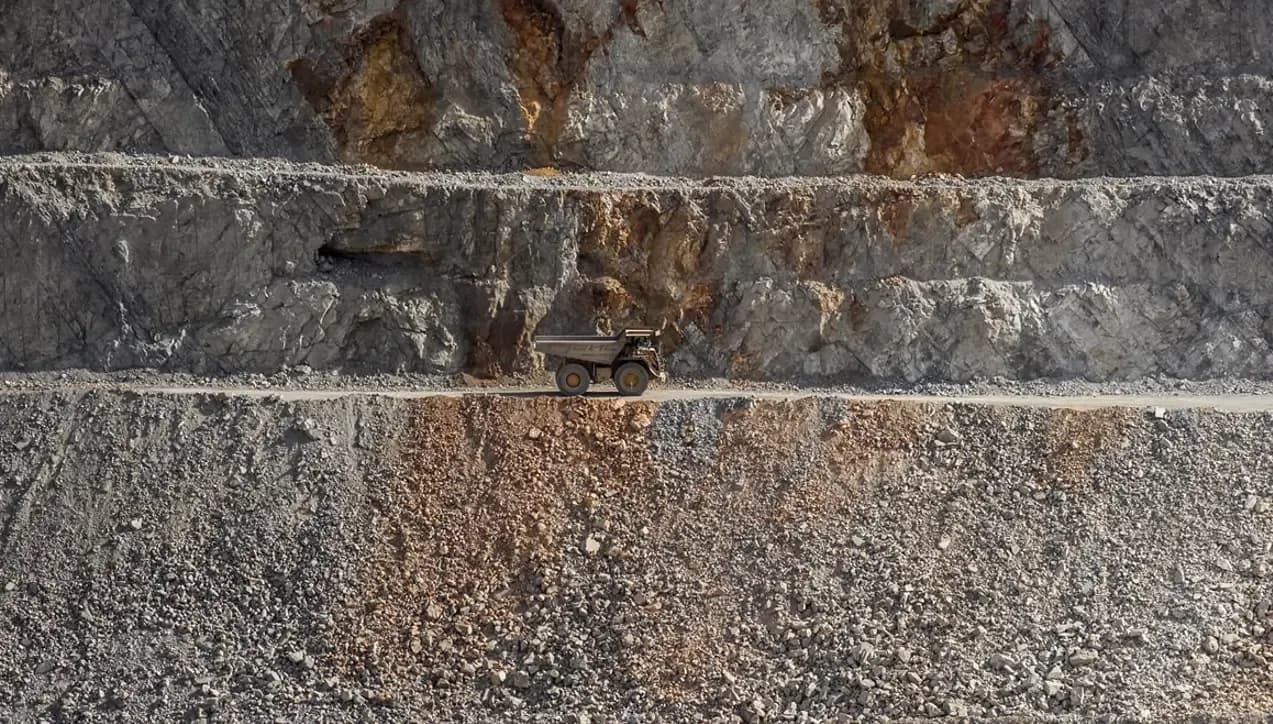
The Chinchillas mine, in operation since December 2018, produces silver, lead and zinc through conventional open-pit methods. Ore is transported 40 km to Pirquitas, where concentrates are produced and shipped to international smelters.
According to the company, Chinchillas hosts proven and probable reserves of 19.5 Moz of silver (average grade: 142.1 g/t), measured and indicated resources of 35.9 Moz (196.9 g/t), and inferred resources of 8.6 Moz (190.8 g/t), with opportunities to extend the mine’s operating life.
SSR Mining continues to evaluate the conversion of resources into reserves at Chinchillas, as well as the development of the Cortaderas project at Pirquitas, reinforcing the continuity of its operations and the strategic U.S. presence in the region.
Gold: Sustained Presence in Patagonia
The Cerro Negro project, operated by Newmont, one of the leading U.S.-based mining companies, maintains stable production and ranks among Argentina’s most important gold operations.
Located at an elevation of 600 meters above sea level in the low plains of Santa Cruz Province (Patagonia), Cerro Negro includes three high-grade underground mines (Eureka, Mariana Central and Mariana Norte), as well as two additional deposits: Emilia, in production since 2022, and San Marcos, currently under development.
The complex also includes the Vein Zone open pit and a cyanide leaching plant equipped with Merrill-Crowe recovery, achieving gold recovery rates of between 90% and 97%.
According to Newmont, the company has temporarily prioritized surface infrastructure projects over extending the life of its underground mines, with the objective of improving productivity and operational safety.
Lithium: The Core of U.S. Interest
Although some projects, such as Fénix (formerly FMC and Livent, now part of Rio Tinto), have experienced changes in ownership, the U.S. presence remains through technological and equity participation in key initiatives across northwestern Argentina.
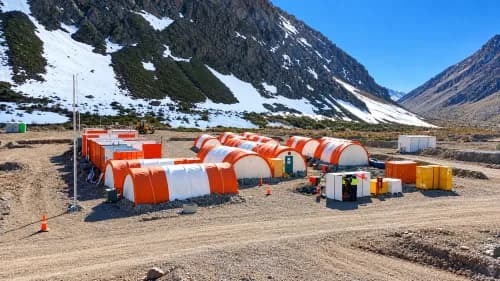
At one of Rio Tinto’s flagship projects in Argentina, known as Sal de Vida, the company recently announced the incorporation of U.S.-developed direct lithium extraction (DLE) technology through a strategic partner, ILiAD Technologies. Together, the partners plan to commission a pilot plant under real operating conditions in the puna region, highlighting the interest of U.S. innovation firms in Argentina’s brine resources.
Also in Catamarca, the Kachi lithium project includes participation by a U.S. partner, Silicon Valley-based technology startup Lilac Solutions, under an alliance focused on the application of DLE technology.
Although the project has faced challenges in recent periods, Lake Resources, the owner and developer of Kachi, announced on August 4 an addendum to its Definitive Feasibility Study (DFS) for Phase 1 of the operation, reflecting material reductions in both capital expenditure estimates and operating costs.
Within this structure, Lilac participates as a technology partner with an earn-in of up to 25% of the project, subject to technical milestones already validated at demonstration scale. Of that amount, 20% has been effectively earned following the completion of technology trials, validation of the demonstration plant, and qualification of the final product as high-purity lithium carbonate (+99.8%).
In the puna, Albemarle is reinforcing the U.S. presence through brine exploration activities at the Salar de Antofalla, drawing on its global experience as one of the world’s leading large-scale lithium producers. With established operations across the Americas, Australia and Asia, the company has strengthened its international positioning as a strategic supplier to the battery and high-purity lithium chemicals value chain, amid intensifying global competition for critical resources.
Since September, Albemarle’s shares have shown a recovery trend in the markets, although they have yet to return to the levels recorded during the expansionary cycle of 2021–2023. In Argentina, the project is advancing in coordination with provincial authorities and local communities, consolidating Antofalla as a regional asset under development and aligned with the company’s long-term strategy to expand its resource base and secure supply for key markets.
Should the strengthening of U.S.–Argentina bilateral relations around lithium continue, Antofalla could become a key asset for the development of the resource under U.S. participation.
Active Diplomacy and Strategic Agreements
The recent Reciprocal Trade and Investment Agreement between Argentina and the United States, released by the White House on November 13, establishes a framework of greater predictability for new investments, including in the mining sector, reinforcing medium- and long-term strategic planning.
Although specific details are still under definition, the agreement aims to promote market access, technical alignment of standards, and cooperation in strategic sectors such as critical minerals, food and digital technologies.
At the same time, the bilateral relationship is reflected in concrete actions at multiple levels of both administrations. One example was the visit of a delegation from the U.S. state of Nevada to Catamarca on November 5, which resulted in the signing of a memorandum of cooperation on sustainable mining. The agreement covers the lithium and battery value chain, academic research, technological innovation, training and environmental best practices, strengthening bilateral coordination to promote investments with strategic impact for both parties.
RIGI and Investment Attraction
Argentina’s mining sector has experienced quantitative growth in investment attraction following the launch of the Large Investment Incentive Regime (RIGI). To date, with the recent inclusion of Gualcamayo, ten RIGI projects have been approved, all with local integration commitments exceeding 20%, as required by the Bases Law. One initiative totaling US$273 million was rejected, while 20 projects remain under evaluation, representing an estimated US$63 billion, based on information published by La Nación.
“The new Argentina will grow thanks to the three pillars of the economy: agriculture, energy and mining,” President Milei stated, once again assigning a central role to extractive industries. He also noted that “we are underutilizing the Andes mountain range,” while repeatedly highlighting the potential of strategic resources such as copper, lithium, uranium and rare earths, reinforcing a vision of greater resource development in response to projected global demand.
The expansion of the U.S. presence will depend on the country’s ability to effectively translate negotiations, international agreements and investment-attraction tools such as the RIGI into concrete projects and initiatives.
One point, however, appears clear: since the signing of the Memorandum of Understanding (MoU) on Cooperation in Critical Minerals, the United States and Argentina have worked to consolidate a framework that provides greater predictability and facilitates coordination between companies and authorities, while aligning the strategic interests of both countries in the future development of large-scale metal and lithium mining operations.
This shift positions Argentina as an increasingly relevant partner for the United States in the competition for investment and the consolidation of supply chains, within a regional environment where neighboring countries share similar geological conditions but differ in political and management framework.