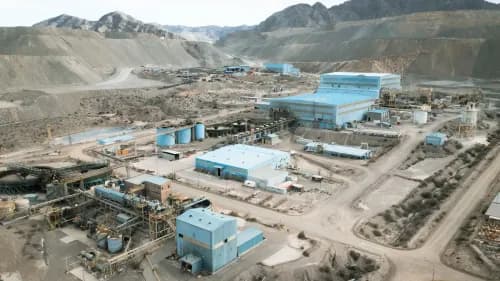
Statements by San Juan’s Secretary of Industry, Alejandro Martín, have brought attention to one of the province’s main structural constraints: the limited availability of industrial parks to meet the growing demand expected from large-scale mining projects, particularly those linked to copper.
By Panorama Minero
San Juan currently operates four industrial parks. Two of them, located in Pocito and Chimbas, are operating at or near full capacity. Pocito has no room for expansion, while Chimbas has only limited capacity to grow.
In response, authorities have implemented a strategy focused on the reallocation of lots previously assigned to companies that halted operations or never initiated productive activities, through processes of revocation and reassignment to firms with concrete investment projects.
Albardón and PITAR Offer Expansion Potential
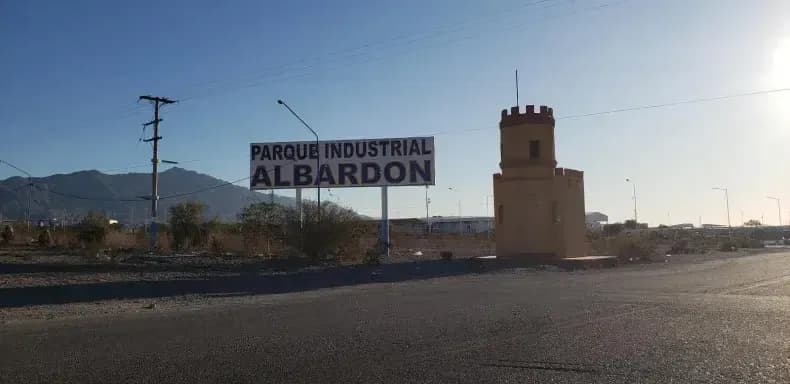
The two industrial areas with greater availability are Albardón Industrial Park and the Environmental Technologies Industrial Park of Rivadavia (PITAR).
Albardón continues to attract new investments, including companies from the Berazategui industrial cluster that decided to relocate to San Juan in 2025. Meanwhile, PITAR is undergoing a strategic review, as only three companies have established operations there over the past decade.
The provincial government is working with environmental authorities to broaden the range of permitted activities at PITAR, maintaining environmental standards while avoiding restrictions that would confine development solely to circular economy initiatives.
Mining Growth Intensifies Infrastructure Demand
According to the Secretariat of Industry, the need to expand industrial infrastructure is not driven exclusively by mining. However, projected copper developments are accelerating and exposing the structural deficit.
San Juan’s positioning as a mining services hub has led to sustained interest from companies seeking to establish operations in the province. Following sectoral events such as the Argentine Industrial Parks Association forum and Expoindustria, several firms finalized land acquisitions in Albardón, while additional projects are currently in negotiation stages.
Rising demand has also affected industrial real estate values. Some companies are seeking lower-profile locations to avoid rental and land price increases. The Secretariat is providing zoning guidance to prevent market distortions.
Risk of Saturation Without Planning
Provincial authorities warn that large-scale mining investments could outpace available industrial infrastructure, potentially creating saturation scenarios similar to those experienced in other resource-driven regions during rapid expansion cycles.
The diagnosis also highlights structural challenges related to logistics and connectivity. Coordination is underway with the Ministries of Infrastructure and Mining to strengthen the road network and assess improvements to the railway system, considered strategic for industrial and mining logistics.
Public-Private Partnerships as a Development Model
To accelerate the creation of new industrial parks, Alejandro Martín proposed public-private partnership schemes. Under this model, municipalities would provide land and basic services, while private developers would finance and manage the parks through trust structures, similar to frameworks already implemented in other provinces.
The challenge, according to provincial authorities, is to anticipate mining-driven growth and ensure that industrial infrastructure does not become a bottleneck for copper-related development.