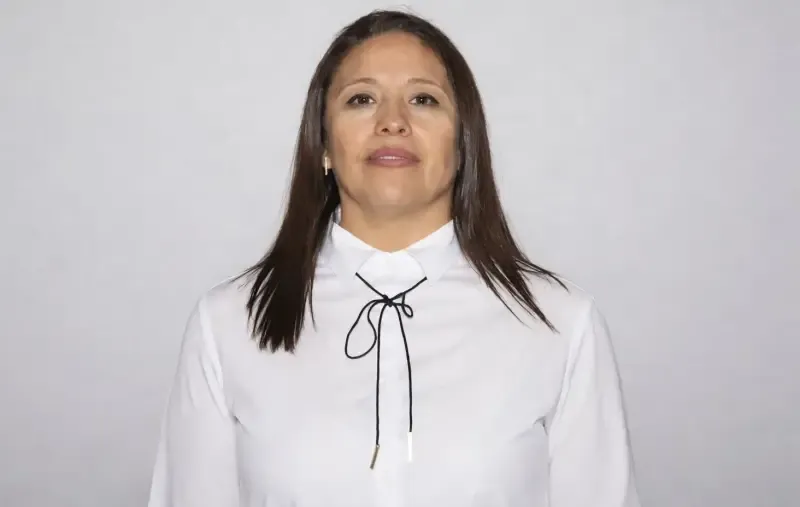
Northwest Argentina concentrates key mineral resources that explain much of the current mining boom in Salta and neighboring provinces. Around 40 projects are currently operating at different stages of development, while four are already in production. In this expansion scenario, Puna communities face the challenge of adapting to growing demand for services, infrastructure and workforce training. Gabriela Miranda, president of the Chamber of Mining and Tourism Service Providers of La Puna (CAPROSEMITP), spoke with Panorama Minero about the Chamber’s role, the impact of mining on local employment and the main challenges looking ahead to 2026.
By Panorama Minero
What is CAPROSEMITP’s central role today in the productive development of the Puna region?
Our mission is to develop local suppliers through the prior preparation of entrepreneurs, because here everyone starts out as an entrepreneur. Large companies also began as small businesses, and the Chamber provided them with the potential and tools to grow. Our role is to prepare entrepreneurs to become future business owners, through training programs and partnerships with institutions. The fundamental pillar of our work is to serve as a link between mining companies or large subcontractors and our members.
Are there partnerships between the different chambers?
Yes, we are working together on training initiatives. Last year we signed an agreement with CAPEMISA, the Chamber of Mining Company Suppliers of Salta. The objective was to strengthen ties among members. CAPEMISA is a very large organization, with more than 300 members, while we are a smaller chamber with 60 members, where more than 40% are entrepreneurs and over 50% are already developed business owners.
What real impact are mining projects having on local employment and the economy of Puna communities?
At the moment, activity has slowed slightly and is going through a period of consolidation and organization, but we expect companies to begin operating more intensively between March and April. There has been a profound change, as many entrepreneurs have now become business owners and are able to provide services. I feel that the Puna region is growing and transforming. Opportunities are increasingly available for Salta to advance its economic development, and the results are already beginning to materialize.
What challenges remain in order to achieve greater local economic spillover?
Our greatest challenge is training and access to financing. We can provide training, but financing is not aligned with the reality of local suppliers. We know that banks have many requirements, which are properly established, but in many cases entrepreneurs do not qualify. We are seeking alternatives to facilitate access to financial resources and further develop local suppliers.
Have there been discussions with the local government and financial institutions to obtain credit lines?
We have spoken with banks and with the Federal Investment Council (CFI), and they are currently analyzing how they might work with us. However, we do not yet have an agreement or a specific program that applies to entrepreneurs who are just starting out.
This is a challenge that has existed for some time, but it has intensified over the past two or three years with the growth of mining. Many external financial institutions have arrived offering possibilities, but small suppliers still lack the conditions required to access large loans. As a Chamber, we have considered acting as a support or guarantor for entrepreneurs, enabling them to access credit while we provide follow-up, but this option is still under evaluation.
How do you assess the participation of local suppliers in the mining value chain?
We have support and access to meetings with major companies. So far, companies are actively seeking ways to include us. At the end of last year, we organized a business roundtable in San Antonio de los Cobres, with the participation of Ganfeng, Rio Tinto, Eramine and Alpha Lithium, where we showcased our services and allowed each entrepreneur to engage directly with contract managers.
We receive support from companies, but it is up to us to continue building capacity and securing financing, either individually or through joint ventures or partnerships, which also enable participation in bidding processes, along with the support of Provincial Law 8164, which prioritizes suppliers from the area of influence.
What are the main infrastructure limitations currently affecting development in La Puna?
National Route 51 is the main issue. During the rainy season, as is currently the case, operations become more difficult for all sectors, mining, tourism and local residents alike. Planned works have yet to materialize, and this is an issue that requires focused attention. We hope that access conditions will improve this year. In some cases, companies take responsibility for road maintenance, but the stretch between Campo Quijano and San Antonio de los Cobres remains critical. Without reaching San Antonio, it is impossible to access the projects. Its completion is strategic in every sense.
How does the Chamber work to strengthen social license and community acceptance?
Many members of the Chamber belong to local communities. We work closely with them, maintain a respectful and close relationship, and engage in dialogue with community leaders. Our role is to develop suppliers by providing tools and connections with companies, and this year the main challenge is to add financing programs.
Communities must be able to participate in the value chain. The objective is for entrepreneurs to arrive prepared, with professionalized companies capable of competing. There are already certified companies actively operating, demonstrating that it is possible to combine community development with mining development.
Is the current training offer aligned with the needs of the mining industry?
In meetings with companies, we identify their needs, which allows us to guide entrepreneurs and avoid everyone pursuing the same services. This year, we aim to develop new services that are not currently offered within the Chamber but are required by companies. We know we do not have the capacity of a multinational company, but we can start as subcontractors. This allows for learning and growth. We do not create false expectations, because we understand that companies have high standards, and we must be prepared through training and financial backing.
How do logistics costs and tax pressure affect competitiveness in the region?
The impact is greater on companies based in the Puna region, because they do not have the financial strength of large firms. This leaves them more exposed to the country’s economic challenges. Even so, companies continue operating, adapting and remaining active. Activity has declined, but there have been no closures so far.
What are the Chamber’s strategic priorities for this year and expectations given the current industry context?
We have high expectations due to upcoming projects and those already moving into new phases. Projects operated by Rio Tinto, Ganfeng, AbraSilver and Alpha Lithium generate strong expectations and long-term outlook, which is an important concept for our members. We closely monitor developments on a daily basis to be ready to work with companies or their subcontractors. We hope that the Puna region’s economy will grow through these incoming investments and that they will foster the development of local communities.