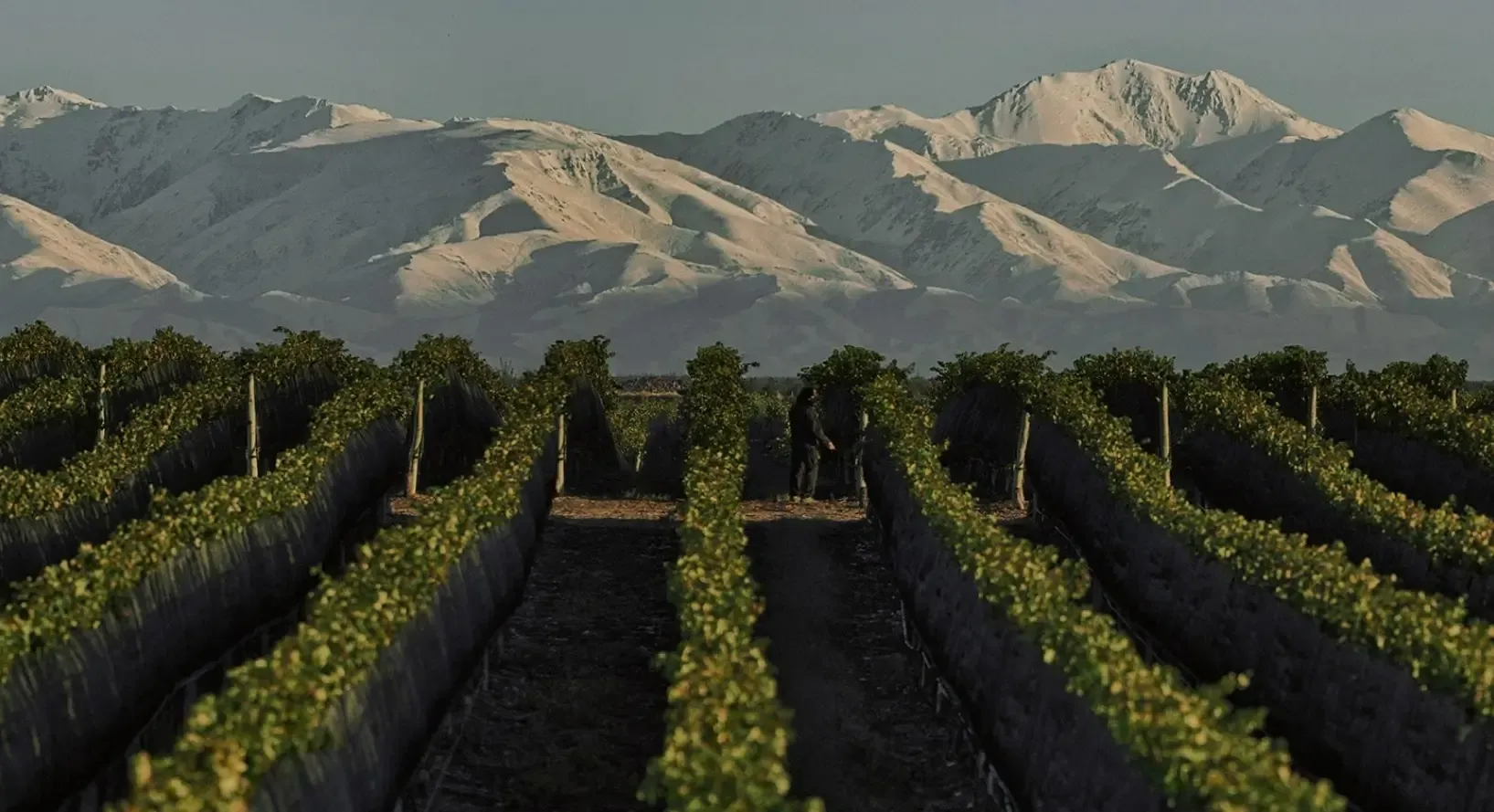
For years, in Mendoza, winemaking and mining were often portrayed as antagonistic activities. However, on the other side of the Andes, several business groups moved in the opposite direction, building diversified structures in which both industries coexist, reinforce each other and form part of a single productive ecosystem. One of the most representative cases is that of the Chilean group Elecmetal, owner of the Mendoza-based winery Doña Paula and, at the same time, one of the world’s largest-scale mining suppliers.
By Panorama Minero
The group traces its origins to Chilean steelmaking in the early twentieth century, but found its turning point with the development of modern mining in Chile during the 1990s. From that moment on, Elecmetal consolidated a specialization in metallurgical solutions for mineral processing, focusing on critical components such as mill liners, crushing parts and grinding media. This strategic decision allowed the company to evolve from a local industrial firm into a global player in the mining supply chain.
Today, Elecmetal operates production facilities in six countries and maintains commercial presence in more than 40 markets, with an annual capacity exceeding 600,000 tonnes of grinding balls and rods, in addition to tens of thousands of tonnes of high-engineering cast components. Its operational core, ME Elecmetal, works directly with large copper, gold and other metal operations, developing tailor-made solutions for SAG and ball milling circuits, as well as primary and secondary crushing.
This industrial “muscle” is further supported by an environmental strategy embedded across the entire group structure. At its Rancagua plant, located in an area where agriculture and mining coexist opposite Mendoza, Elecmetal manufactures a significant share of its liners using up to 96% recycled steel as raw material. Thanks to this circular economy scheme, the plant managed to double its output while reducing emissions to less than half compared to its original configuration, demonstrating that sustainability can be integrated into large-scale industrial processes without sacrificing competitiveness.
Mining represents the financial core of the conglomerate, with consolidated annual revenues exceeding US$1.1 billion, but it is not its only pillar. Elecmetal is part of a diversified business group that also controls Cristalerías de Chile (glass packaging for wine, beer and beverages), participates in renewable power generation, holds assets in media outlets such as Diario Financiero, and develops a historic winemaking business, led by Viña Santa Rita in Chile and Doña Paula in Argentina.
It is precisely in Mendoza where this diversified model becomes tangible for the local audience. Doña Paula, the group’s winery in the Uco Valley, was recently awarded International Gold at the Best Of Wine Tourism 2026 awards in Bordeaux, in the Sustainable Practices category. The recognition highlighted its comprehensive approach to innovation, scientific research and respect for the natural environment, but within the group it is not viewed as an isolated achievement. Rather, it is understood as the winemaking expression of the same philosophy applied in mining, based on productive efficiency, continuous improvement and environmental management.
For Mendoza, this type of case sends a relevant signal. It is not just about an award-winning winery or an international mining supplier, but about a structure in which different industries are integrated within a single long-term strategy. Mining provides scale, technology and investment flows, while wine contributes territorial identity, value added and international visibility. Both activities coexist within the same group, not in competition, but reinforcing one another.
In a context where the province seeks to reactivate its mining agenda and expand its productive matrix, the Elecmetal model shows that it is possible to articulate capital, heavy industry, agribusiness and sustainability under a coherent business logic. Mining in Chile and wine in Mendoza cease to be opposing poles and become two sides of the same economic project, that of diversified groups committed to regional integration, industrial innovation and long-term development.