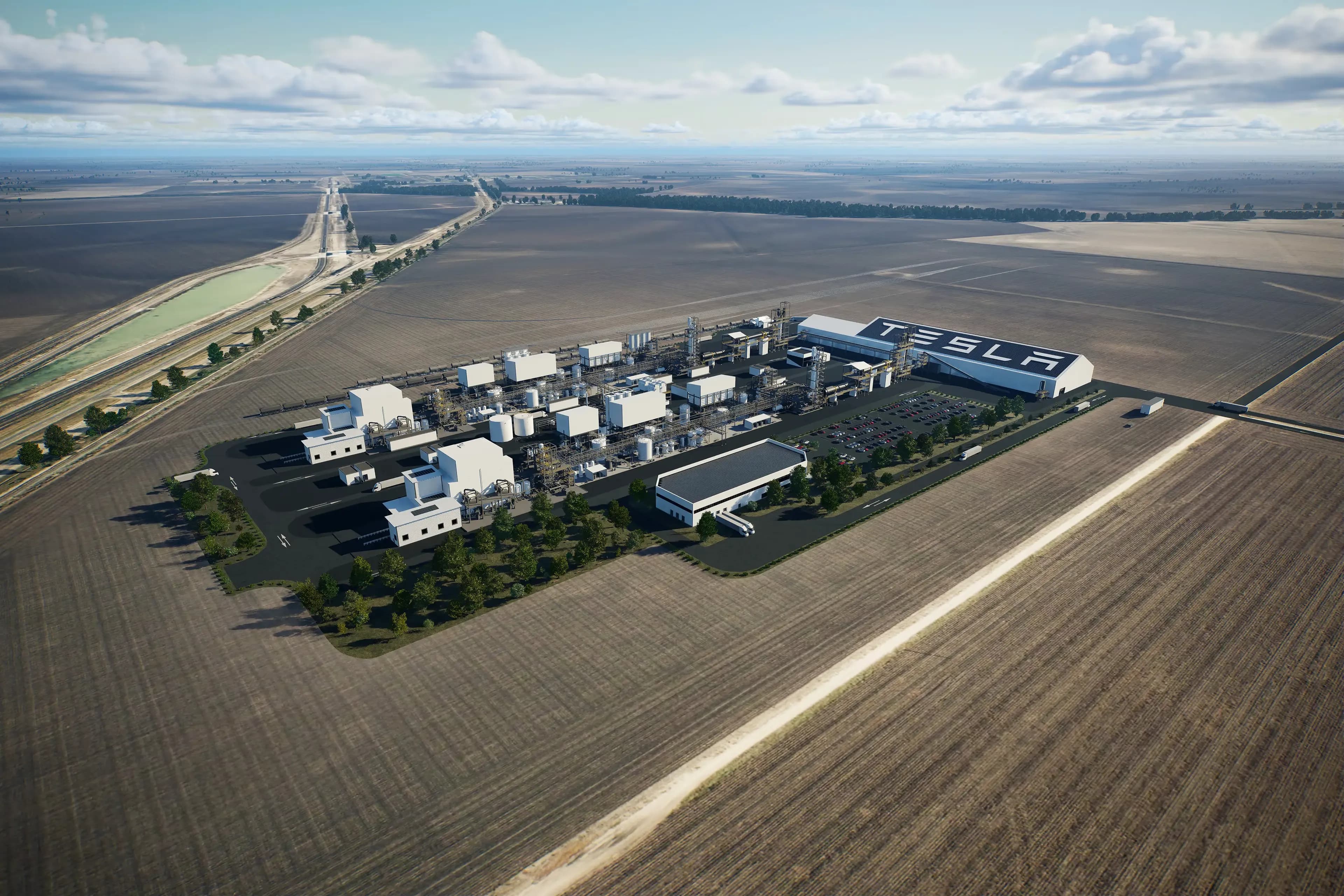
Tesla has officially confirmed that its lithium refinery in Corpus Christi, Texas, is now operational, marking a milestone in the production of batteries for electric vehicles and energy storage systems. Through its X account, the company stated that this development “marks the beginning of energy independence for North America”.
By Panorama Minero
Tesla CEO Elon Musk echoed the announcement, highlighting the significance of the project now that it is fully operational. “The largest lithium refinery in the Americas is operational,” he stated, underscoring the importance of the milestone within the company’s vertical integration strategy and its efforts to secure critical mineral supply.
An Integrated and Efficient Facility
Tesla’s refinery was built on a site spanning more than 480 hectares, with an investment exceeding US$1 billion. According to the company, the refining process is integrated and acid free, reducing the use of hazardous chemicals and enabling the generation of byproducts suitable for use in construction.
The facility aims to produce battery grade lithium hydroxide, accelerating the local availability of critical materials in the United States and strengthening the domestic supply chain.
Employment and Local Development
The plant was also conceived as a hub for employment and local development. At the start of construction in 2023, the company highlighted the project’s impact on the local community, including the creation of more than 1,000 temporary jobs during the construction phase and over 250 permanent positions, including technicians and engineers, once operations began.
Tesla also emphasized its commitment to regional talent development through educational investments in the Robstown Independent School District, apprenticeship programs at Del Mar Community College, and internships linked to Texas A&M University–Corpus Christi.
From Mining to Batteries: Supply Chain Control
According to Tesla, the mission of the refinery is to accelerate the global transition to sustainable energy through the local production of high quality lithium hydroxide, a key material for electric vehicle batteries and energy storage systems.
Regional access to battery critical minerals helps reduce costs, minimize reliance on external processing in Asia, and improve supply chain stability in the United States. Tesla describes the investment as a key step toward increasing the availability of battery grade lithium domestically, reducing the need to transport raw materials over long distances and lowering logistics related emissions.
A Strategic Perspective
The commissioning of the refinery reflects not only a technological achievement but also a strategic bet on supply chain autonomy within the battery industry. By integrating lithium refining into its production ecosystem, Tesla seeks to reduce bottlenecks and secure a critical share of the raw materials required for its products over the medium and long term. This move is particularly significant in a global context defined by growing competition for critical minerals and the concentration of refining capacity outside the United States.


