Chile’s recent National Critical Minerals Strategy makes relevant—also for Mendoza—a mineral that is little visible in public debate but of high strategic value: rhenium. The reason is concrete and geological. The rhenium that Chile produces—and for which it holds a position of global leadership—originates in copper deposits located in the same cordillera and metallogenic belt that continues toward the high Andes of Mendoza, at a short distance from the Argentine border.
By Panorama Minero
In its strategy, Chile identified 14 minerals of strategic interest but defined a core of four priorities—copper, lithium, molybdenum, and rhenium—over which it holds a leading productive position at the global scale. In copper, the country is the world’s leading producer, with close to 25% of global supply. In lithium, it ranks second. In molybdenum, it consistently remains among the three principal producers. In rhenium, a metal of extremely limited production, Chile concentrates most of the supply available on the international market.
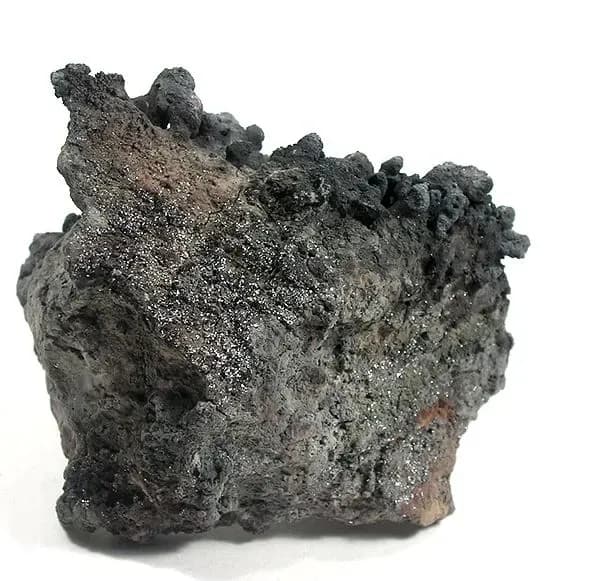
Rhenium is not mined as a primary mineral. Its production is entirely subordinated to copper and molybdenum mining. In large Andean copper porphyries, molybdenum is recovered as a byproduct of the copper flotation process, and rhenium is present in trace amounts within the molybdenum concentrate.
Rhenium recovery occurs at a later stage, during molybdenum roasting, when the metal volatilizes mainly as rhenium oxide. That compound is captured and refined. From a technical standpoint, the dependency is direct: without molybdenum production there is no rhenium, and without copper mining there is no molybdenum at scale.
The Direct Reference for Mendoza: División Andina
This productive chain materializes in copper operations located in the central Andes, opposite Mendoza. The closest case is División Andina, operated by Codelco. It is the copper mine operating nearest to Mendoza and one of the divisions that produces molybdenum concentrate as a structural component of its metallurgical scheme.
División Andina integrates the Andina–Los Bronces district and is located in the same Andean metallogenic belt that extends toward the high Andes of Mendoza, where copper systems with comparable geological characteristics exist. The molybdenum generated in this operation constitutes the key input for subsequent rhenium recovery, directly linking Andean copper mining with the production of this critical mineral.
Industrial Uses of Rhenium
Rhenium is a strategic input for the manufacture of nickel superalloys used in aeronautical and power-generation turbines, applications that require materials capable of operating at extreme temperatures with high mechanical resistance. It is also used in catalysts for the refining industry, particularly in catalytic reforming processes for the production of high-octane fuels.
Global rhenium production is very low—on the order of tens of tonnes per year—with highly concentrated supply and no direct substitutes in several of its critical applications. This combination explains its inclusion within the core group of critical minerals defined by Chile.
Industrial Processing and Value Capture
In addition to the production of molybdenum concentrate in Andean copper deposits opposite Mendoza, a central part of the rhenium value chain is completed in the vicinity of the Chilean capital. Concentrate from different operations is industrially processed by Molymet; a company specialized in molybdenum transformation and rhenium recovery as a byproduct.
At these plants, the rhenium volatilized during molybdenum roasting is recovered and refined for the production of ammonium perrhenate and metallic rhenium, mainly destined for international markets for superalloys and industrial catalysts. This industrial link consolidates Chile as the world’s leading producer of rhenium, not only due to the availability of molybdenum associated with its copper mining, but also because of its installed processing and refining capacity.
From a Mendoza perspective, the rhenium case is technically relevant. The complete chain—from the copper deposit to advanced metallurgy—develops along the same Andean belt contiguous to Mendoza. The rhenium case confirms how strategic byproducts associated with copper also add value and become strategic assets.