The Government of the Province of Catamarca and the National University of Tucumán (UNT) have finalized the signing of strategic agreements that complete the transfer process of Yacimientos Mineros de Agua de Dionisio (YMAD).
By Panorama Minero
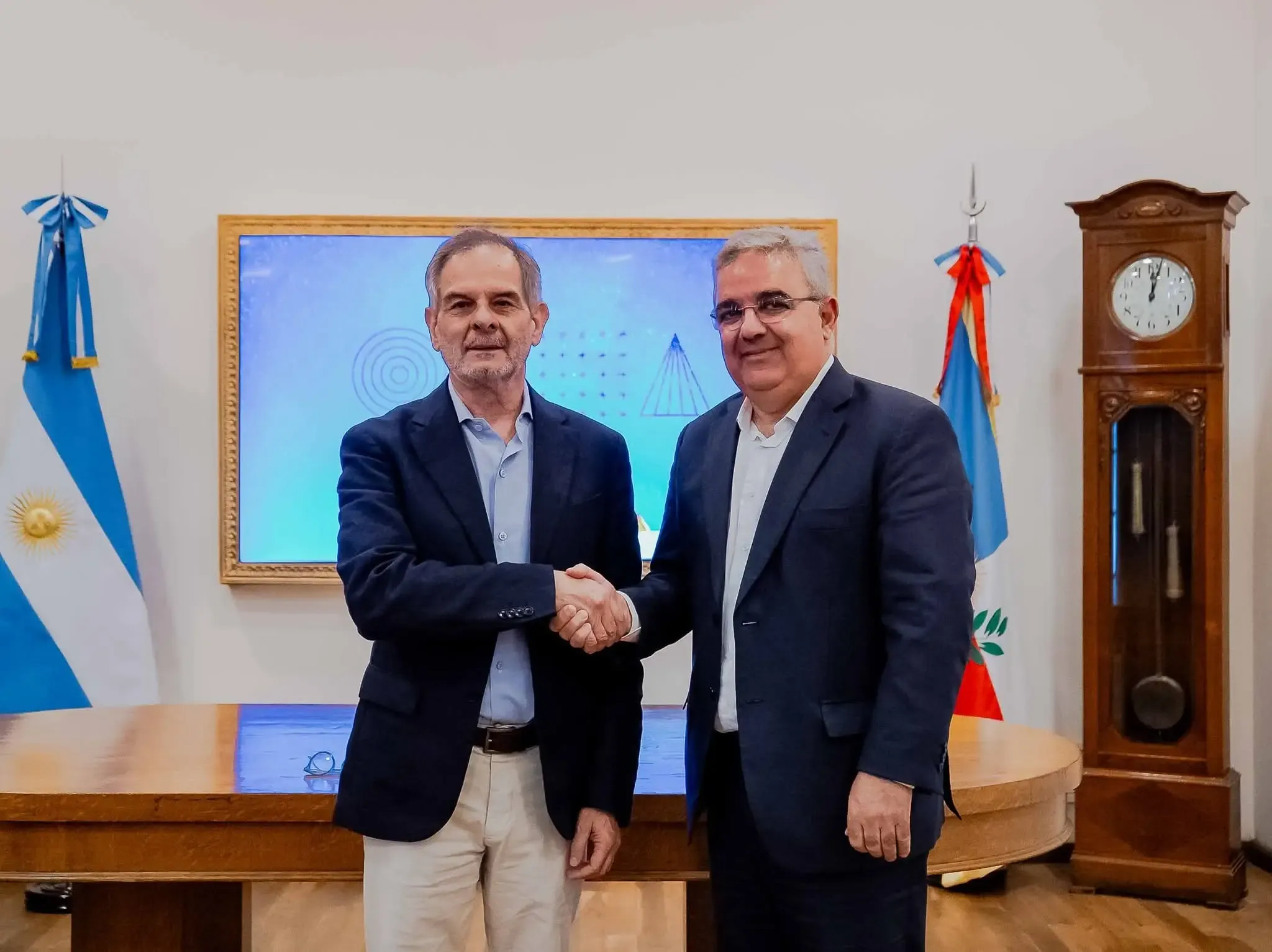
This milestone fulfills a long-standing demand by the province and ushers in a new management model for one of Argentina’s most significant state-owned mining companies. The signing ceremony—held at the Center for Applied Technology and Art (CATA)—was led by Governor Raúl Jalil and UNT Rector Sergio Pagani, with the participation of provincial officials, legislators and YMAD board members.
New Shareholding Structure and Governance
The main agreement formalizes the definitive withdrawal of the national government from YMAD’s share capital, fully replacing the historic 1958 “Farallón Negro Agreement.” Under the new structure, YMAD’s shareholding is as follows:
-
Province of Catamarca: 60%
-
National University of Tucumán (UNT): 40%
Once the corresponding presidential decree is enacted—the only remaining requirement—the national government will cease to be an active shareholder.
Corporate governance will be reorganized through a five-member board: a chair appointed by Catamarca and four directors, two designated by each shareholder. This structure grants Catamarca an operational majority with three of the five seats, consolidating leadership and managerial control.
Closure of a long-running legal dispute
As a preparatory step, Catamarca and the UNT signed a settlement agreement bringing to an end litigation initiated in 2016, stemming from the University’s claims regarding its share of YMAD’s profits. This legal process—one of the cornerstones of an institutional dispute spanning decades—must still be ratified by the courts to achieve final closure.
The agreement also formally restores the UNT’s right to receive 40% of net profits, a share established under Law 14,771, which created YMAD, and supported by recent institutional rulings interpreting profit distribution as originally intended.
Background and historical significance
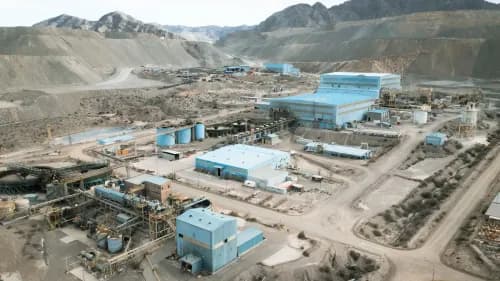
YMAD was established in 1958 under Law 14,771 as an interjurisdictional mining company tasked with exploration, extraction and commercialization activities on the Agua de Dionisio plateau in western Catamarca.
Historically, the company operated under a tripartite structure involving the national government, the Province of Catamarca and the UNT. With this new agreement, a long-sought corporate reorganization is completed—one that provincial authorities have pursued for years and that has gained momentum in recent times, culminating in the signing of these accords.
Implications for mining and the regional economy
The operational and governance transfer of YMAD represents not only a symbolic affirmation of federal autonomy for Catamarca, but also strengthens the province’s role as a central player in Argentina’s state-run mining sector.
The move comes amid a revival of large-scale mining projects in the province, particularly the Bajo de la Alumbrera project, whose operations are being resumed after years of inactivity in response to rising global demand for copper tied to the energy transition.
In addition, the new corporate charter—set to be jointly drafted by the provincial government, the University and YMAD’s board—aims to modernize the company’s legal framework, aligning it with contemporary challenges related to competitiveness, sustainability and corporate governance in the mining industry.
Institutional reactions
Provincial officials underscored the agreement’s significance as a “gesture of productive federalism,” positioning Catamarca at the forefront of managing a strategic asset for both the regional and national economy. For its part, the UNT highlighted the restoration of historical rights and the viability of a governance model that combines provincial control with academic participation.
Outlook and challenges
Pending the enactment of the presidential decree and subsequent approval by the provincial legislature, YMAD is entering a critical transition phase. Updating the company’s charter, integrating new governance bodies and implementing professional corporate management standards are immediate challenges as the company seeks to consolidate a model capable of integrating effectively into the modern mining sector, while contributing to competitiveness and regional socioeconomic development.