A young professional from Jujuy has developed an innovative road stabilization product specifically designed for roads that support and connect mining operations. The proposal stands out for its strong positive environmental impact, as it enables the reuse of residual salts generated during lithium carbonate production, with properties similar to bischofite, a product currently imported from Chile.
By Panorama Minero
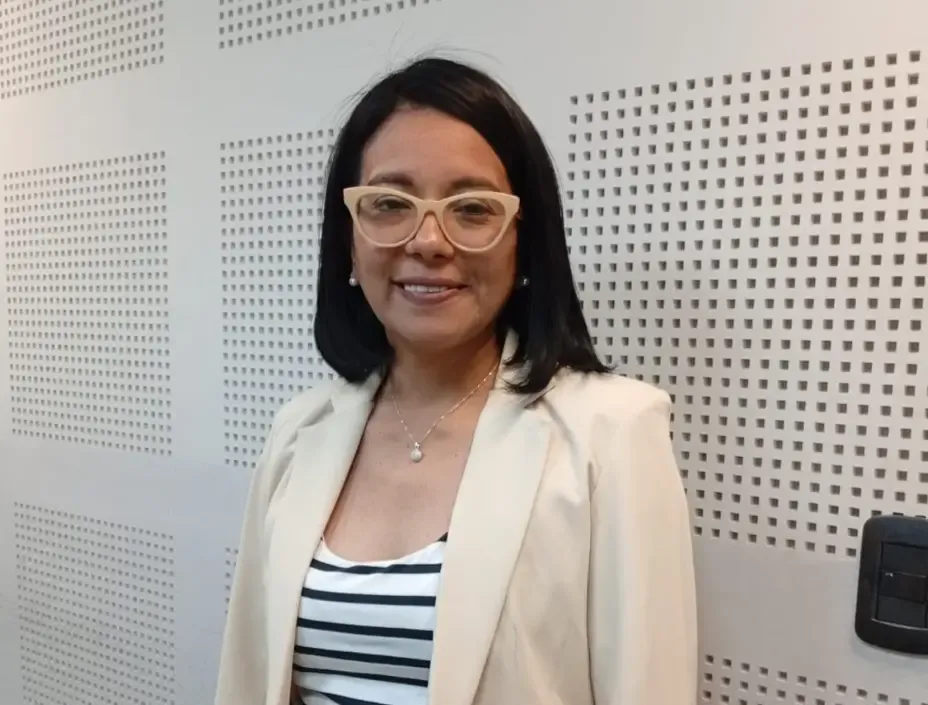
“The project focuses on producing road stabilizers through the recovery of salts from the salt flats of Northwest Argentina. A process was developed to obtain this product using residual salts that are currently considered industrial waste generated during lithium carbonate production,” explained chemical engineer Josefina Singh, author of the research.
The main objective is to transform an industrial residue into a useful input for the mining industry, providing a concrete solution to both an operational and environmental challenge. In this regard, Singh emphasized the project’s provincial relevance, as it would improve the stabilization of unpaved roads and provincial routes heavily used by mining logistics.
These road corridors are not only critical for productive activity but are also essential for local communities, which rely on them daily to travel to urban and economic centers for administrative procedures, shopping and other essential activities.
“The residue proposed for reuse contains ions, mainly magnesium chloride, calcium and sodium, which are currently not being utilized. These compounds are very similar to those found in bischofite, a product that is not produced in Argentina and must be imported from Chile for dust control and soil stabilization,” Singh noted.
From an environmental standpoint, the analysis conducted as part of the project shows compelling results. “It would be possible to reduce industrial solid waste by 90% and, in addition, cut water consumption used for road maintenance by 93%,” she explained. This aspect is particularly relevant in a region where water is a scarce and strategic resource.
Currently, road maintenance in Northwest Argentina covers approximately 600 kilometers. In around 40 kilometers, water is used as a temporary binding agent, a resource that evaporates quickly and loses effectiveness. In these sections, roughly 1,200 cubic meters per day are used, equivalent to about 438,000 cubic meters of water per year, implying an intensive and inefficient use of the resource.
Singh’s proposal aims to replace this system with the use of residual salts from lithium carbonate production, capable of generating a brine with stabilizing properties similar to bischofite, but at lower cost and with greater efficiency. “Water evaporates quickly and the stabilizing effect is lost. By contrast, a brine allows salts to promote soil stabilization and aggregation. My work focused on producing road stabilizers from residual salts, achieving characteristics comparable to those of bischofite,” she explained.
The study concludes that the resulting saline solution is an effective and highly efficient dust suppressant and soil stabilizer, delivering direct benefits in reducing environmental liabilities, reusing industrial waste and achieving significant water savings.
Academic Background and Mining Experience
The project was developed as Singh’s undergraduate thesis for the Chemical Engineering degree at the Faculty of Engineering of the National University of Jujuy (UNJu). The thesis, entitled “Production of Road Stabilizers Through the Recovery of Salts from the Salt Flats of Northwest Argentina”, was supervised by Dr. Daniel Ernesto Galli, co-supervised by Eng. Demetrio Humana, and advised by Eng. Lucas Javier Chumacero. The evaluation committee included engineers Andrea Alejandra Arduino, David Alejandro Blasco and Edith Amalia Gareca.
Although academic in nature, Singh brings 15 years of experience in the mining sector, which enabled her to identify a concrete operational problem and develop a solution with strong application potential. “I chose this development because it addresses a real need in the country. I see strong business potential, and that interest has already been recognized. I was also awarded an international scholarship because of this project,” she said.
In 2022, Singh received a scholarship from the University of British Columbia (Canada), where she was selected among the 60 most influential figures in mining in Argentina and Chile thanks to this development. She later received another scholarship to participate in a program on water econometrics in Peru, attended by only two Argentine representatives.
In December 2024, she was invited by the Embassy of Peru in Argentina to take part in a training program on mining suppliers, strengthening her network with key players in the Latin American mining industry. She is currently preparing to begin an MBA at the University of Buenos Aires (UBA), with a partial scholarship, aiming to scale the road stabilizer project into a high-impact business solution for the mining industry.