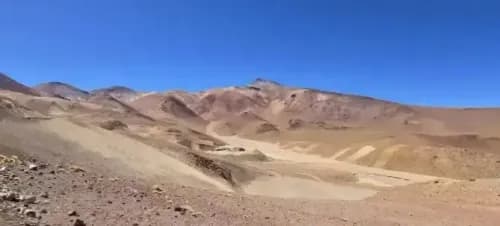
With independent environmental permits and low-impact prospecting work, both projects mark a new front of mining activity outside the Malargüe Western Mining District (MDMO).
By Panorama Minero
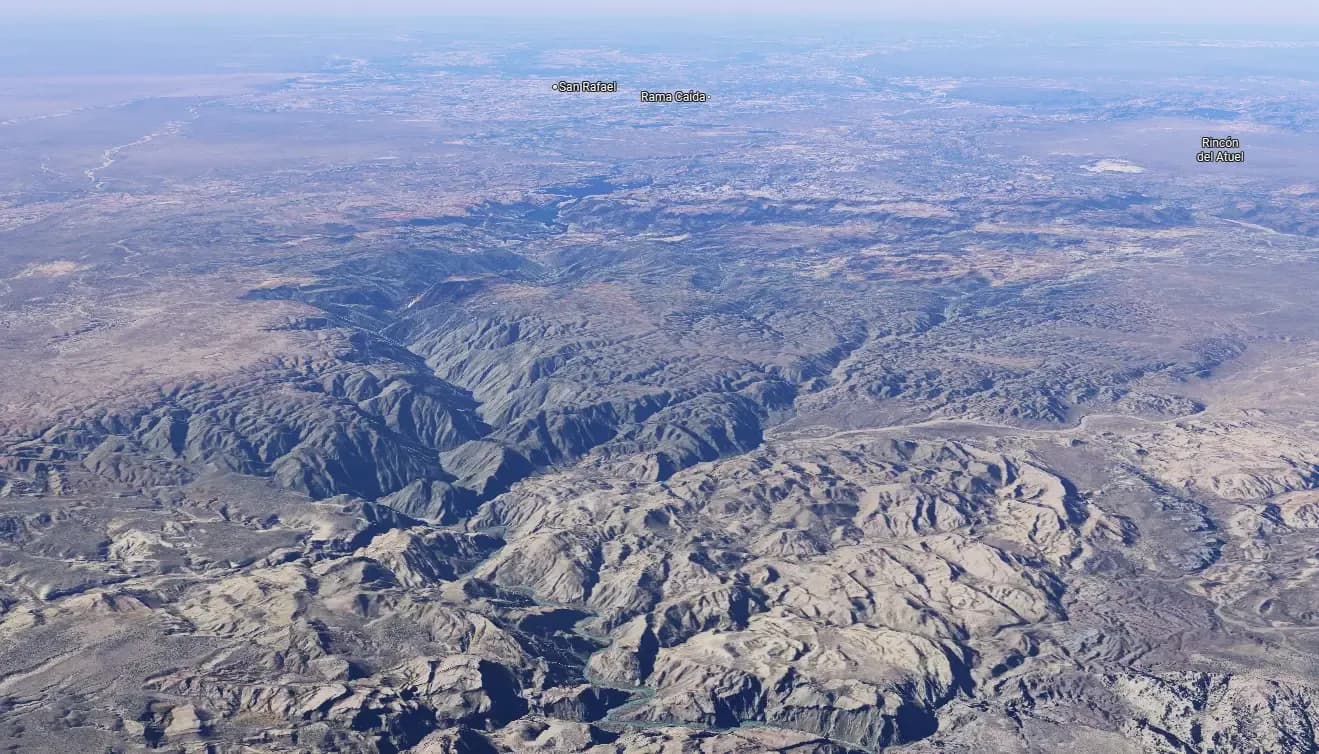
Multipiping Engineering Company is advancing two early-stage exploration projects in the San Rafael department: María Elsa and Camila. Both focus on the geological and environmental characterization of areas with mineral potential, operating in a preliminary, low-impact phase.
The two projects follow a similar exploratory approach, centered on organizing geological information, identifying targets of interest, and conducting preliminary assessments of technical feasibility to progress toward later stages. No drilling or extraction activities are planned at this stage.
This development represents one of the first formal copper exploration initiatives outside the boundaries of the southern Mendoza mining district, which explains why the projects are processed through independent permits. Unlike integrated schemes such as the Malargüe Western Mining District, a joint Environmental Impact Statement is not applicable outside the district’s defined polygon, requiring each initiative to be evaluated autonomously. In this context, San Rafael is beginning to consolidate as a new destination within the province’s mining drive, adding these copper projects to an ongoing lithium exploration initiative and expanding the regional geological interest map.
María Elsa
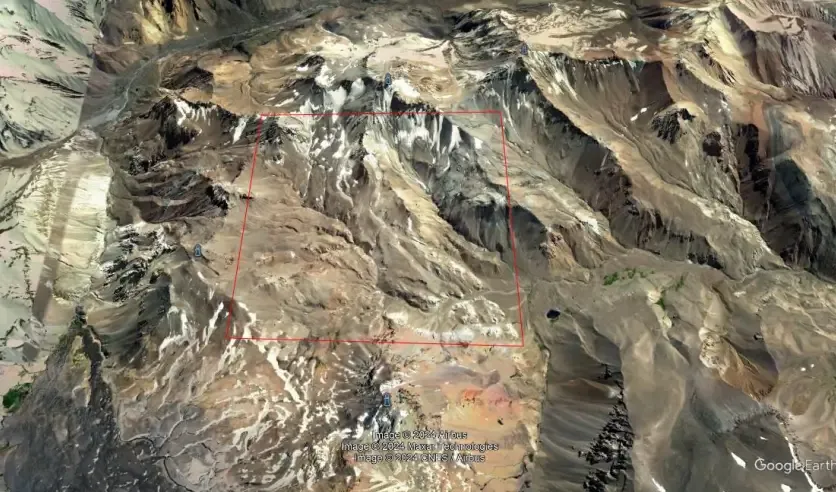
The María Elsa project is located in the La Pintada district, El Infiernillo area, and south of the Diamante River. The area is associated with mineralized systems linked to the Choiyoi magmatism (285–260 Ma) and is classified as a low-sulfidation epithermal vein deposit, containing silver, lead, zinc, copper, and arsenic.
There is a history of mining activity dating from the late 19th to the early 20th century, whose remnants are currently considered mining environmental liabilities.
Technically, initial exploration at María Elsa involves field reconnaissance, sampling, and indirect subsurface studies to build a geological model that will allow later identification of potential drill platform sites.
Key planned activities:
-
Geological and environmental reconnaissance of the area
-
Rock, soil, and water sampling
-
Drone surveys and image analysis
-
Geophysical, geoelectric, and geomagnetic prospecting studies
The duration of this phase varies depending on the type of study, with campaigns ranging from a few weeks to several months, depending on field conditions and results.
From a regulatory perspective, the María Elsa project formally initiated its Environmental Impact Assessment Procedure (PEIA) on October 23, following a joint resolution by the provincial authority. While the submission largely meets exploration-stage requirements, the agency requested additional technical information regarding the impact matrix, management and monitoring plans, and the handling of waste and effluents as part of the ongoing evaluation process.
Camila Project
The Camila project is located in the El Sosneado district and remains in the prospecting stage, focusing on assessing the geological potential of the area, particularly in identifying copper-bearing systems.
Unlike María Elsa, interventions at Camila are more limited, prioritizing existing trails and foot or pack-animal access to minimize environmental disturbance.
Planned tasks include:
-
Detailed geological analysis of the polygon
-
Comprehensive area mapping
-
Sampling of water, rocks, and soils
-
Aerial surveys using drones
-
Geophysical, geoelectric, and geomagnetic studies
No new roads or significant soil movement are planned during this stage.
Logistics, Environmental Considerations, and Operational Scope
Operationally, both projects have limited logistics and small teams. No overnight stays are planned on-site during the initial stage, with personnel operating from Villa 25 de Mayo using low-impact mobile facilities such as tents and chemical toilets.
No liquid effluents will be generated during this phase, and environmental management includes proper disposal of domestic waste and specific handling of hazardous waste related to equipment maintenance, which must be managed by authorized operators under current regulations.
Identified environmental impacts at this stage are localized and temporary, mainly related to personnel movement, light machinery use, and sampling and survey activities.