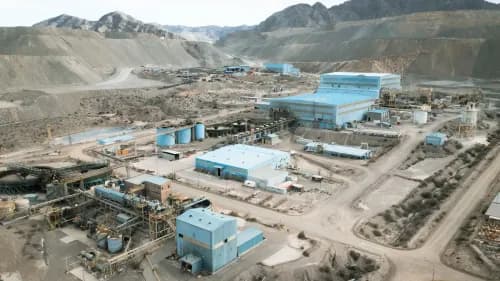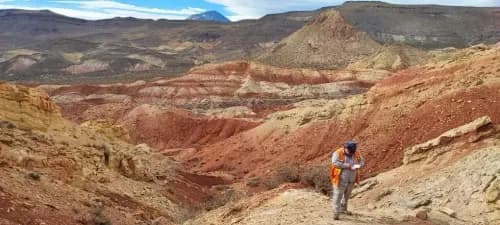
Cancambria is a project located in southern Malargüe that is beginning its prospecting phase through desk-based studies, with potential drilling exploration subject to results. The public hearing is scheduled for December 20.
By Panorama Minero
While Mendoza awaits concrete definitions regarding compliance with the committed schedule for Potasio Río Colorado (PRC), potash is once again taking a place on the provincial mining agenda due to the administrative progress of Cancambria Exploración S.A. Its prospecting and exploration project for potash salts (sylvinite) in the department of Malargüe is heading toward a public hearing on December 20 as part of the environmental impact assessment process.
This development highlights the contrast between a large-scale project that continues to face difficulties in regularizing its timelines and an initiative that proposes a phased and technically limited exploration scheme, with a strong emphasis on environmental control from its initial stages. In this case, the mining environmental authority determined that the Cancambria project must formally begin in the prospecting stage, restricting activities to desk-based work and validation of existing information.
Cancambria Exploración manages more than 44,000 hectares in Neuquén as a subsidiary of Argentina Potash, with its most significant project being “El Ceibo.”
Prospecting without direct intervention
The phase currently expected to be authorized is based almost exclusively on the reinterpretation of pre-existing geological and geophysical information, mainly from 2D and 3D seismic lines and records from historical oil wells drilled in the basin. Since potash salts do not outcrop at the surface due to their high solubility, the authority considered this approach to be technically and environmentally appropriate for defining the deposit’s potential without generating unnecessary impacts.
The planned field tasks are minimal and occasional, carried out using light 4x4 vehicles and without road construction, earthmoving, or the use of industrial water or chemical inputs. At this stage, no discharges to the environment or generation of effluents are expected, resulting in a low operational impact scheme.
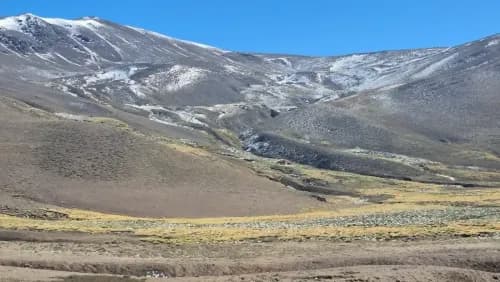
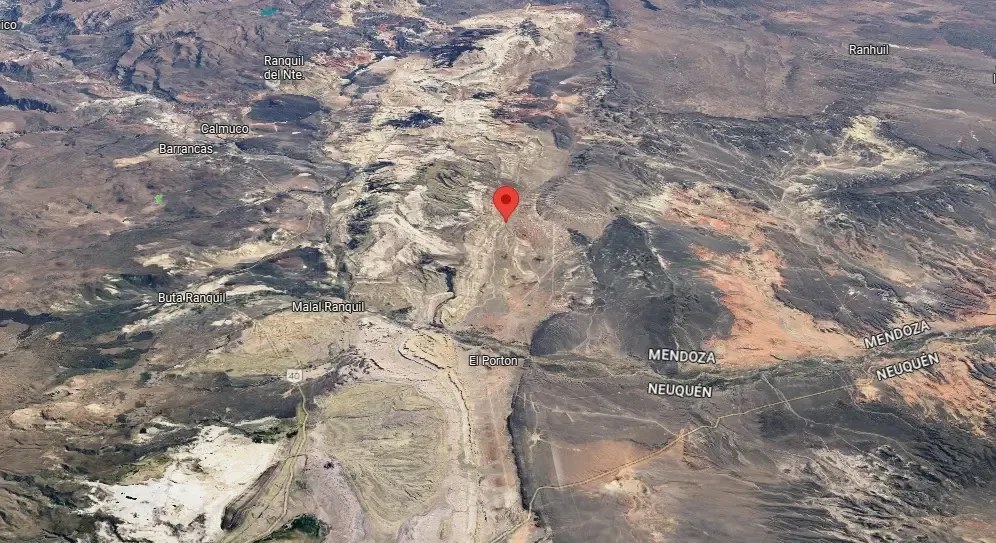
The Cancambria project is located in the department of Malargüe, in the south of Mendoza province, within the Payunia region—an area of basaltic plateaus and gentle hills with a strong geological and hydrocarbon background. The project covers two prospecting areas—CCMK-2 and CCMK-4—which together exceed 19,000 hectares, within the department of Malargüe and on the Payunia morph structural unit. The geological target focuses on potassium-bearing levels hosted in the Upper Troncoso Member of the Huitrín Formation, immediately below the Rayoso Formation, one of the classic horizons for potash mineralization in the Neuquén Basin.
Deep exploration subject to new permits
Depending on the results of the prospecting phase, Cancambria is evaluating a second exploration stage, which would involve drilling a deep vertical well under oil industry operational standards. The preliminary design contemplates a well between 1,000 and 1,500 meters deep, with core extraction to confirm the presence of potash-bearing levels.
Drilling would be carried out under a dry-location system, on a pad of approximately 100 by 100 meters, with critical areas sealed using geomembranes. The estimated operational duration of the well would be 15 to 20 days, with specialized personnel and rotating shifts.
Unlike the prospecting phase, this stage would involve the consumption of industrial water—estimated at around 25 m³ per day—and the use of water-based drilling muds with biodegradable additives. Environmental management plans provide for a zero-discharge scheme, with mud recirculation, transport of waste to authorized facilities, and controlled management of sanitary effluents. Any progress in this direction will be subject to approval of a specific project notice by the competent authority.
Environmental framework and technical conditions
The studies included in the project file contain a detailed hydrogeological characterization, identifying sub-alluvial and plateau aquifers with varying water quality, as well as the presence of gypsum and saline horizons. These elements are central to the design of any future drilling and to defining measures to protect water resources.
Additionally, the existence of natural cavities in sectors of the prospecting area was recorded based on information from the Argentine Speleological Union, introducing additional restrictions on the location of access roads and drill sites and reinforcing the need for precise planning of future activities.
From a technical and regulatory perspective, the advancement of the Cancambria project brings potash back into Mendoza’s mining agenda under a model different from that of PRC. It involves gradual exploration, smaller initial scale, and strong environmental oversight, allowing the generation of relevant geological information without committing large volumes of investment or infrastructure in the early stages.
In a context where the development of Potasio Río Colorado continues to be constrained by delays in its schedule, the call for a public hearing for Cancambria enables the mining authority to resume the evaluation of potash projects and once again test the technical and administrative procedures associated with this type of venture.