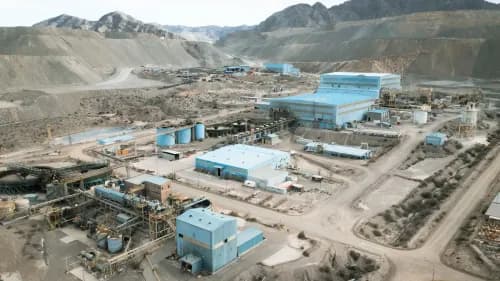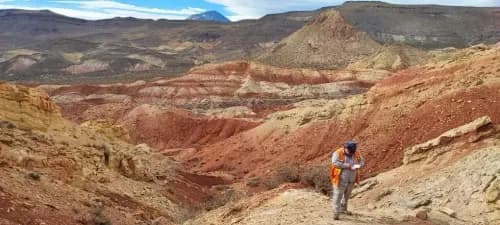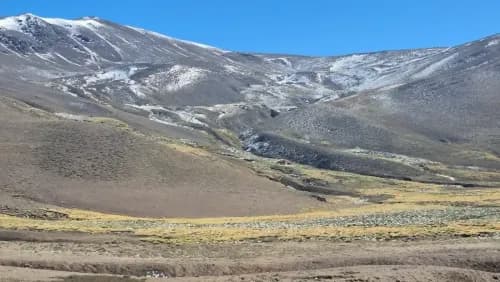
With the activation of the UGA for PSJ Cobre Mendocino, the province adds its second environmental management unit—and the first for an exploitation project—in a key step toward unlocking mining activity after two decades of stagnation.
By Panorama Minero
Less than a week after the legislative ratification of the Environmental Impact Declaration (EIA) for the PSJ Cobre Mendocino project, the Government of Mendoza activated one of the central mechanisms of the new mining environmental oversight framework: the Environmental Management Unit (UGA, by its Spanish acronym). This is a multisectoral body created by the EIA itself and ratified by law, which has already held its first formal meeting and has begun operating in the field.
This is no minor detail. In a province where metal mining has remained virtually paralyzed for nearly two decades, the immediate creation of the UGA sends a political and technical signal: project advancement is being accompanied by a strengthened, permanent oversight system open to citizen participation.
The UGA for PSJ Cobre Mendocino is the second to be formed under this framework. The first was created for the Malargüe Western Mining District I (MDMO I), and in parallel, in recent days, the UGA for MDMO II was also formalized, simultaneously with the incorporation of 27 new projects into the district. The model is thus beginning to be replicated as a standard for the province’s new mining phase.
Although it is the second Environmental Management Unit created in the province, the UGA linked to PSJ Cobre Mendocino is, so far, the most significant. It is the first associated with a project moving toward the exploitation phase—an instance that substantially increases environmental and operational oversight requirements. A producing mine demands continuous monitoring, process traceability, and the capacity to respond to deviations, under a control scheme that is no longer episodic but permanent. For this reason, the performance of this UGA will be decisive not only for the development of PSJ, but also as a test case for the participatory oversight model the province seeks to consolidate in order to reactivate metal mining after two decades of paralysis.
One of the UGA’s distinctive features is that it enables the direct participation of citizens in environmental monitoring and oversight tasks. Any adult may apply to join the Unit, without the need to represent a specific institution, through a registration form available on the official websites of the Directorate of Mining and the Directorate of Environmental Management and Enforcement. In this way, the oversight framework incorporates an open component, adding external perspectives to the technical monitoring carried out by the State and strengthening trust in the development of mining activity in the province.
An expanded oversight body
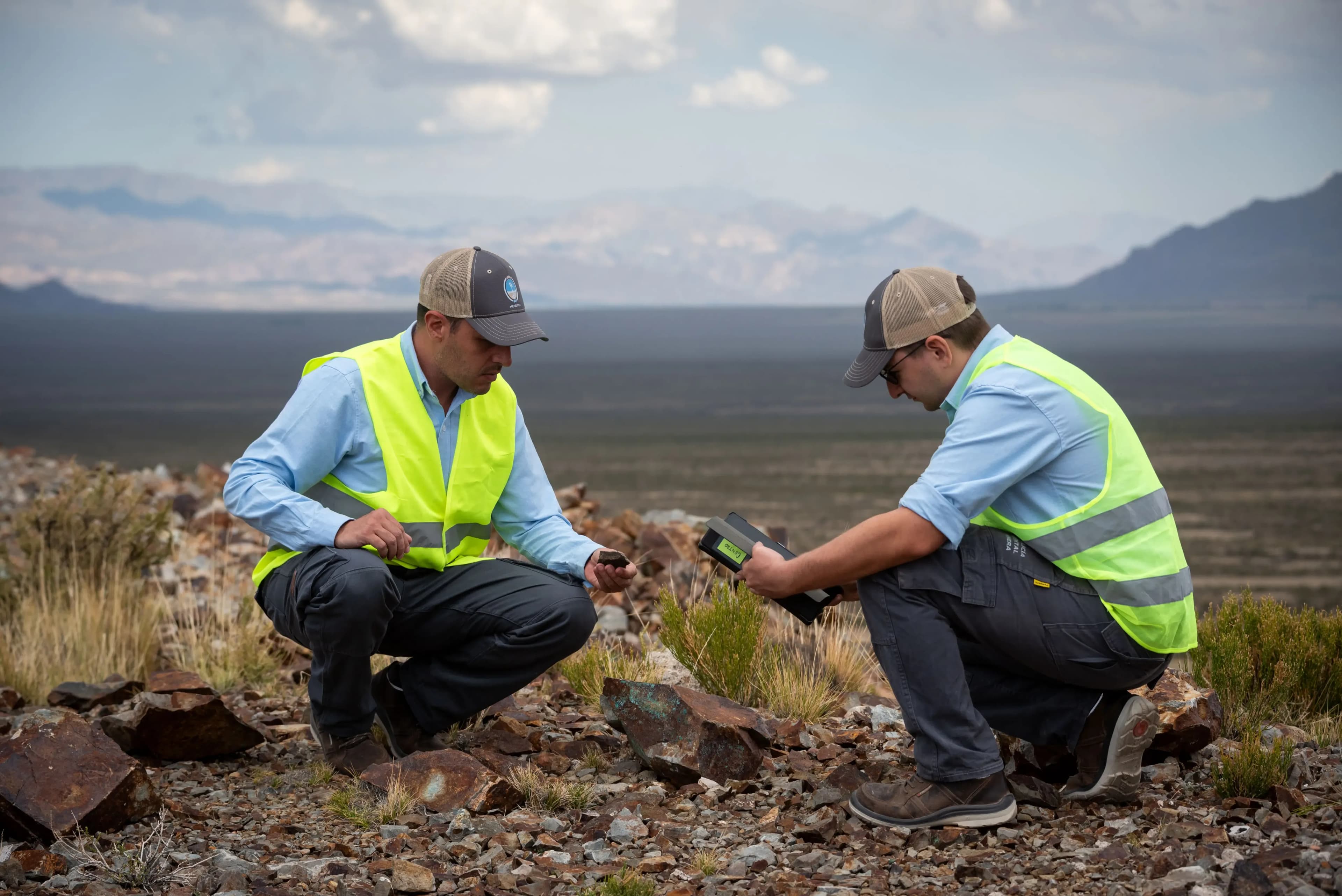
The Environmental Management Unit does not replace the Mining Environmental Police or the Mining Environmental Authority; rather, it complements them as an additional oversight and monitoring body, with a defining characteristic: it incorporates citizens, universities, technical agencies, and sectorial entities as active participants in monitoring.
In the case of PSJ, the UGA brings together more than 20 institutions, including the General Department of Irrigation, UNCuyo, UTN, provincial agencies responsible for environment, biodiversity, cultural heritage, territorial planning, and municipalities. In addition, any adult may register to become part of the forum, gaining access to information, site visits, and project monitoring processes.
The objective is clear: to broaden the oversight base, increase transparency, and ensure traceability across every stage of the project, from compliance with the EIA to on-site inspections.
Permanent oversight and open data
The UGA is responsible for the continuous evaluation of documentation added to the project’s environmental file, the coordination of joint inspections, and the technical analysis of the reports submitted over time. It operates on a regular basis under a regulated working framework established by a specific resolution that defines its scope, methodology, and responsibilities.
This approach is also aligned with Mendoza’s adherence to the Extractive Industries Transparency Initiative (EITI), which promotes information disclosure, multispectral participation, and accountability in the exploitation of natural resources.

A key piece to unlock mining
The swift launch of the UGA following the approval of PSJ Cobre Mendocino seeks to address one of the historical shortcomings of mining in Mendoza: the lack of social trust in oversight mechanisms. By incorporating citizens, universities, and independent bodies, the framework aims to shift the debate from distrust toward permanent technical verification.
In this sense, the UGA is consolidating itself as a central tool for the gradual establishment of the mining industry in the province—not as a shortcut, but as a necessary condition to move forward after years of institutional and political blockage.
With PSJ, MDMO I, and now MDMO II, the provincial government is beginning to outline a model that seeks to combine project approval with strengthened oversight. From now on, the effectiveness of this framework will be measured in the field and in the ability of these units to sustain real, continuous, and visible controls.