The recovery in lithium prices, growing demand driven by electrification and artificial intelligence, production concentration, and a new competitive landscape based on infrastructure, processing capacity and mining districts are reshaping the global lithium market. Recent private-sector reports agree that the industry no longer depends solely on geology, but increasingly on the ability to build competitive value chains.
By Panorama Minero
After experiencing one of the deepest downturns in its recent history, the global lithium market is beginning to show signs of recovery. However, the shift identified by leading international consultancies goes well beyond a cyclical rebound in prices. The industry is entering a new phase in which resource availability remains a necessary condition, but is no longer sufficient to compete.
Several reports published during 2026 by PwC, GEM Mining Consulting, Thunder Said Energy (TSE) and Chile's Copper Commission (Cochilco) indicate that the industry's structural foundations are changing. Growing pressure to supply the energy transition, the expansion of artificial intelligence, the rapid deployment of battery energy storage systems, constraints on supply growth and continued corporate consolidation are reshaping the competitive landscape for one of the world's most strategic minerals.
Today's market looks very different from that of just two years ago. While 2024 and much of 2025 were characterized by oversupply, falling prices and suspended projects, the market is now moving toward a more balanced environment that once again raises a central question: who will be able to supply demand as it continues to accelerate?
According to Thunder Said Energy, global lithium demand is expected to grow by around 9% annually over the next decade, driven not only by electric vehicles but also by stationary battery energy storage systems, robotics, data centers and the infrastructure supporting artificial intelligence. Supply, by contrast, is projected to increase by only 6% per year, creating a structural deficit that could reach 20% to 30% between 2030 and 2035.
The consultancy estimates that global production currently stands at approximately 260,000 tonnes of contained lithium per year. Nearly two-thirds comes from hard-rock mining, while the remaining third is produced from brine operations. Australia remains the world's largest producer with 36% of global output, followed by Chile (22%), China (16%) and Argentina (10%). At the same time, TSE identifies Argentina as one of the countries with the greatest production growth potential over the coming decade.
One of the report's most significant findings is that approximately 45% of projected demand by 2035 will need to be supplied by projects that have not yet entered construction. "We do not believe current prices are sufficient to accelerate the global project pipeline," the report states, warning that lithium carbonate prices will need to move significantly higher to encourage new investment, particularly in spodumene mining and refining.
TSE also projects that lithium carbonate prices could return to around US$40 per kilogram before sodium-ion batteries become sufficiently competitive to partially replace lithium-ion technologies.
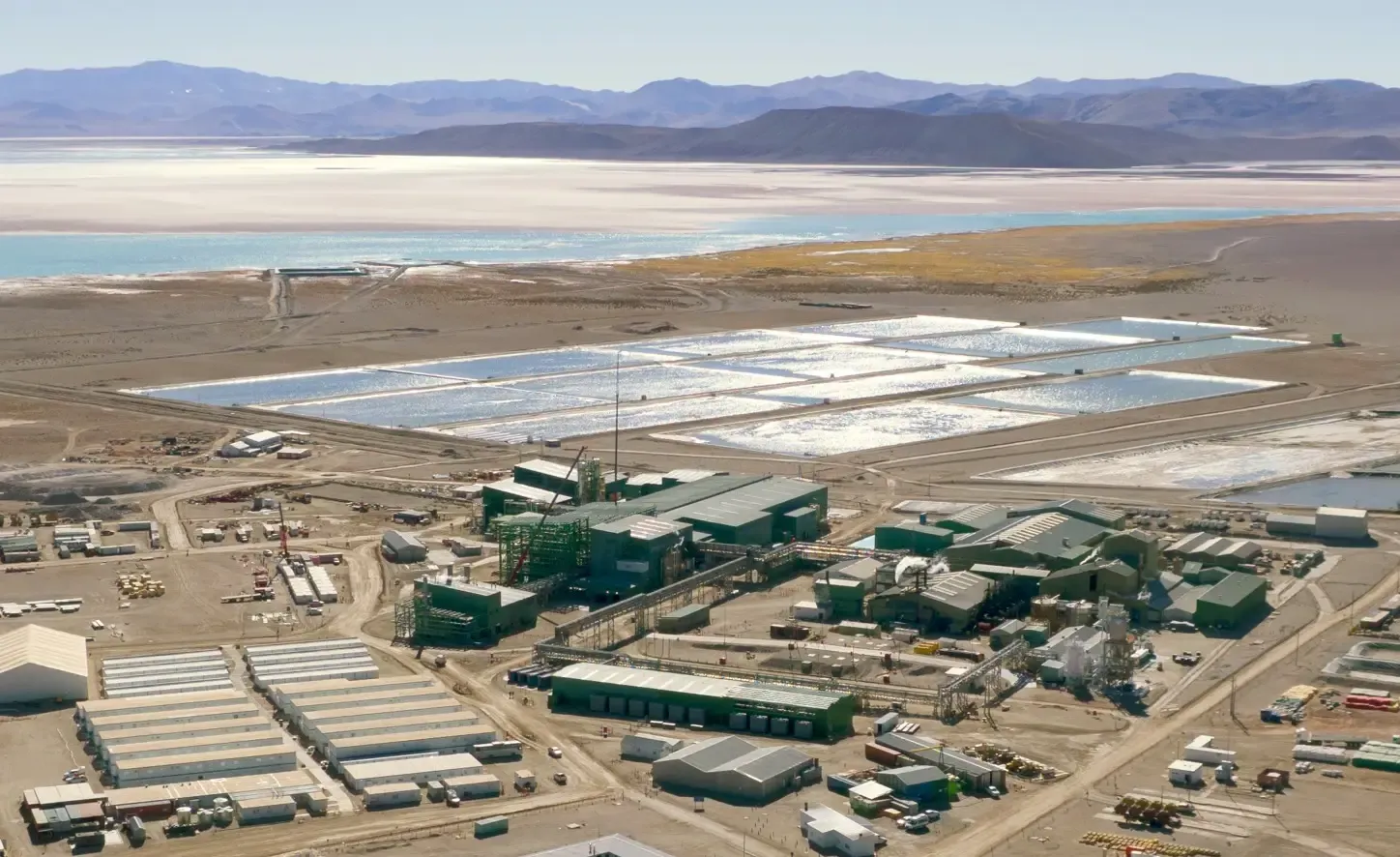
Against this backdrop, Argentina continues to expand its pipeline of large-scale lithium investments. Under the country's Large Investment Incentive Regime (RIGI), the national government has approved the expansions of Cauchari-Olaroz, Sal de Oro, Rincón and Fénix, recently joined by LIEX S.A.'s Tres Quebradas (3Q) project in Fiambalá, Catamarca. The project represents an investment of US$709 million to develop a plant with an annual production capacity of 40,000 tonnes of lithium carbonate, while generating 4,406 direct and indirect jobs and potentially contributing approximately US$400 million per year in exports. With this latest approval, the RIGI now includes 21 approved projects, representing US$46.7 billion in committed investment.
The recovery in lithium prices has already begun to materialize. Cochilco's latest Bi-Monthly Lithium Market Report, published by Reporte Minero, shows that battery-grade lithium carbonate CIF Asia reached US$24,000 per tonne in May, its highest level since December 2023.
The Chilean agency attributes the rebound primarily to temporary supply disruptions occurring simultaneously in China, Australia and Zimbabwe.
In China, the temporary suspension of the Jianxiawo mine, associated with CATL, together with stricter regulations affecting lepidolite operations in Jiangxi Province, reduced the availability of raw materials. At the same time, Zimbabwe's decision to restrict exports of unprocessed ore began affecting feedstock flows to Asian refineries, while Australia recorded lower production expectations at Greenbushes and scheduled maintenance at the Kwinana refinery.
As a result, average lithium carbonate prices during the first five months of 2026 reached US$19,358 per tonne, nearly double the average recorded throughout 2025.
The behavior of futures markets also confirms that the recovery continues to coexist with elevated volatility. On the Guangzhou Futures Exchange (GFEX), prices approached US$30,000 per tonne during May before partially correcting.
According to Cochilco, the industry is beginning to move beyond the severe oversupply that characterized the past two years and is establishing a price floor near US$17,500 per tonne.
Although prices are showing signs of recovery, the industry's most significant transformation is taking place beneath the surface: the challenge is no longer simply to produce more lithium, but to develop competitive value chains capable of sustaining long-term growth.
However, the market's recovery cannot be explained solely by short-term factors. Beneath it lies a much deeper transformation linked to the industry's very structure.
Thunder Said Energy highlights that ten companies currently account for nearly 80% of global lithium production, the result of an intense wave of corporate consolidation. Among the most significant transactions, the consultancy cites the merger between Orocobre and Galaxy to create Allkem, which later merged with Livent to form Arcadium Lithium. The company was ultimately acquired by Rio Tinto in 2025 for approximately US$6.7 billion.
This trend aligns with the conclusions presented by PwC in its report Mine 2026: Ambition to Action, which argues that the mergers and acquisitions market has become increasingly selective, focusing almost exclusively on assets linked to critical minerals.
"Capital allocation discipline has become just as important as geological quality," PwC notes, explaining that major mining companies now prioritize projects with advanced permitting, regulatory stability and available infrastructure over simply large resource bases.
The report also identifies a conceptual shift of profound significance for the lithium industry.
Over the past decade, competition focused primarily on discovering new resources and increasing production. Today, according to PwC, the real competitive advantage lies in the ability to transform those resources into higher-value industrial value chains.
In other words, the industry's center of gravity has begun shifting from extraction toward processing, refining, battery materials manufacturing and recycling.
China provides the clearest example of this strategy. Although it does not hold the world's largest reserves, it dominates a significant share of global critical minerals processing and produces more than half of the world's supply of 18 strategic minerals, capturing a much larger share of the economic value generated throughout the supply chain. This reality is driving strategic shifts in numerous countries.
Chile is advancing its National Lithium Strategy, based on Special Lithium Operating Contracts (CEOLs), with the objective of combining state participation with private investment while incorporating Direct Lithium Extraction (DLE) technologies.
The United Kingdom, meanwhile, is pursuing an industry centered on refining, recycling and technology development, despite lacking large geological reserves.
Argentina appears to be one of the countries best positioned to capture part of this new cycle. However, both PwC and GEM Mining Consulting warn that resource availability alone no longer guarantees competitiveness.
In its report "Perspective 2: From Geographic Proximity to Strategic Value," GEM Mining Consulting argues that the traditional vision of isolated mining operations should give way to a model based on mining districts. "Competition will no longer take place between individual projects, but between territories capable of generating synergies," the report states.
The study introduces the District Potential Value Index (DPVI), a framework that incorporates variables such as shared infrastructure, water availability, corporate coordination, access to energy, operational continuity, regulatory stability and social license to operate.
From this perspective, Argentina stands out for combining strong economic potential with solid environmental performance across its lithium districts. However, GEM emphasizes that this advantage will only materialize if the country succeeds in consolidating stable institutional conditions and developing infrastructure consistent with the scale of planned investments.
This assessment is consistent with recent market developments. The future of lithium no longer depends exclusively on the availability of resources beneath a salt flat. It also requires roads, power transmission lines, logistics capacity, chemical processing, financing, specialized human capital and territorial governance.
Demand is also evolving.
While electric mobility remains the largest source of lithium consumption, Cochilco notes that the fastest-growing segment is now Battery Energy Storage Systems (BESS), whose global demand is expected to increase by more than 160% by 2030, driven by the expansion of renewable energy and, particularly, by the rapid growth of artificial intelligence data centers.
This trend adds another layer of structural demand to a market where supply continues to face regulatory delays, higher capital costs and increasingly stringent environmental requirements.
The conclusion shared by all four reports is remarkably consistent: lithium remains a strategic mineral, but the rules of the industry have changed. The coming decade will not be defined solely by who holds the largest reserves, but by who succeeds in transforming those resources into competitive operations integrated into higher-value industrial supply chains and supported by territories capable of sustaining long-term investment.
In this context, Argentina has an exceptional opportunity. Yet the challenge is no longer simply to produce more lithium carbonate. The real race is to build a mining and industrial ecosystem capable of transforming one of the world's largest lithium resource bases into a lasting competitive advantage within the new geopolitics of critical minerals.