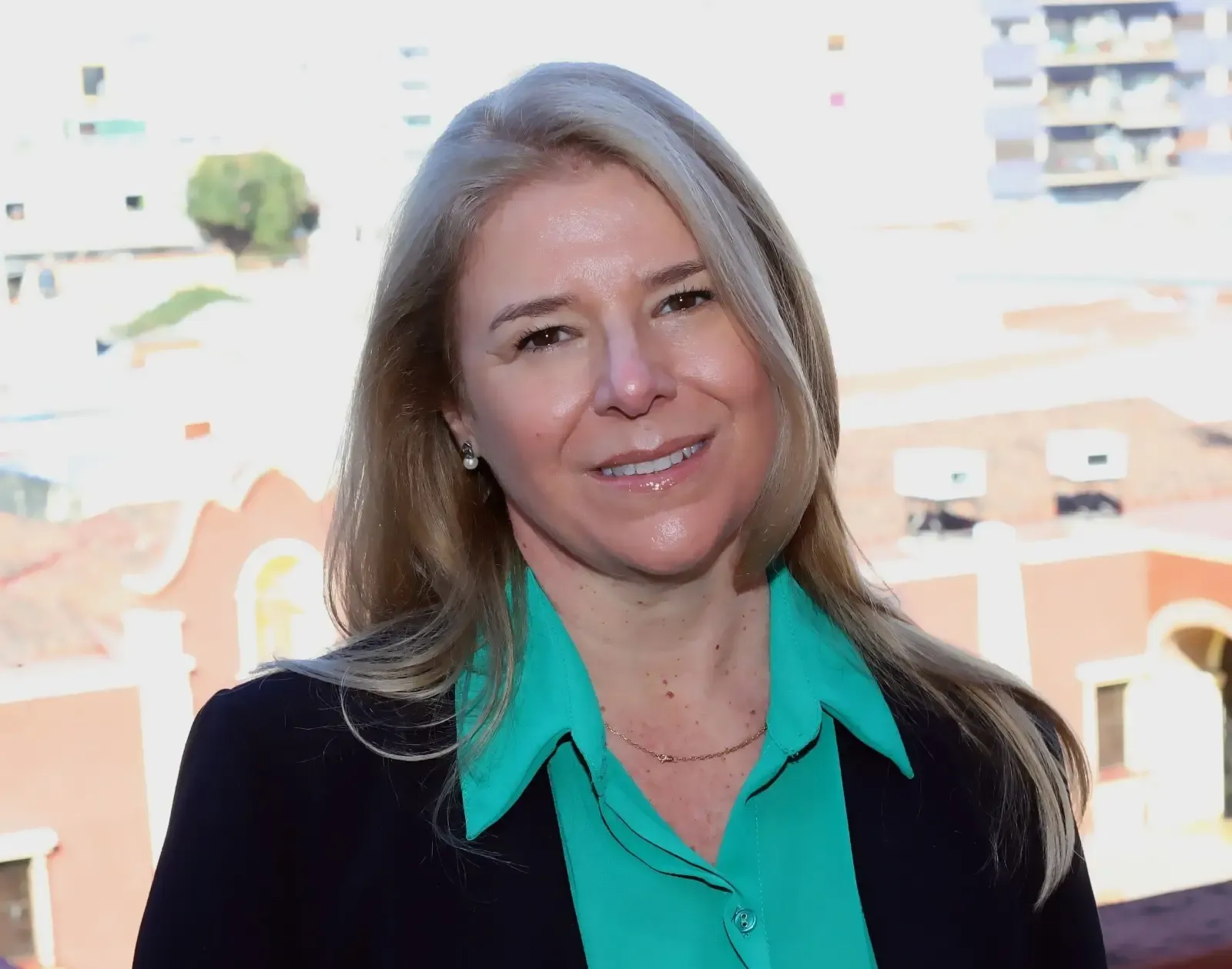
A leader in sustainability and ESG, and former Argentina’s Secretary of Mining Policy (2018–2019), Dr. Carolina Sánchez analyzes one of the main challenges facing the expansion of Argentina’s mining industry: talent development. Sánchez argues that the answer does not lie solely in increasing the number of university professionals, but rather in developing new technical skills, strengthening continuous training and consolidating coordination among government, companies and universities so that Salta can become a hub for knowledge, innovation and specialized mining services.
By Panorama Minero
What responsibility does the training system currently have in supporting the expansion of mining activity and preventing talent demand from exceeding the province’s capacity to respond?
The entire training system, at its different levels, is being challenged because the demand for talent already exceeds the capacity of institutions to respond, and not only in the province of Salta.
I believe the challenge lies in understanding the diversity of talent required by the sector, because it is not only about university professionals. It also involves territorial coordinators, micro-logistics agents, skilled trades—some of them highly specialized due to the use of new materials and technologies—tax specialists, environmental analysts with skills in environmental sampling, among others.
At UCASAL, we are convinced that, both within this broader context and in terms of the specific demands of Argentina’s mining sector, training must be continuous and skills certification is the way forward. This must be combined with agility in adapting university degree curricula and facilitating professional transitions for people who are extending their working lives due to demographic changes and who require new skills not provided by their original qualifications.
Which professional, technical and skilled-trade profiles are in greatest demand, and how does IDeMiS contribute to training these human resources?
The profiles required by the sector are diverse and dynamic. Based on studies conducted several years ago by IDeMiS on skills gaps, we have been monitoring changes in the profiles required, as these evolve alongside the maturation of mining projects in Argentina.
Today, more specialized profiles are required in community relations, where the traditional view of corporate social responsibility is shifting toward investment and the long-term documentation of participation and consultation processes, as well as toward a more active approach to social risk and the monitoring of potential conflicts, enabling interventions to be managed intelligently.
Other profiles we have identified as critical include geologists with data management and new technology skills, both for mineral exploration and resource modeling—not only focused on minerals, but fundamentally on water, understanding hydrological cycles and performing the calculations required for the use of this resource.
There is also strong local demand for administrative capabilities related to construction processes: technical management of assembly works, procurement, supplier platform management, contract analysts and the commissioning of technologies on site—and by this I mean sites where projects operate under extreme conditions.
In every case, there are also cross-cutting issues such as knowledge and implementation of new industry standards and the development of a safety culture.
Mining is evolving rapidly in terms of technology, environmental management and operational practices. How can training programs remain up to date in an industry undergoing constant transformation?
IDeMiS is an academic institute that also brings together the public sector, private sector and civil society. By its very nature, it is a forum for dialogue that allows us not only to discuss real challenges, but to do so in a safe environment where we can deepen our analysis of industry dynamics, conduct research, implement scientific cooperation projects and establish links with universities in mining countries across the region and around the world.
Institutionally, we have a Vice-Rectorate for Continuing Education, which is already working on innovative training programs focused on skills and digital assurance systems for those certifications.
Through our distance education system, we reach the entire country and increasingly Latin America. We have more than 120 locations across Argentina, which we offer as a platform to extend IDeMiS to all mining provinces, while other UCASAL institutes serve provinces facing challenges related to the development of other industries, including energy, O&G and agriculture of the future.
Mining development requires coordination among companies, government, universities and educational institutions. How do you assess this coordination in Salta, and which areas still need to be strengthened to build a more robust training ecosystem?
In Salta, we take advantage of the fact that “we all know each other,” and through educational institutions and professional relationships we build interinstitutional links. These are becoming increasingly fluid because the scale of the needs is very large, and only through coordination, sharing best practices and collaboration will we be able to respond to market demand.
The provincial government also relies on evidence generated by knowledge centers such as research institutes—many of them co-financed by CONICET—and the geological survey, and demonstrates an open and collaborative approach toward academic and scientific institutions.
Sustainability is a central pillar of modern mining. What role do topics such as environmental management, community relations, safety and innovation play within the training programs promoted by IDeMiS?
These types of content are the differentiating factor of the training programs developed by IDeMiS, which in many cases are implemented together with the University’s Academic Units and with universities from countries with a long mining tradition.
We are convinced that we must take advantage of the existing knowledge and experience of countries where mining is a mature economic sector, adopt best practices, but above all learn from historical mistakes in order to continuously improve.
Looking ahead to Salta’s mining industry over the next ten years, which capabilities should begin to be developed today so that the province can consolidate its position not only as a mineral producer, but also as a generator of knowledge, innovation and specialized human capital?
It is an interesting question because some of the capabilities that will be critical in ten years are already in demand, depending on the maturity of individual projects.
I believe that all the mining industry demands we mentioned earlier have a corresponding need for industrial capabilities, assembly, last-mile product finishing and specialized service offerings. This requires technical and commercial training, together with the ability to provide timely responses at the sites where projects are operating, because stopping a mining process due to an equipment failure or breakdown involves extremely high costs and a complex recovery process.
Ultimately, the objective is to develop the full capacity of Argentina’s domestic industry and services that support mining activity, which are also the largest source of indirect employment generated by the sector and constitute the capital needed to build long-term prosperity once a deposit is depleted and new opportunities emerge.
Social capital is a highly attractive asset for foreign investment in industries or economic activities that may still be at an early stage today—or that we may not even have imagined yet.