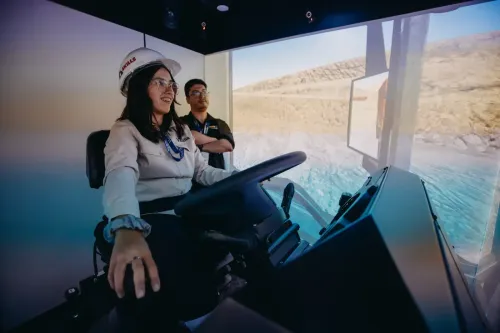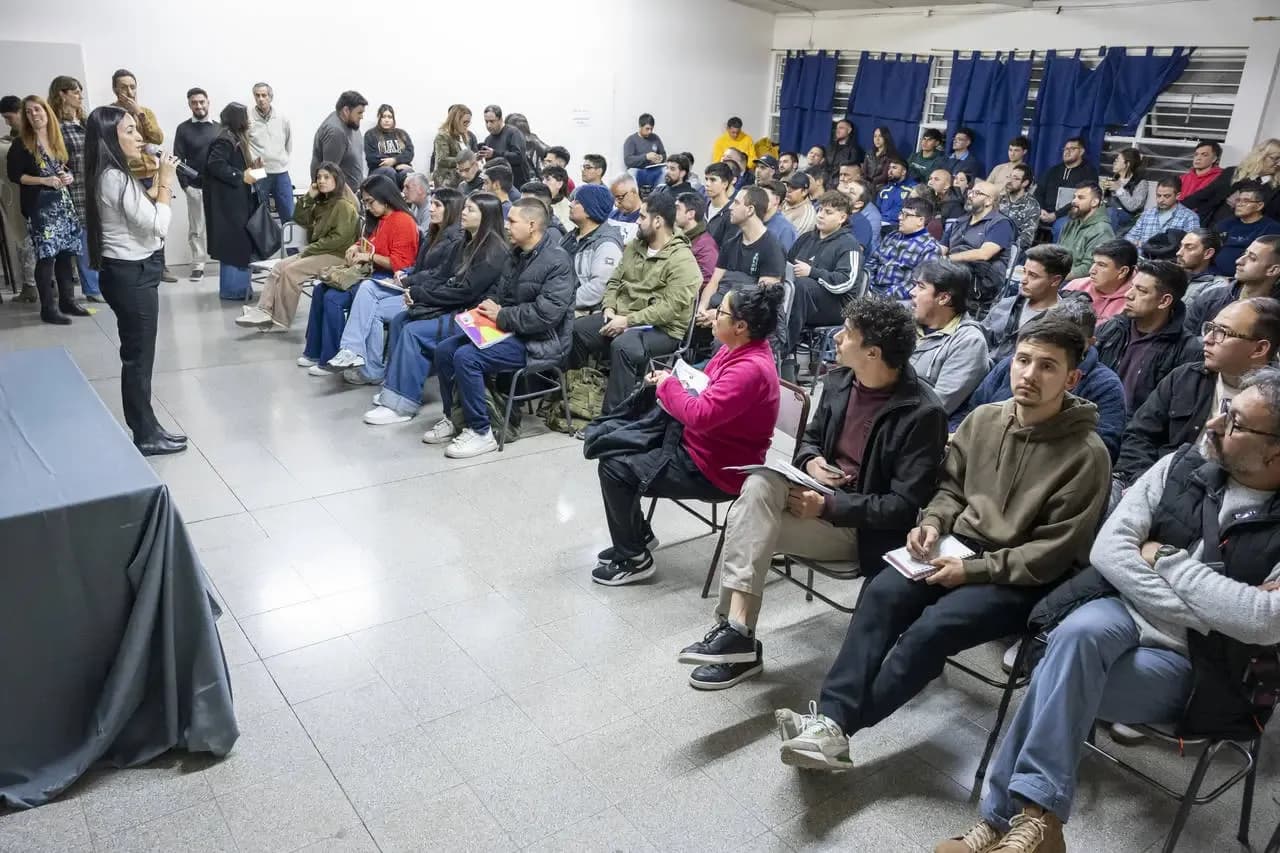
The course began at Higher Technological Institute No. 9-019 after receiving more than 1,000 applications. The program combines technical content and practical training at drill sites to address one of the main demands of the mining industry.
Mendoza has launched a mining driller training program, which received more than 1,000 applications and began with an initial cohort of 140 students selected according to technical criteria. The course is being offered at Higher Technological Institute No. 9-019 (Insutec) and seeks to prepare specialized personnel for one of the core tasks in mineral exploration: drilling.
By Panorama Minero
“Today, 140 students are beginning this professional training program, which is so important for Mendoza. It is a joint initiative between the government and the private sector, since this training includes a significant practical component carried out at drill sites,” explained Mariela Ramos, Director of Higher Education.
The course structure combines technical preparation with practical training. This component was one of the criteria considered when organizing the program, since drilling work requires equipment handling, operational knowledge and the application of safety protocols under real working conditions.
Pablo Aceña, Rector of Insutec, highlighted the level of interest and the design of the training program. “The teaching teams, together with the participating companies, have developed a strong training plan with a major emphasis on practical work. The selection of the first 140 students followed technical training criteria.”
Organizers indicated that those who were unable to join this cohort could be incorporated into an expansion of the program, depending on the level of educational demand recorded.
A Profile Required in Exploration
Drilling provides direct information about the subsurface, allows samples to be recovered and supports the geological interpretation of an area. For this reason, the availability of trained personnel is an operational requirement for exploration campaigns carried out in Mendoza, both at copper projects and other mining initiatives.
Ponce linked the number of applicants to the need to develop trained workers for an industry that is beginning to expand its field programs. “This program has a quality certification and grants a qualification,” Ponce said.
The participation of companies and industry organizations seeks to align educational content with project requirements, particularly in terms of practical training, safety and applied knowledge. The involvement of Women in Mining Argentina also adds a dimension related to the participation of women in technical roles within the industry.
Training as Part of a Broader Agenda
The driller training course forms part of a provincial agenda aimed at expanding mining training opportunities and preparing human resources for the different stages of the industry.
Within this framework, Impulsa Mendoza is developing the “Impulsando el Conocimiento” program, with free, asynchronous courses on sustainability, capital markets, introduction to mining, geology, exploration and project development. The program is aimed at students, professionals, entrepreneurs, suppliers and small and medium-sized enterprises seeking to become involved in the mining value chain.
During 2026, the company also promoted in-person programs for suppliers and entrepreneurs in Uspallata, organized initiatives to strengthen local capabilities and advanced training activities aimed at improving the preparedness of Mendoza companies to meet the technical, environmental and safety standards required by the industry. The Directorate of Mining also reported that a provincial call received 138 proposals to form part of a training agenda aimed at local suppliers.
The agenda also includes the expansion of the “Nuestro Suelo, Maravillas Minerales de Mendoza” training program, which was initially aimed at teachers and added content on sustainability, environmental monitoring and employability, while also opening participation to professionals.
The New Mining Engineering Degree Program
In addition to these courses and training programs, the National Technological University, Mendoza Regional Faculty, has created a Mining Engineering degree program. The program, corresponding to the 2026 curriculum, has a duration of five years and includes an intermediate qualification as a University Technician in Mining.
The degree program was declared of interest by the Mendoza Chamber of Deputies and incorporates content related to the efficient management of water and energy, the circular economy, process digitalization and so-called Mining 4.0.
The intermediate qualification would allow students to enter the workforce earlier, while the degree program aims to train professionals for the exploration, evaluation, design and operation stages of mining projects.
Within this framework, driller training represents the operational level of a structure that also requires technicians, geologists, engineers, environmental specialists, safety professionals and qualified suppliers. Mendoza is building this base of capabilities through programs of varying duration and scope, ranging from specific courses for fieldwork to university degree programs.