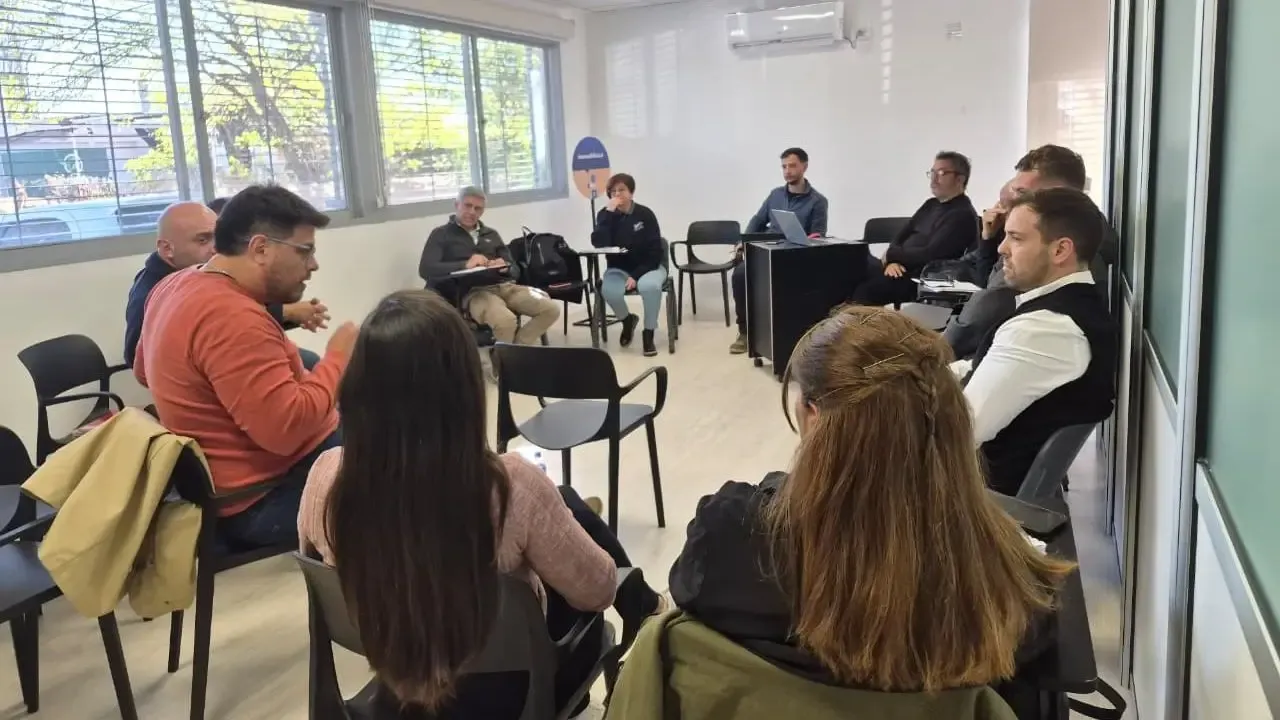
The mining working group of the National Prevention Program by Branch of Activity (ProNaPre) agreed on three priority areas at its September 14 meeting in Mendoza: the exploration stage in first- and second-category mines, activities related to social mining, and working practices in third-category mines. The meeting brought together representatives from the Superintendency of Occupational Risks (SRT), Mendoza’s Undersecretariat of Labor and Employment, the provincial Directorate of Mining, business chambers and industry unions.
By Panorama Minero
The mining working group is not a long-established forum in the province. It was launched on September 2, together with two other quadripartite commissions dedicated to hydrocarbons and cannabis and hemp. With these additions, ProNaPre reached 62 working groups across the country. In Mendoza, they join the viticulture commission, the only one that had already been operating in the province, with seven years of activity.
The program was created by SRT Resolution 770/2013 and organizes its work by productive activity under a quadripartite structure that brings together the national government, trade unions, business chambers and occupational risk insurers, with the possibility of inviting provincial and municipal agencies, universities and professional associations. Its outputs include risk maps, outreach materials and training recommendations, and all conclusions are adopted by consensus among its members. The commission does not issue regulations or have enforcement powers: what it defines is not enforceable in itself.
This framework explains the nature of the meeting, which was the second since the group was launched and was aimed at setting the agenda rather than producing specific instruments.
The Three Priority Areas and the Segments They Target
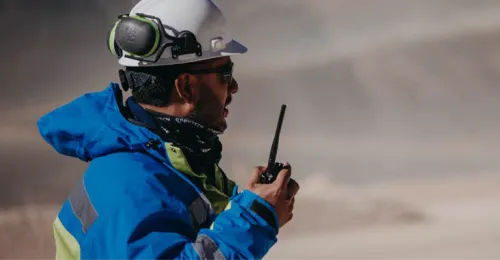
The selection of priority areas organizes the work around the segments of the industry that currently account for employment in Mendoza. Exploration in first- and second-category mines covers the stage in which most of the province’s project portfolio currently stands, with drilling campaigns operated by contractors at remote and high-altitude camps.
The other two areas—social mining and third-category mines—cover segments with a more fragmented business structure. In the case of third-category mines, these include dimension stone and aggregates, whose exploitation rights belong to the landowner under the Mining Code.
Representing the Directorate of Mining were Director Jerónimo Shantal; Deputy Director Jimena Ponce; and Lucas Domínguez, from the Environmental Mining Police.
Shantal said that the forum makes it possible to “address occupational safety from a comprehensive perspective” and “build solutions jointly among the State, workers and the productive sector.” Undersecretary of Labor and Employment Rodrigo Herrera said that joint work enables “the identification of risk situations” and the promotion of “common criteria among the different stakeholders involved in mining activity.”
What the Available Data Can and Cannot Measure
The occupational accident reports published by the SRT are organized by branch of activity. The applicable statistical category is mining and quarrying, which groups hydrocarbons, metalliferous mining and dimension stone into a single aggregate, without breakdowns by mine category or province in the generally published series.
The material released regarding the meeting did not include accident statistics for Mendoza’s mining sector or specify the basis on which the three priority areas were selected.
In the case of social mining, the scope of the occupational risk system depends on the existence of registered employment relationships covered by an occupational risk insurer, a condition that cannot be assessed from the available material.
Prevention Built Around an Industry Still Taking Shape
The launch of the three commissions took place within the productive diversification strategy promoted by the Provincial Government, with mining and hydrocarbons among the sectors carrying the greatest weight in that strategy.
This sequence leaves the mining working group addressing an industry whose first-category segment is still predominantly at the exploration stage: the priorities defined are focused on the pre-production stage and on segments that are already operating outside it.