The first RIGI Business Roundtable, held in Rosario, brought together representatives of 43 major investment projects and generated 3,300 business and networking meetings. With the participation of the national government, governors from mining provinces, and industrial leaders from across the country, the event brought to the forefront a debate that is increasingly moving beyond provincial boundaries as mining gains prominence in Argentina's national productive agenda: how to turn investment in mining and energy into contracts for Argentine companies.
By Panorama Minero
Argentina's mining industry is expanding its influence across the country's productive structure. Supplier development, historically concentrated in provinces hosting mining operations and projects, is taking on a broader federal dimension, as industries from other jurisdictions seek to enter mining supply chains. These relationships are currently shaped by the principle of "local-first procurement," which prioritizes suppliers according to their proximity to mining operations, beginning with communities and regions surrounding the projects before progressively extending to other jurisdictions.
In this context, the Business Roundtable held Thursday in Rosario provided a concrete example of growing integration between mining companies and suppliers, while offering a glimpse of what could emerge as major copper mines come online and lithium development continues. If the anticipated mining boom materializes, the industry will require a larger supplier base, new partnerships between mining and non-mining provinces, and the participation of SMEs and companies that have had little or no direct involvement in mining to date.
This expansion will also have implications for the labor market, workforce training, and the availability of skilled professionals. Roberto Cacciola, president of the Argentine Chamber of Mining Companies (CAEM), addressed the issue during the event, warning that each major copper project could require between 6,000 and 7,000 workers during construction alone, illustrating the scale of the challenges facing the industry in the coming years. Argentina currently has no commercial-scale copper production, but could have five or more mines operating after 2030, alongside continued lithium development. That horizon may appear distant, yet it is fast approaching in terms of supplier development, training, and the preparation of specialized human resources.

43 Major Projects and 3,300 Business and Networking Meetings
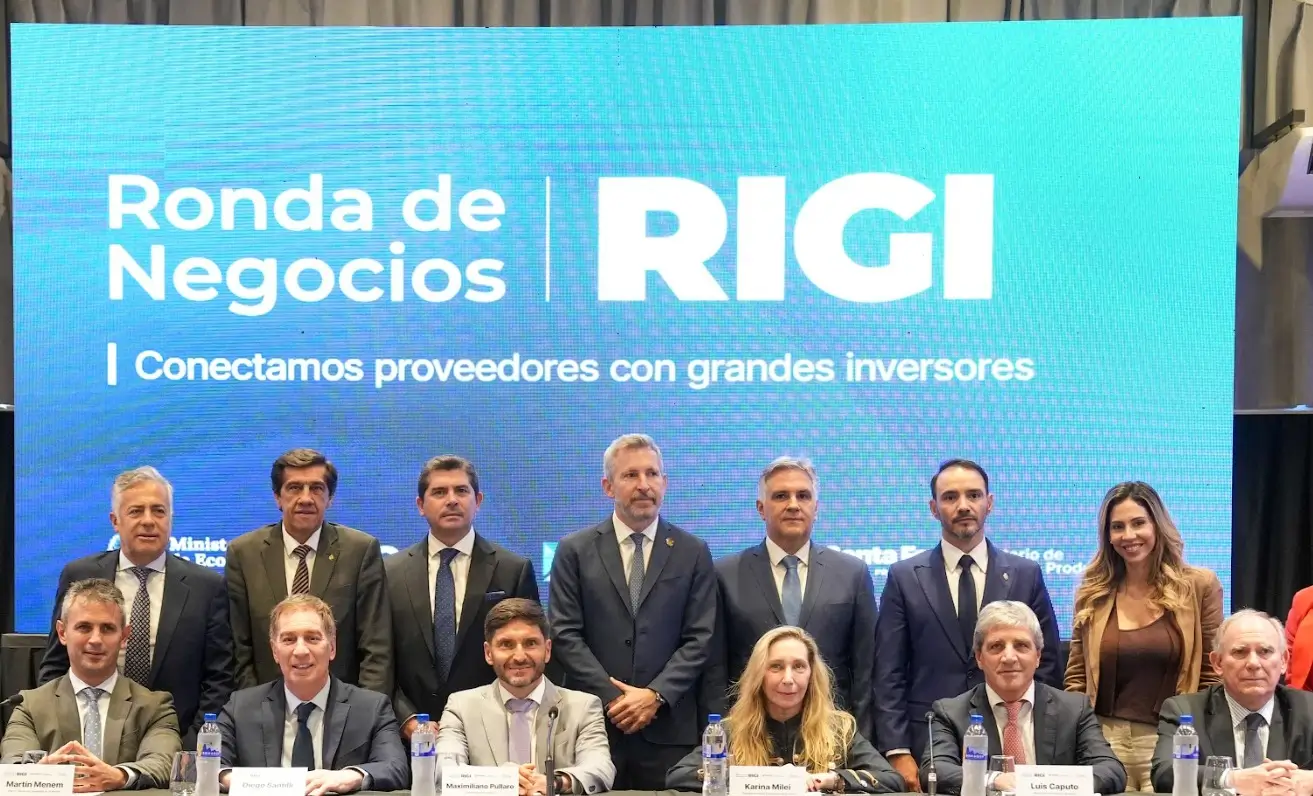
The event was organized by Argentina's Ministry of Economy in partnership with the Santa Fe provincial government and held at La Fluvial in Rosario. It brought together 4,500 participants representing 1,800 companies, which had the opportunity to engage with representatives of 43 major mining, energy, and infrastructure projects.
According to the final figures released by the Santa Fe government, the event generated 2,500 business meetings and 800 networking sessions, involving suppliers from 16 economic sectors.
The turnout reflected a shift in the scale of the industry's debate. The discussion is no longer limited to the employment and commercial activity generated by a mine within its host province. It now encompasses the development of supply chains connecting different regions of Argentina and drawing on existing industrial, technological, and logistics capabilities.
The participation of Economy Minister Luis Caputo, Presidential General Secretary Karina Milei, Chief of Cabinet Diego Santilli, and governors representing different productive regions underscored the growing importance of supplying large-scale investment projects within the national economic agenda.

The institutional dimension also included the second Federal Mining Roundtable, following its inaugural meeting in May during Expo San Juan Minera, organized by Panorama Minero. Industry organizations represented at the event included the Argentine Industrial Union (UIA), the Argentine Association of Metallurgical Industrialists (ADIMRA), the Argentine Chamber of Mining Companies (CAEM), the Argentine Chamber of Mining Suppliers (CAPMIN), the Lithium Roundtable, and the Copper Roundtable.
From Local Procurement to a Nationwide Supplier Network
One of the central issues emerging from Rosario was the relationship between sourcing goods and services from companies located near mining operations and bringing suppliers from other Argentine provinces into the value chain.
Prioritizing local procurement remains a fundamental component of mining development, particularly because of its impact on employment, services, and the economies of communities connected to mining projects. However, large-scale investments also require equipment, goods, and technical solutions that are not always available within the immediate areas of influence.
Meeting those needs through companies based elsewhere in Argentina could strengthen industrial integration, complement local supply, and reduce dependence on certain imported goods. It could also encourage new business partnerships, the creation of industrial clusters, the standardization of technical protocols, and the transfer of technology and knowledge.
This model encompasses several levels of procurement: companies established in communities close to mining projects, suppliers operating at the provincial level, and specialized national firms capable of meeting more complex technical, volume, or technological requirements.
The question is how to expand national participation without displacing opportunities that can be met by businesses in mining provinces. Coordination between these different supplier groups becomes particularly relevant for projects requiring goods and services over many years, during both construction and operation.
The RIGI establishes a specific framework for this discussion. Under the regime, purchases from local suppliers must account for at least 20% of the total amount allocated to project suppliers, subject to the conditions established by the regulations. The requirement applies during both construction and operation, with compliance assessed every two years.
An important distinction is that, under the national regime, local supplier status is not determined exclusively by whether a company is based in the province hosting the investment. The definition includes companies incorporated and domiciled in Argentina that meet specific ownership and control requirements.
Consequently, the RIGI's definition of a local supplier is not equivalent to the provincial or community-level procurement priorities incorporated into supplier development policies at many mining operations.
The regulations also consider price, availability, quality, and delivery times when assessing domestic supply. Industrial competitiveness and the ability to meet actual procurement requirements will therefore play a decisive role in expanding contracts awarded to Argentine companies.
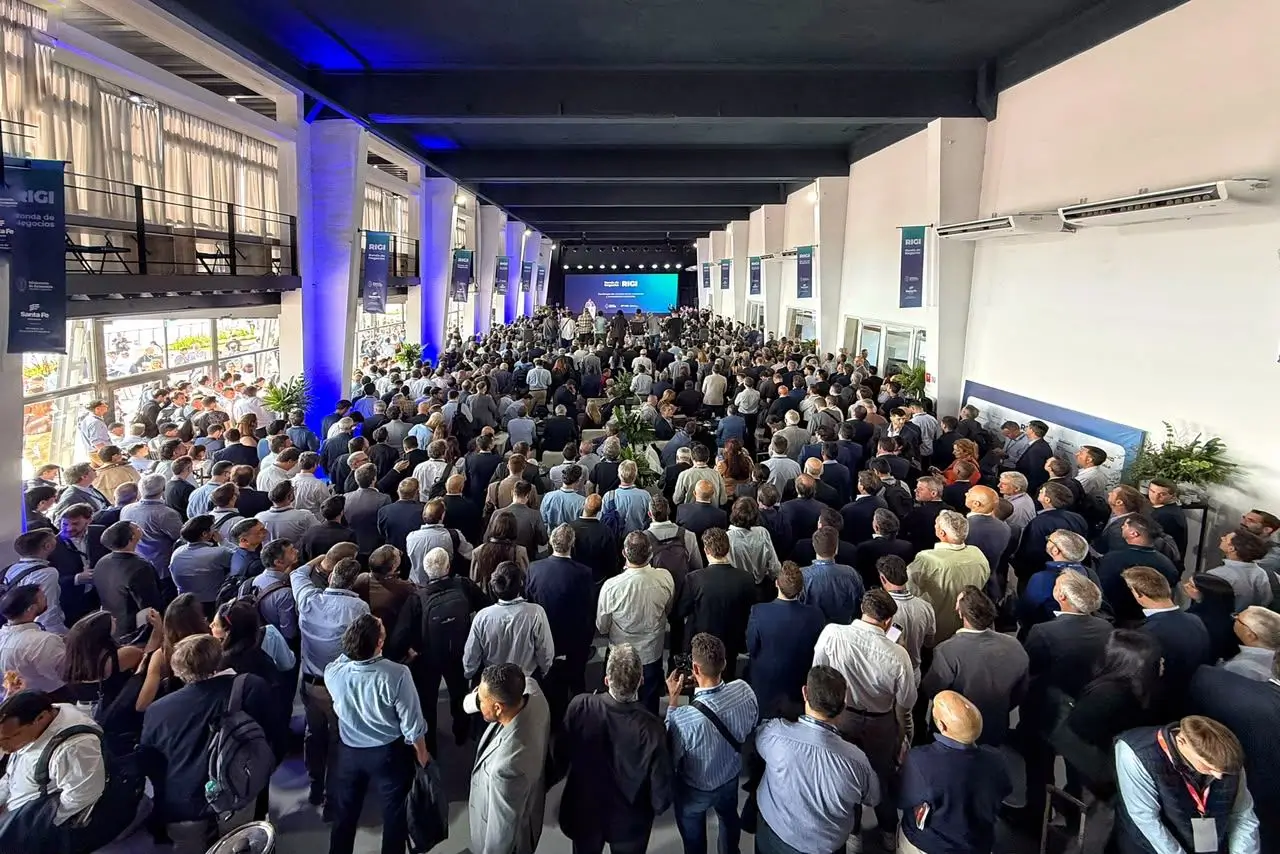
Santa Fe Seeks to Connect Its Industrial Capabilities With Mining Growth
Rosario's selection as the venue reflected a specific productive opportunity. Although Santa Fe is not one of Argentina's main metal-mining provinces, it has an industrial base capable of participating in planned investments across the Andes and the country's northwest.
Of the 1,800 companies participating in the event, approximately 500 were based in Santa Fe. The province aims to capitalize on its experience in metalworking, equipment manufacturing, engineering, transportation, industrial services, and logistics—capabilities developed over decades around agriculture and other manufacturing activities.
During the opening session, Governor Maximiliano Pullaro summarized that ambition: "We want mining exports to pass through Santa Fe. And if the industry needs specialized suppliers, we want them to be able to call on us."
His position involves two distinct objectives. The first is enabling Santa Fe's industries to access new demand for goods and services. The second is expanding the province's participation in the logistics infrastructure supporting mineral and energy exports.
On the industrial front, Santa Fe's Minister of Productive Development, Gustavo Puccini, highlighted the province's network of more than 6,400 companies, noting that Santa Fe-based firms already supply Vaca Muerta and mining operations in Salta, Catamarca, Jujuy, San Juan, and Mendoza.
Experience in agricultural machinery, component manufacturing, metal structures, and technical services provides a foundation for meeting new demand. Nevertheless, mining has specific requirements involving certification, safety, traceability, quality, and operational continuity.
Pullaro also linked mining development to Argentina's broader infrastructure needs. His priorities included expanding roads, energy connections, ports, and airports, as well as ensuring greater gas availability for industrial users.
The logistics debate is particularly relevant to copper and lithium projects. The location of deposits, available transportation alternatives, existing infrastructure, and destination markets will determine which corridors are competitive. Santa Fe's ambition to capture part of those cargo flows will need to be supported by concrete solutions in terms of costs, connectivity, and operational capacity.
Beyond suppliers and workforce training, another strategic decision remains: which routes Argentina's minerals will take to international markets, and what infrastructure will be built around them. Exporting through the Pacific via Chile or through the Atlantic presents different implications for logistics costs, destination markets, regional integration, and supplier development.
The choice of export corridors, which also involves geopolitical considerations, will influence where new investments, services, and industrial opportunities become concentrated. To a significant extent, the mining industry's real economic spillover will also depend on where and how the infrastructure needed to sustain its growth is developed.
Caputo Defends Economic Policy Continuity and Links Investment to Foreign Currency Inflows
Economy Minister Luis Caputo's participation brought a macroeconomic dimension to the event, directly connected to the evolution of mining investment.
Caputo emphasized the need to maintain the government's economic policy and macroeconomic stability to preserve investor confidence.
"We cannot deviate from this path, not even by a centimeter. We have a track record that means even the slightest deviation immediately raises doubts. We must continue without shortcuts," he stated during his remarks.
Caputo also argued that planned investments would strengthen foreign currency availability and ease exchange-rate pressures in the coming years. In this context, he maintained that Argentina had historically constrained sectors in which it holds comparative advantages, while defending the conditions introduced to attract long-term capital.
These statements are particularly relevant to mining, an industry characterized by lengthy development periods, high capital intensity, substantial infrastructure requirements, and investment recovery horizons spanning decades.
However, announced investments, actual capital expenditures, and future foreign currency earnings from exports are not interchangeable. The sector's ability to structurally increase dollar availability will depend on project execution, construction schedules, production start-up, and international market conditions.
Regarding investment incentives, Diego Santilli called for advancing an expanded version of the RIGI, referred to as the "Super RIGI," to attract additional capital.
"We need to move forward with this framework because it will bring investments that are currently not coming to Argentina. It is aimed at a segment that is not yet present in our country and could involve much larger amounts," Santilli said.
The proposed Super RIGI would expand tax, customs, and foreign exchange incentives to attract investments of at least US$1 billion in industries not yet developed commercially at scale in Argentina, including battery manufacturing, green hydrogen, and emerging technologies. The proposal provides for a 15% corporate income tax rate and 30 years of regulatory stability.
Mining Governors: Infrastructure, Investment, and Community Participation
The sectoral discussions also featured governors from mining provinces, including Carlos Sadir of Jujuy, Marcelo Orrego of San Juan, Raúl Jalil of Catamarca, and Alfredo Cornejo of Mendoza.
Their remarks addressed different aspects of a common challenge: developing large-scale projects while ensuring that mining activity generates economic benefits in the territories where mineral resources are located.
In Jujuy, the relationship between mining, communities, and suppliers is particularly significant given the location of lithium operations and the involvement of Indigenous communities in project areas of influence. Sadir emphasized the development of local businesses and workers, along with the importance of reaching agreements that allow mining activity to move forward.
San Juan focused part of the discussion on the conditions required to develop new copper projects. Orrego highlighted macroeconomic stability and regulatory predictability, while addressing infrastructure needs associated with projects such as Vicuña and the transport corridors connecting mining areas.
Catamarca brought environmental, social, and economic oversight into the discussion, together with the need for investment to improve living conditions in local communities. Mendoza, meanwhile, presented advances in the provincial approval process for mining initiatives and its strategy for attracting new investment.
Despite differences among provinces, the discussions highlighted the need for the expansion of national supply chains to coexist with the procurement and business development strategies pursued by each mining jurisdiction.
From Investment to Contracts: The Next Challenge for SMEs
The scale of mining projects under development points to procurement needs ranging from relatively standardized services to highly complex industrial equipment.
During construction, opportunities include earthworks, civil engineering, roads, camps, electrical installations, metal structures, transportation, catering, and industrial assembly. Once operations begin, demand expands to maintenance, spare parts, instrumentation, automation, processing inputs, environmental management, and specialized services.
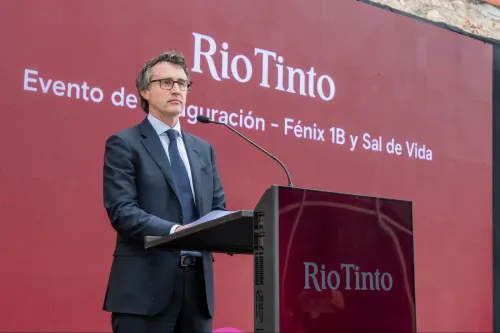
The Rosario event enabled Argentine companies to obtain information on technical requirements and procurement schedules. Mining operators participating in procurement and networking activities included Vicuña, Rio Tinto, Glencore, Barrick, McEwen Copper, and Eramet.
Growth in Argentina's copper project pipeline is among the factors likely to increase demand. Projects such as Vicuña, Los Azules, and El Pachón in San Juan, together with MARA in Catamarca, represent large-scale investments that will require infrastructure, equipment, and services over extended periods.
MARA's recent admission to the RIGI, formalized through Resolution 1854/2026, added another major project to this landscape. The development involves integrating the Agua Rica deposit with existing infrastructure at Alumbrera, creating opportunities to make use of previously developed facilities and operational capabilities.
However, bringing new suppliers into mining value chains depends on more than demand alone.
For companies that have historically served other industries, entering the mining sector may require investment in certifications, process adaptation, workforce training, quality management systems, and the financial capacity to fulfill larger contracts.
Additional challenges include payment terms, guarantees, supplier qualification requirements, and the need to maintain reliable deliveries under demanding geographic and operational conditions.
The event therefore included financing and technical assistance sessions involving Banco Nación, BICE, provincial financial institutions, and the National Institute of Industrial Technology (INTI), among other organizations.
Argentina's Ministry of Economy reported that projects approved under the RIGI already had more than 1,200 suppliers of goods and services. It also stated that 86% of investments were directed toward Argentine companies, according to its own records.
The scope of this latter indicator requires distinguishing between actual procurement contracts and investment commitments. On its own, it does not establish how much value is effectively added within Argentina.
In this respect, Rosario's results provide an indication of commercial interest, but not yet of actual contracting: the 3,300 meetings recorded do not necessarily translate into signed agreements, purchase orders, or confirmed additional investments.
The outcome of those discussions will become clearer as companies enter supply chains, specific sectors secure new opportunities, and suppliers work through the obstacles involved in finalizing contracts.
The growing national dimension of this agenda also raises a broader question for Argentine industry. Mining could create a new source of demand for established manufacturing sectors, but its impact will depend on their ability to compete on price, technology, quality, and delivery times.
The challenge is no longer simply to attract large-scale mining investment, but to determine how much of that investment can be converted into domestic production, industrial capabilities, and employment. This issue will become increasingly relevant as RIGI-approved projects move beyond the investment approval stage and begin implementing their development plans.
Rosario demonstrated that the discussion now involves a broader range of provinces and economic stakeholders. Its ultimate outcome will depend on the contracts actually awarded and the industry's ability to integrate national suppliers without weakening business development in mining regions.