Rio Tinto, Eramet, Exar, CNGR and Albemarle outlined their next steps in Jujuy, ranging from new investments and expansions to direct lithium extraction, exploration and supplier development.
By Panorama Minero
Argentina’s lithium industry has begun discussing a different agenda. With projects in production, expansions under way and new investments, the leading companies are no longer focusing solely on geological potential, but also on how to operate on a larger scale, reduce costs, incorporate technology and develop local suppliers and talent.
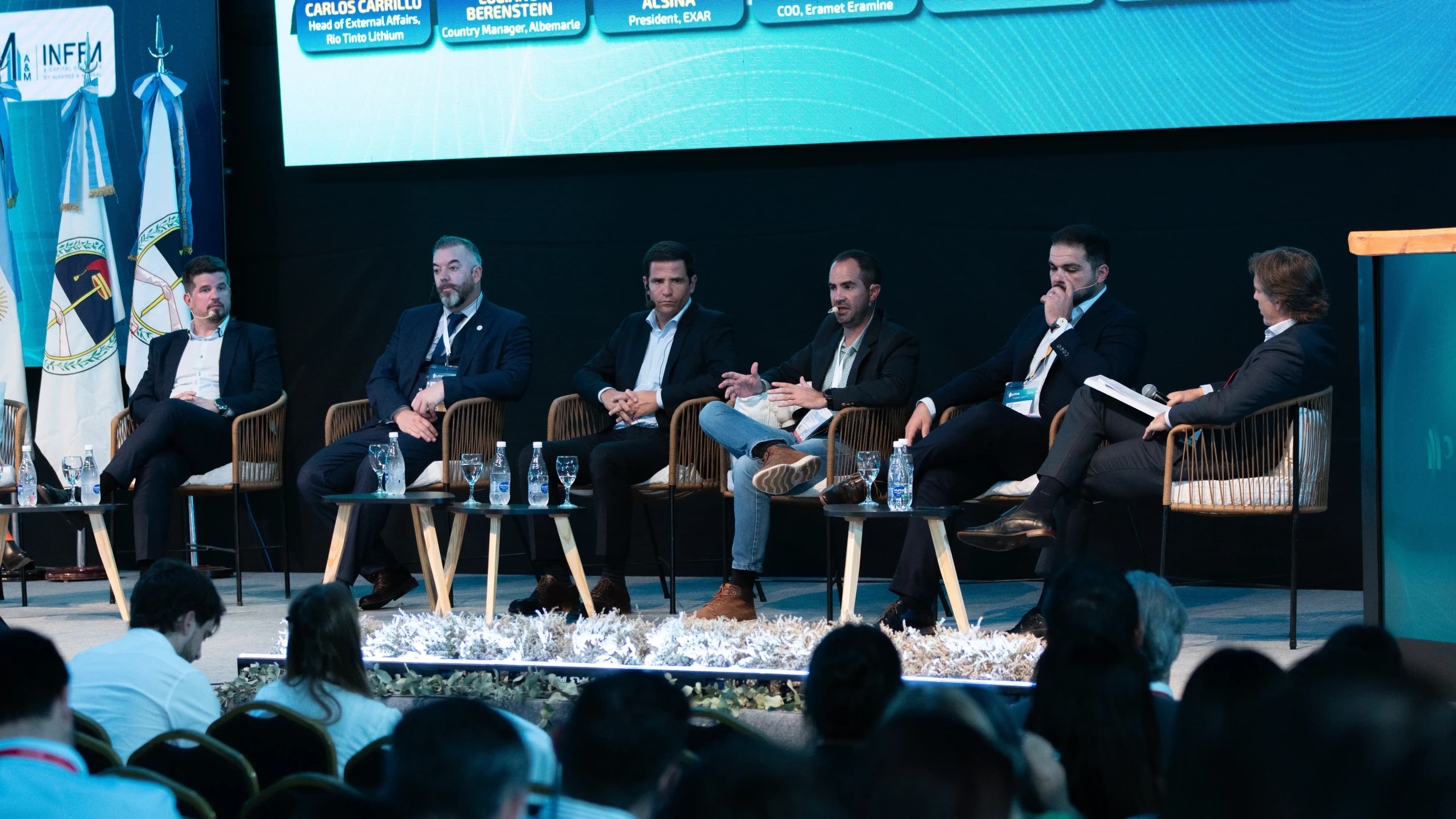
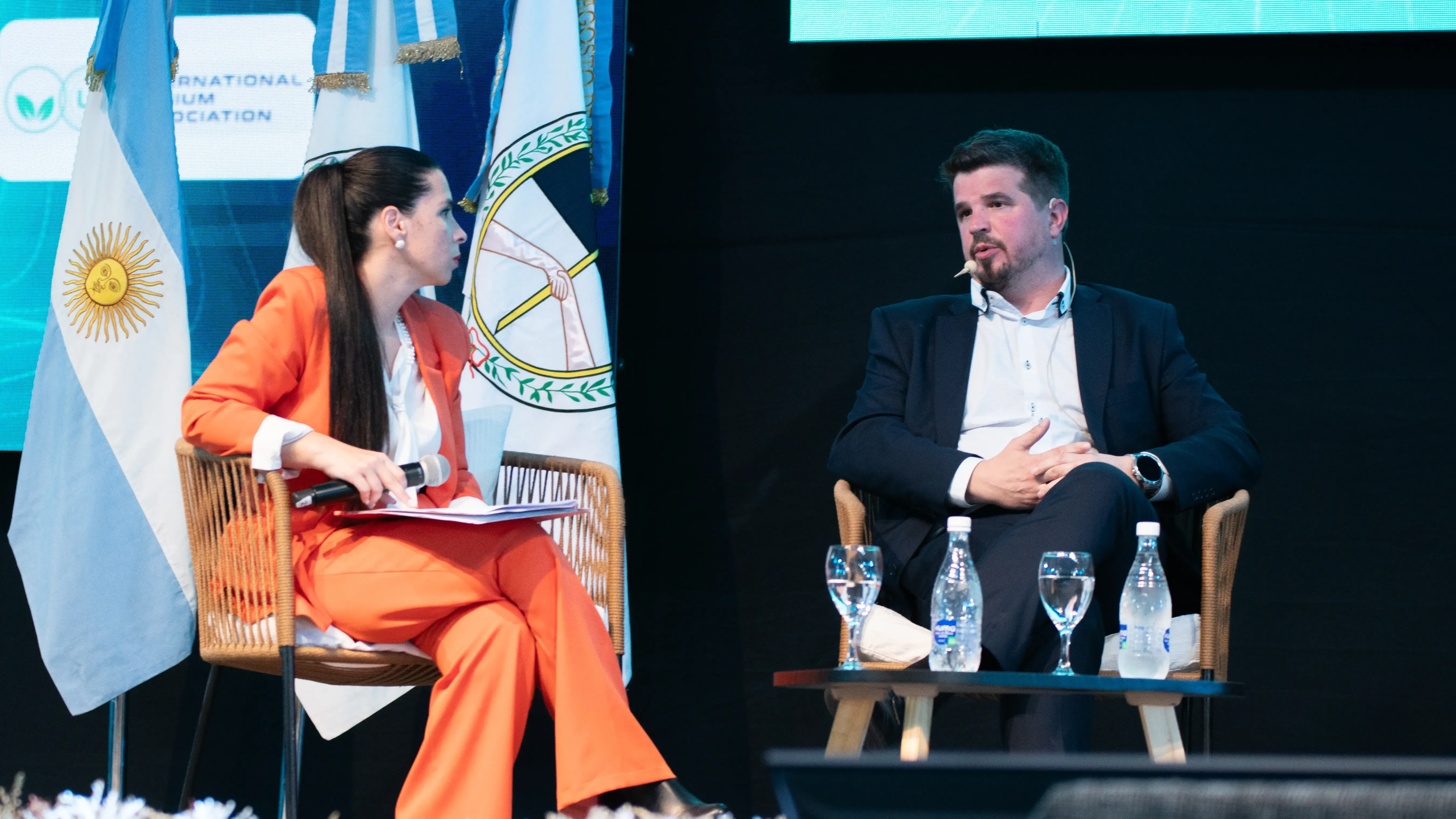
This was the focus of the fifth panel of the 15th International Lithium in South America Seminar, organized by Panorama Minero in San Salvador de Jujuy. Carlos Carrillo, Head of External Affairs at Rio Tinto Lithium; Luciano Berenstein, Country Manager of Albemarle; Simón Pérez Alsina, President of Exar; Guillermo Simonutti, COO of Eramet Eramine; and Nicolás Damin, CSO of CNGR, detailed their companies’ progress and challenges.
One of the most significant announcements came from Rio Tinto, which is considering submitting a third project under the Large Investment Incentive Regime (RIGI) before the deadline established for the regime expires. Carrillo recalled that the company had already submitted RIGI applications for Rincón, in Salta, involving an investment of more than US$2 billion, and for Fénix 1B, linked to its operation in Catamarca.
“This also leads us to consider and analyse the possibility of submitting a third RIGI application before the deadline expires,” Carrillo stated, highlighting Rio Tinto’s presence in Argentina’s three lithium-producing provinces: Catamarca, Salta and Jujuy.
The executive put the company’s strategy into perspective and recalled that Rio Tinto has operated in the country since 1997, when production began at the Fénix operation. This was subsequently followed by Sal de Vida, the lithium chloride plant in Güemes and Olaroz, in Jujuy.
“As far as lithium in our country is concerned, Rio Tinto is part of the past, part of the present and will be part of the future,” he stated.
The scale of growth also requires addressing the supply chain. Carrillo revealed that Rio Tinto allocated US$800 million to Argentine suppliers during 2025 and 2026, while 93% of its suppliers are currently Argentine.
The executive also highlighted the development of companies in Northwestern Argentina (NOA) and the possibility of combining regional suppliers with companies from other provinces. “It was possible to do it, and we have to continue doing it,” he stated.
Among the examples, he mentioned the Rincón camp, built by a temporary joint venture comprising companies from Salta and Jujuy, as well as civil works carried out through partnerships between suppliers from the north and the central region of the country. He also highlighted the growth of community-based suppliers in activities ranging from international freight transport and civil works to salt harvesting at Olaroz and Sal de Vida.
DLE: The Technology Beginning to Change the Scale
Direct lithium extraction (DLE) was another common theme of the panel. For Eramet Eramine, the technology has ceased to be a promise and has become a production tool. “Years ago, at these same conferences, we were discussing whether DLE was the way forward or not. DLE has arrived to mark a milestone in the way lithium carbonate is produced,” Simonutti stated.
The executive highlighted the performance of the Centenario-Ratones project and said that Eramet is demonstrating that it is possible to develop the first greenfield project in the Americas based entirely on direct extraction.
One of the main benefits lies in lithium recovery. “Today we have DLE units that exceed 90% lithium recovery,” he explained.
Greater efficiency also makes it possible to obtain more carbonate from the same quantity of brine, a particularly relevant factor for projects subject to extraction limits.
On this basis, Eramet announced a 50% expansion of its production assets. Simonutti explained that the Centenario-Ratones resource, the experience gained during ramp-up and confidence in the company’s own technology provided the conditions for moving forward.
The second stage will, however, involve a different level of complexity. It is no longer a matter of building from scratch, but of expanding a facility that remains in production. “We have to continue producing while we expand those facilities,” he noted.
Exar Targets 85,000–100,000 Tonnes
At Exar, the focus is also on expansion and direct extraction efficiency. Simón Pérez Alsina confirmed that the company aims to produce 38,000 tonnes this year and explained that the lessons learned during ramp-up were among the main factors in consolidating the operation.
“Ramp-ups are very complicated because there is a lot of trial and error,” he explained. The difficulty, he added, is greater in lithium because “every salt flat is a different world”, both in terms of its chemical characteristics and the particular features of the plants.
With RIGI approval secured for the expansion, Exar initially plans to move forward with a 10,000-tonne direct extraction module, followed by the addition of another 45,000 tonnes, to reach a target of between 85,000 and 100,000 tonnes over the coming years.
DLE will also make it possible to reduce brine consumption. “With the same brines, we produce much more lithium,” Pérez Alsina noted.
For Exar, local development is also part of this expansion. Over the past year, the company has worked to replace contracts held by companies from other provinces with suppliers from Jujuy and local communities. “We obtained very good results with suppliers from Jujuy and suppliers from the communities,” he highlighted.
Pérez Alsina also identified regulatory stability as one of the central conditions for long-term investment. “What matters is stability, having the rules and knowing that those are going to be the rules,” he stated.
CNGR: A Plant in Jama and Training for Chemists
CNGR confirmed another concrete development in Jujuy. Nicolás Damin reported that the company had obtained approval of the environmental impact assessment to build a plant at the Jama salt flat, with a planned capacity equivalent to 22,000 tonnes of lithium carbonate.
The Chinese company, which specializes globally in cathodes and precursors for batteries, seeks to integrate Jujuy’s resources into its international supply chain and placed particular emphasis on quality, traceability and reducing the environmental footprint. “What we want to do is work on technological efficiency and reducing the technology’s footprint,” Damin explained.
According to the executive, international customers are demanding increasingly high levels of traceability, including environmental, water-related, labour and human rights aspects.
At the same time, CNGR is promoting a technical laboratory in Palpalá together with JEMSE, CONICET and the National University of Jujuy, linked to the training of specialists in mining chemistry and DLE. “This laboratory, which is already offering a diploma programme in mining chemistry and DLE, is training not only workers for our company,” Damin explained.
The objective is to develop human resources capable of supplying an industry that will incorporate increasingly complex technologies.
Albemarle Accelerates Exploration in Catamarca
While producing companies move forward with expansions, Albemarle continues preparing its project at the Antofalla salt flat, in Catamarca. Luciano Berenstein explained that the company is carrying out its fourth consecutive exploration campaign since 2022.
The work has made it possible to significantly expand resources while also advancing hydrogeological studies, infrastructure, permits, energy and water. “Knowledge of the salt flat, but also the foundations for moving the project forward,” were, according to Berenstein, among the main results of this stage.
The company seeks to bring global operating standards to Argentina and draw on its production experience in Chile, where it has operated for 46 years.
For Albemarle, one of the main challenges remains infrastructure. Berenstein particularly highlighted the importance of reactivating the binational treaty with Chile and noted that Antofalla’s proximity to the San Francisco Pass could make it relevant to the project’s development.
“Infrastructure is the main challenge,” he stated. The distance from urban centres and communications infrastructure generates additional costs and makes the availability of roads, energy and other basic services decisive.
At the same time, the company is already working with local suppliers. Berenstein highlighted the case of a drilling contractor from Catamarca who developed technology adapted to the characteristics of the salt flat together with Albemarle, as well as the incorporation of personnel transport services from local communities.
The five executives thus agreed that the next stage of Argentina’s lithium industry will be defined less by the existence of the resource and more by the ability to operate, expand and make projects competitive. Technology, recovery rates, brine consumption, infrastructure, suppliers, talent and regulatory stability are now emerging as central variables for transforming the industry’s growth into larger-scale production with an increasingly developed local value chain.