During the second panel of Lithium in South America, European representatives, multilateral organizations and specialists analysed how to attract capital, reduce risks and turn mineral resources into projects.
By Panorama Minero
The shift in the global geography of critical minerals is also changing the investment landscape. The need to diversify suppliers, secure supply chains and guarantee access to strategic resources has opened up an opportunity for Argentina, but has also raised the requirements for transforming geological resources into bankable projects.
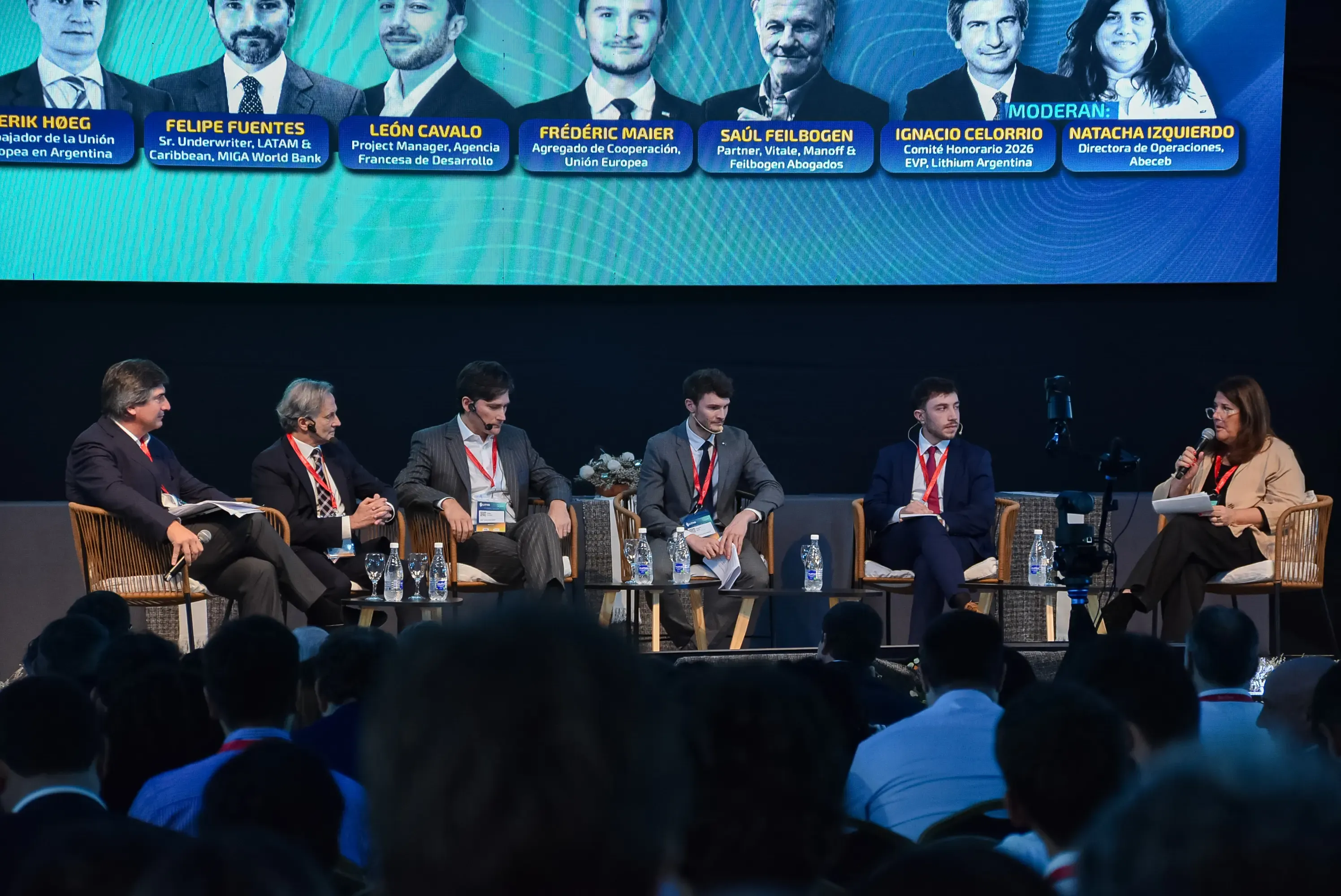
This was the central theme of the second panel on the first day of Lithium in South America, organized by Panorama Minero at the Altos de la Viña venue in San Salvador de Jujuy. Under the title “International Outlook: Positioning in the New Geography of Critical Minerals. Capital, Financing and Partnerships to Turn Resources into Tangible Growth,” representatives of the European Union, multilateral organizations, development agencies and the private sector agreed on one point: capital is available, but projects must demonstrate viability, governance, sustainability and the ability to reduce risks.
The European Union Ambassador to Argentina, Erik Høeg, stated that the energy transition and European industrial competitiveness depend on access to these minerals. The concentration of processing among a small number of suppliers has become, he explained, a geopolitical risk that led the bloc to change its strategy.
“In 2024, we adopted the Critical Raw Materials Act in the European Union, which marks a fundamental change in the way the European Union acts in this field,” he noted. The objective is to diversify supply sources and build long-term partnerships with countries such as Argentina.
In this context, he highlighted Global Gateway, the European strategy for investment and external cooperation. The initiative seeks to combine resources from member states, development banks, cooperation agencies and private capital to multiply the financing available.
Argentina occupies a relevant position in this strategy. Høeg recalled that the European Union is the largest foreign investor in the country, with an investment stock of US$75 billion, and that both parties signed a memorandum of understanding on critical raw materials in 2023, followed by a joint roadmap.
The ambassador explained that this work is advancing in two directions: connecting Argentine projects with European financing and buyers, and developing infrastructure, local capabilities and governance. Under Global Gateway, he noted, there are already 20 investment projects in Argentina linked to electricity transmission, energy and electromobility. He also announced a €5 million technical cooperation program to be signed before the end of the year.
The issue of concrete access to these instruments was addressed by Frédéric Maier, Cooperation Attaché of the European Union. As he explained, the challenge is to organize the connection between projects and the various European financial institutions.
The EU is working on an evaluation process that considers technical feasibility, governance, social aspects and local added value. Selected projects receive specific follow-up to facilitate their connection with institutions such as the European Investment Bank and other European instruments.
“It is important because there are many projects worldwide, and that quality label already shows that the project has met the requirements for technical feasibility, governance and everything related to social legitimacy,” Maier stated.
For Saúl Feilbogen, partner at Vitale, Manoff & Feilbogen Abogados, the challenge is to bring these international agreements into the concrete field of investment. This is where multilateral organizations, development banks, export credit agencies and guarantee mechanisms come into play.
The specialist explained that regulatory risks and country risk ultimately translate into financing costs. “Through their financing lines and guarantee facilities, they replace country risk with the risk represented by the institutions themselves,” he stated.
In this regard, he mentioned the role of institutions such as IFC (International Finance Corporation) and MIGA (Multilateral Investment Guarantee Agency), which are capable of reducing risks and enabling companies with certain profiles to participate in Argentine projects. He also cited a US$7 billion scheme announced by the United States Export-Import Bank (EximBank), which could combine financing and guarantees, generally associated with production offtake agreements.
Infrastructure financing emerged as another common theme. León Cavalo, Project Manager at the French Development Agency (AFD) in Argentina, explained that one of the main instruments involves extended repayment terms and grace periods that allow infrastructure to be built before it begins generating repayment capacity.
“We provide, for example, five-year grace periods for these infrastructure projects that require very substantial structuring,” he explained. Among the priority works, he mentioned electricity transmission lines, water, sanitation and aqueducts, with the possibility of extending repayment periods to 15 or 20 years.
AFD also works alongside the European Investment Bank, the World Bank and the IDB to complement instruments and avoid overlaps. Cavalo also emphasized the need to accompany physical investments with training and technical education to ensure the availability of the human resources required by new projects.
From MIGA, the World Bank Group’s guarantee arm, Felipe Fuentes focused on the conditions that make it possible to mobilize foreign investment. In his view, Argentina needs a coherent regulatory framework, effective dispute resolution mechanisms, and environmental and social standards aligned with international standards.
“To attract international investment, we need a coherent regulatory framework, effective dispute resolution mechanisms and environmental and social standards aligned with international standards,” he stated.
Fuentes considered that the participation of European agencies can bring predictability and credibility to projects. “Argentina has made enormous progress, although its controversial history weighs on investors and creditors,” he noted, adding that the presence of institutions such as the European Investment Bank can help mobilize capital.
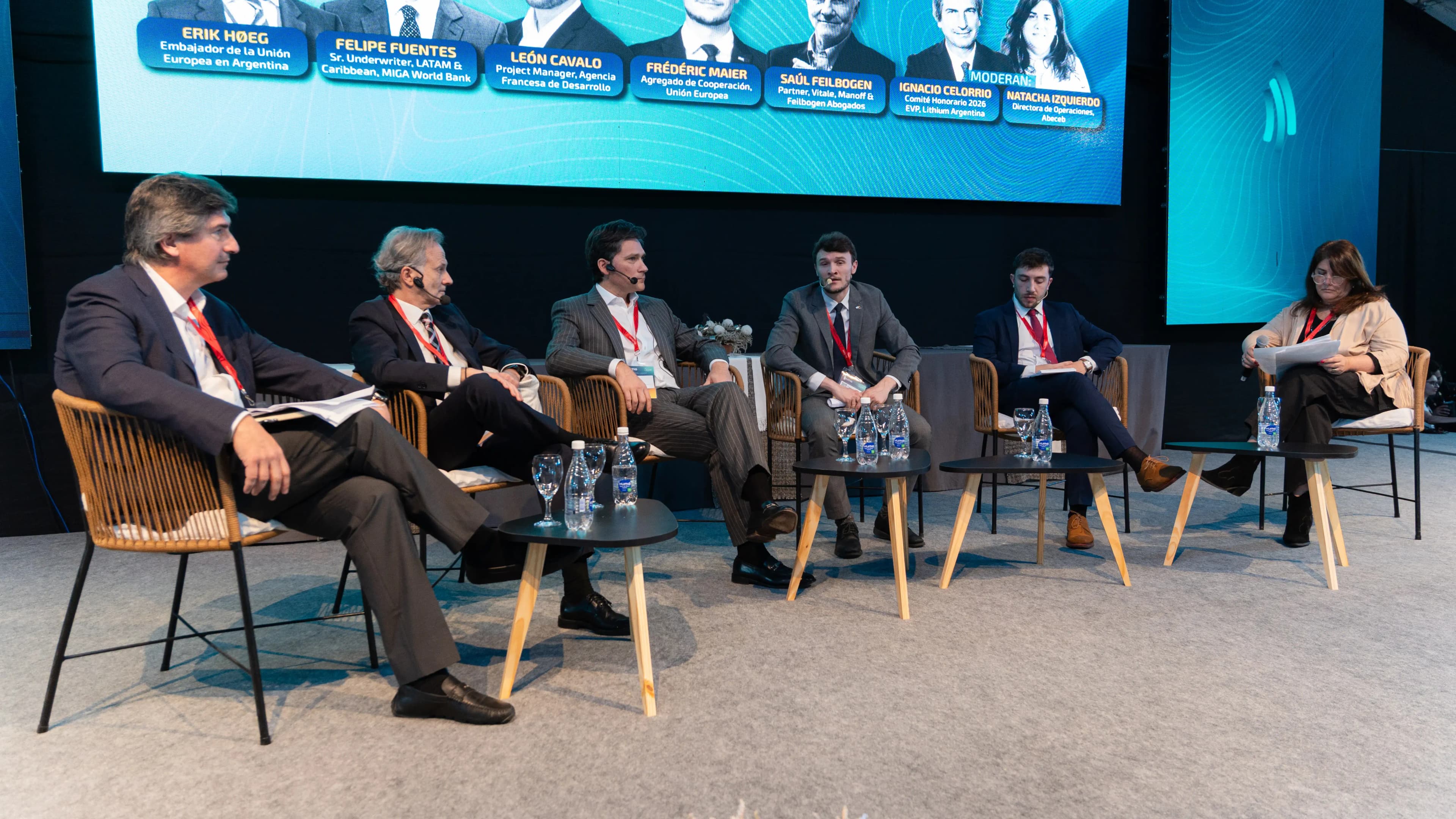
The panel, moderated by Natacha Izquierdo, Chief Operating Officer of Abeceb, and Ignacio Celorrio, EVP of Lithium Argentina, thus outlined a new scenario for Argentine mining: international competition is no longer solely about who possesses the resources, but about who can develop them with infrastructure, financing, international standards, buyers and rules capable of attracting capital for decades.
In this process, the European Union seeks to deepen its relationship with Argentina through the memorandum on critical raw materials and Global Gateway, while organizations such as MIGA, the World Bank, the EIB, the IDB and AFD provide financing instruments, guarantees, technical cooperation and infrastructure to reduce the risks faced by mining projects.