The advancement of new copper, lithium, gold and other mineral projects is creating opportunities to expand the participation of Argentine companies in the mining value chain. But the scale of these investments also brings new requirements: production capacity, financing, international standards and greater coordination among local, provincial and national suppliers.
By Panorama Minero
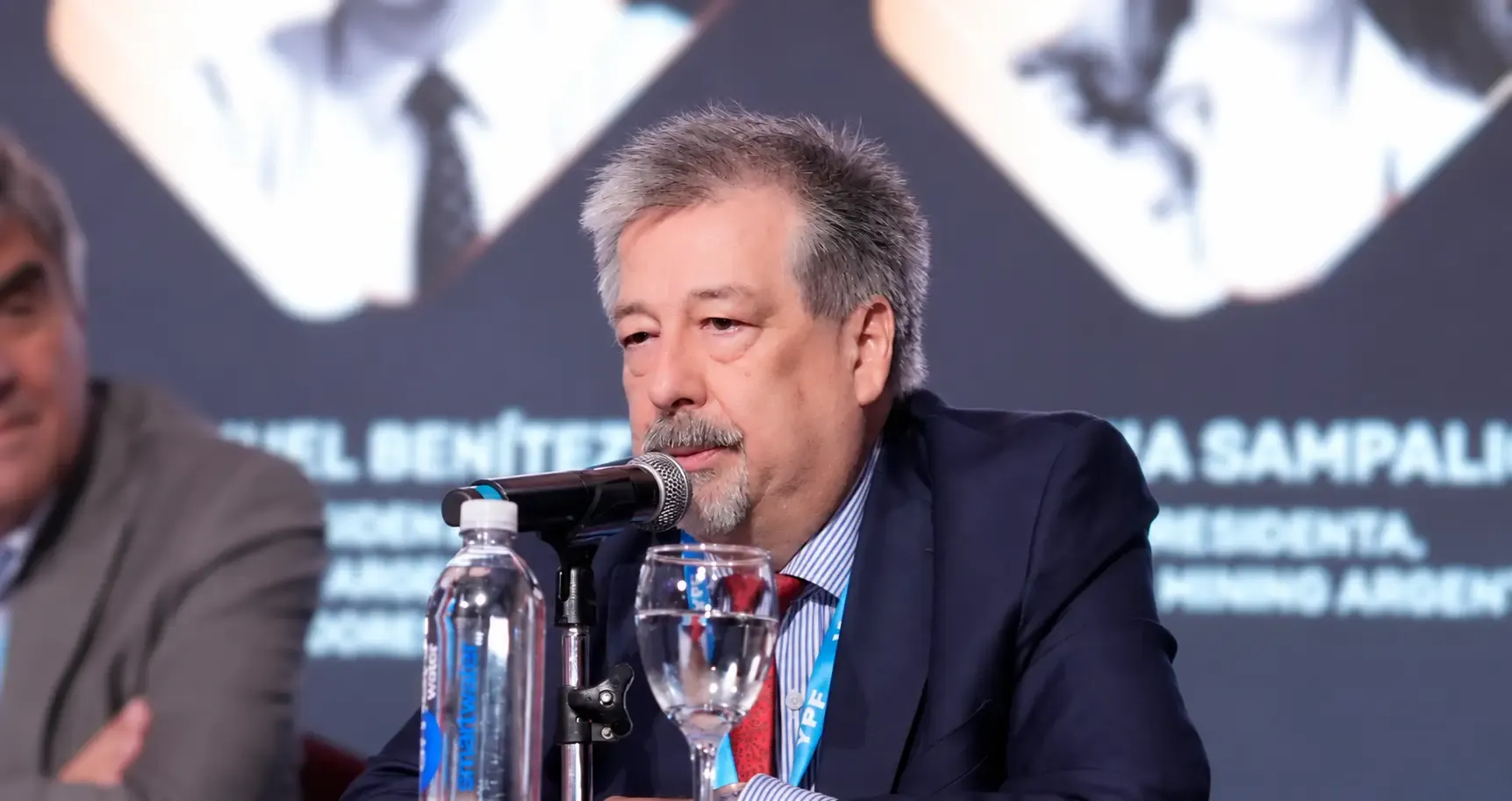
For Manuel Benítez, president of the Argentine Chamber of Mining Suppliers (CAPMIN), the projected growth of the mining sector could become a driver for Argentine industry and services, provided local companies can compete and meet the requirements of large-scale projects.
In an interview with Panorama Minero, Benítez discusses CAPMIN’s growth, the entry of new companies into the mining value chain, the increasing involvement of the Argentine Industrial Union (UIA) in the sector and competition from foreign suppliers. He also addresses the need to expand financing options and build partnerships among Argentine companies to meet demand that, in some cases, could exceed the capacity of individual businesses.
How do you view the current state of Argentina’s mining sector and the opportunities emerging for suppliers?
We are at a very favorable moment for Argentina’s mining industry because several factors are coming together. There is growing international demand for critical minerals, prices that support the development of new projects and, at the same time, Argentina has many of the resources the world is demanding.
When we talk about mining, we necessarily have to talk about suppliers. The development of new projects also represents an opportunity to expand Argentina’s industrial activity and the services associated with the sector.
How significant is the role of suppliers in the investment and operation of a mining project?
We need to distinguish between two major stages. During mine construction, a very significant share of CAPEX goes to goods, construction and services provided by third parties. Our estimates indicate that this can account for between 80% and 85% of the investment.
Once the mine enters operation, suppliers continue to play an important role in OPEX. We estimate their share at between 45% and 60%.
Mining operates on a very large scale and, if Argentina moves forward with its planned projects, that scale will also increase rapidly. Our objective is for as much of that demand as possible to be met by Argentine suppliers. To achieve that, we need to develop the capabilities required to compete at that level.
What tools do Argentine companies need to respond to that scale?
One of the main tools is collaboration among suppliers. A company may face demand that exceeds its individual capacity and, in that case, it should be able to partner with another company from the same province or elsewhere in the country.
At CAPMIN, we place considerable emphasis on this concept. The scale that Argentina’s mining industry could reach requires cooperation among companies and the ability to build partnerships. Not every supplier will necessarily be able to meet the requirements of major projects on its own.
How has CAPMIN evolved alongside the growing interest in mining?
Since I became president of the chamber, we have grown from approximately 40 companies to around 300, while also incorporating 12 supplier associations from different regions of the country.
We have representation in provinces including San Juan, Chubut, Río Negro, Santa Cruz and Buenos Aires, as well as the Puna region. That growth also reflects the increasing interest in mining among industrial and service companies.
Argentina has significant entrepreneurial and industrial capabilities. In addition to serving the domestic market, there are already companies exporting mining-related goods and services.
The Argentine Industrial Union has also become more actively involved in the mining agenda. How important is that development?
It is important because it helps illustrate what building a mine can mean for Argentina’s broader industrial base. Consider, for example, a project requiring an investment of US$6 billion. If a significant share of that CAPEX goes to construction, goods and services, we are talking about substantial potential demand for suppliers.
We also need to understand that supplier development takes place at different levels. At CAPMIN, we refer to three rings: first, companies from communities near the project; second, suppliers from the province; and third, companies from the rest of the country.
A small or medium-sized company that begins supplying the mining industry can build capabilities, accumulate capital and gradually move toward more complex contracts. Larger companies can also play an important role in that process by partnering with or integrating smaller suppliers.
What does a company need to enter the mining supply chain for the first time?
Communication and the transfer of experience are fundamental. Those of us who know the industry have a responsibility to explain what a mining operation requires.
A mine needs its suppliers to operate under standards comparable to those applied by the mining company itself. We are talking about an industry that is highly intensive in technology and technical expertise, with procedures covering safety, environmental management and community relations.
A company seeking to enter this value chain therefore needs to understand mining companies’ protocols, establish traceability, implement compliance systems and achieve high levels of efficiency. Having a product or service available is not enough: companies need to be prepared to operate under the standards required by the industry.
What other factors are critical for becoming an established mining supplier?
A mining operation needs predictability. Those responsible for running a mine need to know that a supplier will deliver the work as required and will not create problems that could affect operational continuity, safety, the environment or relations with local communities.
Mining projects also have international visibility. The performance of an operation can influence how investors perceive a jurisdiction and, consequently, future investment decisions.
There is also a fundamental issue: mining requires capital. The same applies to suppliers, which need to finance equipment, infrastructure and working capital to meet increasingly large contracts.
How is CAPMIN addressing access to financing for suppliers?
It is one of the issues we are studying most closely. Banks that already work with the mining industry are involved with CAPMIN, and we are continuously assessing new financing tools for companies that need capital to grow.
We are also seeing financial institutions that previously had limited involvement in mining begin to engage with the sector. That is important because, if we want Argentine suppliers to grow alongside mining projects, they also need financial instruments that allow them to fund that expansion.
How can Argentine suppliers compete with companies from countries that have more developed mining industries?
We need to distinguish between different scenarios. Within Latin America, countries such as Chile, Peru and Brazil have more developed mining supply chains.
Argentine companies have certain advantages in that competition. One is proximity, which has a direct impact on logistics. Another is their knowledge of the territory, local conditions and the context in which each project operates.
But we also need to address costs. We need conditions that allow Argentine suppliers to compete with companies from countries that have different cost structures. That could involve tax and incentive measures, as well as improvements in the efficiency of the companies themselves.
There are also opportunities for partnerships. A foreign company entering Argentina may find value in working with an Argentine supplier that understands the territory, logistics and the specific characteristics of each operation.
Argentina’s Secretary of Mining, Luis Lucero, has referred to provincial requirements that establish minimum percentages for local workers or suppliers. What is CAPMIN’s view on this issue?
We believe in coordination among suppliers from across the country because the scale of the projects itself will require it. If a purchase order requires capacity equivalent to 250 trucks per day, for example, it is unlikely that a single company will be able to respond on its own. In that situation, partnerships are no longer simply an option; they become a necessity.
There are also provinces that do not currently have operating mines but have significant industrial capabilities. Córdoba, Buenos Aires, Santa Fe and Mendoza, for example, have metalworking companies and suppliers with the experience, quality and capacity to participate in projects located in other jurisdictions.
At the same time, we believe in prioritizing nearby communities and strengthening the social license to operate. That is why we refer to different rings of suppliers. But the scale of these projects also requires Argentina to draw on capabilities available throughout the country. Mines and project schedules do not wait, and Argentina needs to be ready to respond when that demand emerges.
Communication comes up repeatedly in your analysis. Why do you consider it so important to the development of the mining industry?
The mining industry has not always been sufficiently effective in communicating how it works and the scale of its value chain.
When the actual figures behind an investment are explained, along with how CAPEX is distributed and what infrastructure a mine requires, perceptions can change. A project needs roads, power, water and wastewater treatment systems, and a wide range of services and infrastructure that, in certain cases, can also generate broader benefits in the regions where it is developed.
Mining played an important role in historical industrialization processes across several economies. Better explaining the relationship between resources, industry, infrastructure and suppliers is fundamental to creating a more informed discussion about the sector.
After several years working with mining suppliers, what are your expectations for the next stage?
I am optimistic. After many years, we are seeing a greater presence of junior and major mining companies, growing business interest and higher enrollment in academic programs related to the industry.
The challenge now is to deepen coordination and understand the true scale of Argentina’s mining supplier base. If we can identify those capabilities, build partnerships and support them with financing and greater competitiveness, we may find that the existing supplier ecosystem is much larger than we think.