The presidents of the mining chambers of Jujuy, Salta and Catamarca agreed that the new stage requires more infrastructure, training, competitiveness and regional coordination. They also defended the impact of the RIGI.
By Panorama Minero
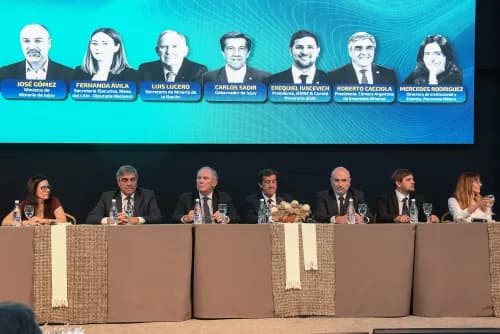
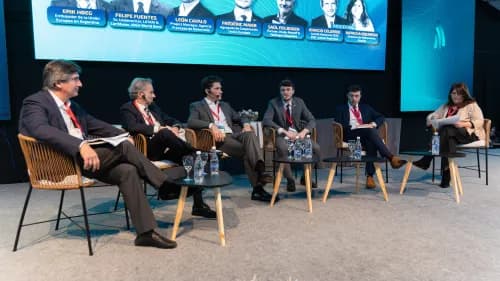
Bright sunshine and a temperature of around 28 degrees accompanied the opening of the 15th edition of Lithium in South America, which brought together more than 2,000 people on the first morning at the Altos de la Viña Hotel in San Salvador de Jujuy. During the opening of the conference sessions, the presidents of the mining chambers of Jujuy, Salta and Catamarca agreed on an assessment: mining in Northwestern Argentina (NOA) has entered a new stage, but sustaining growth requires infrastructure, competitive suppliers, talent and greater coordination among the three provinces.
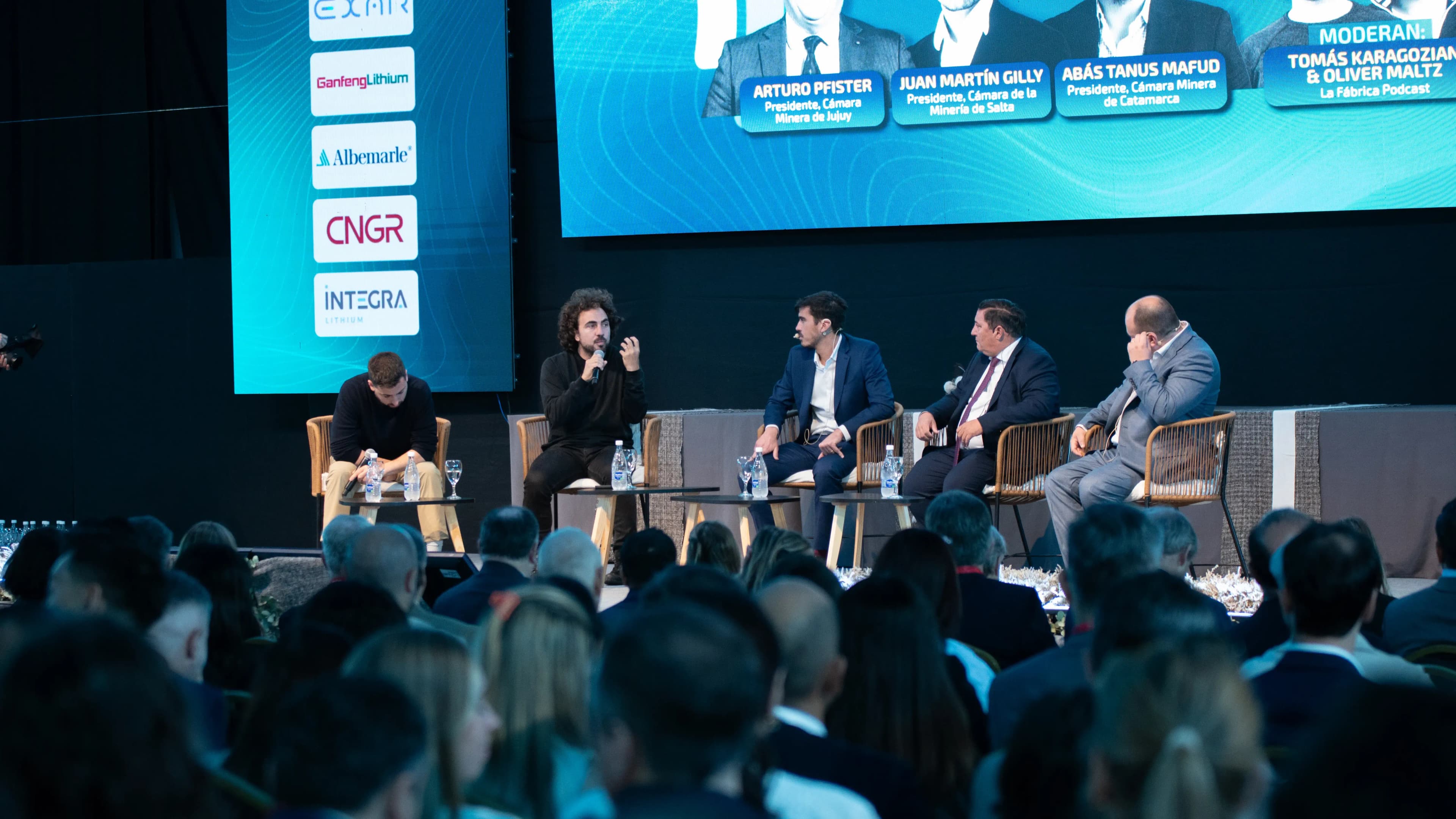
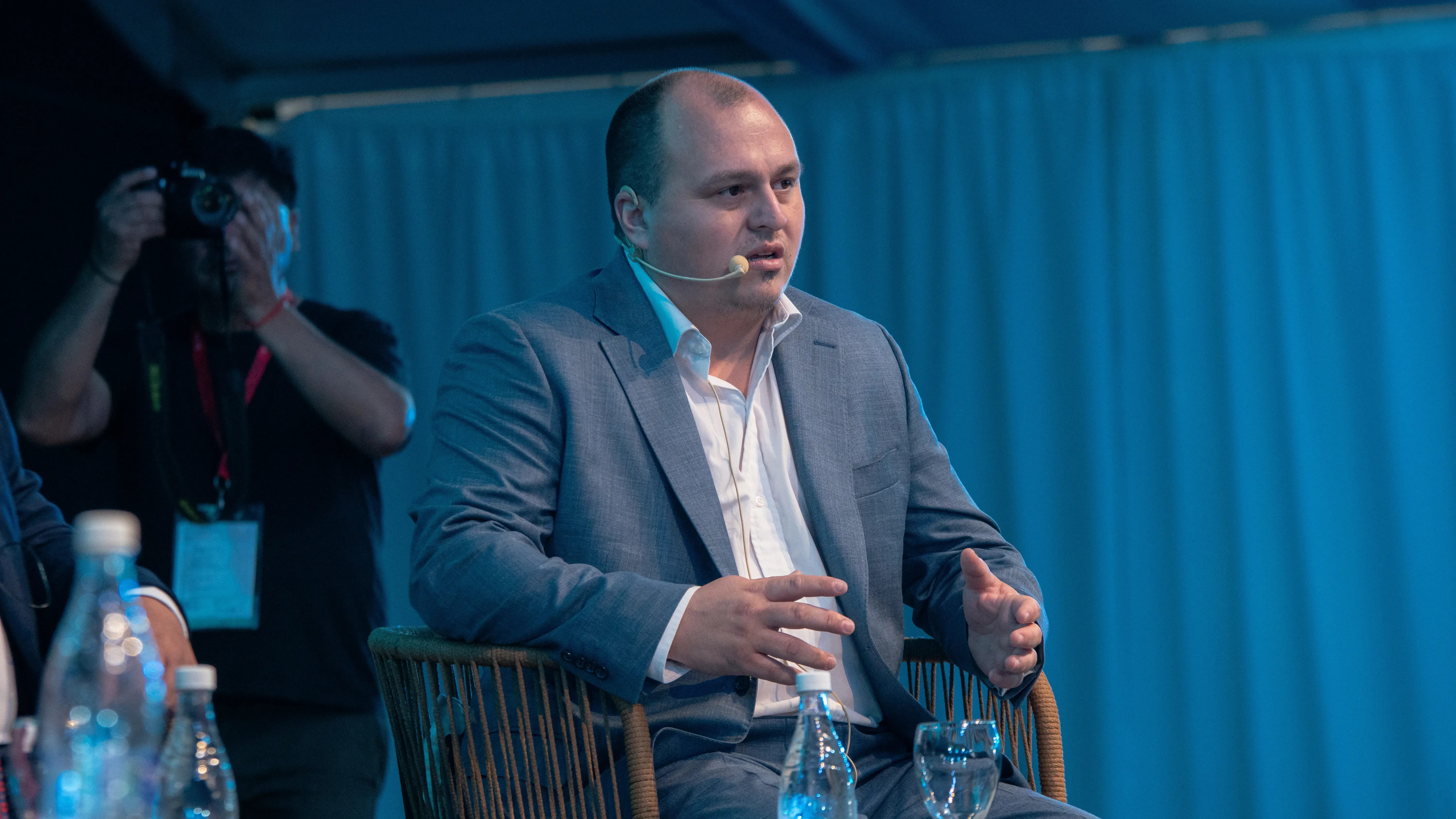
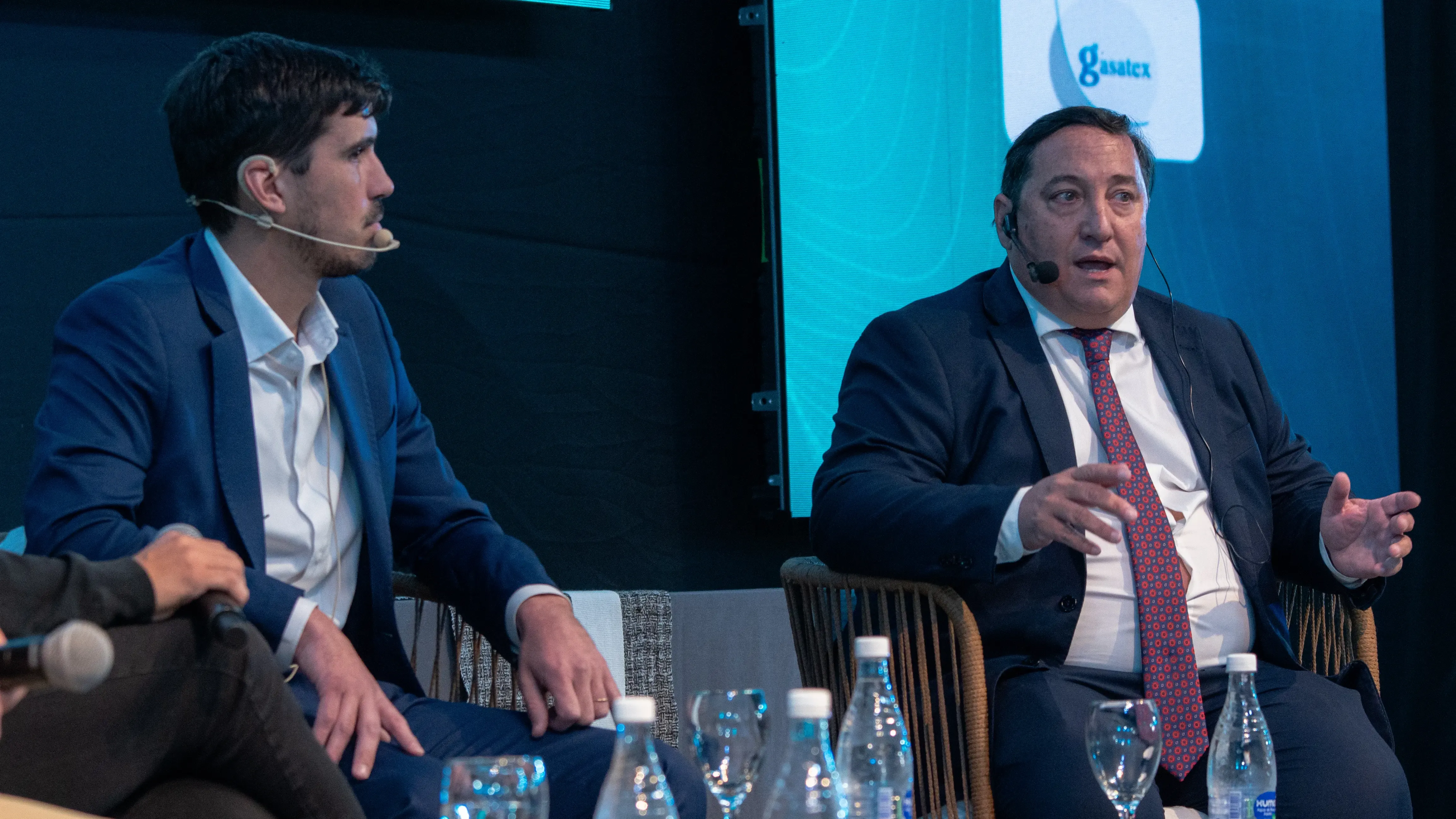
The panel “Northwestern Mining, from the Inside” brought together Arturo Pfister (Jujuy), Juan Martín Gilly (Salta) and Abás Tanus Mafud (Catamarca). The discussion was moderated by young industrial entrepreneurs Tomás Karagozian and Oliver Maltz, from La Fábrica Podcast.
One of the main points of agreement was the need to improve infrastructure to reduce costs and make mining production more competitive. Gilly focused on the railway, particularly the C14 and C15 lines. “We have to work together as three coordinated provinces,” he stated, warning that both railway lines had not been included as mandatory investments for future railway operators.
For the Salta businessman, the volume of freight that mining will generate, together with agriculture, justifies long-term planning. “Transport and making logistics costs more efficient for operations are fundamental,” he noted.
Mafud took the argument a step further and showed how infrastructure shortcomings directly affect suppliers. “How can I expect that supplier to be competitive if they have to pay 1,000 pesos more for fuel?” he questioned. According to his explanation, while the national average is one service station every 150 kilometres, in parts of Catamarca the distance reaches 300 kilometres.
Infrastructure, he argued, cannot be analysed separately from competitiveness. He also mentioned the lack of logistics centres, distribution facilities and industrial parks as obstacles preventing local companies from supporting project expansion.
Pfister agreed with this perspective and added the need to improve connectivity to expand exploration opportunities and reduce costs. But he also emphasized another factor that he considers decisive: the social licence to operate.
“If you want to produce, if you want projects to move forward, invest in the territory,” stated the president of the Mining Chamber of Jujuy. He added: “Do not forget that aspect, the social one.” For Pfister, the experience of lithium projects already in production demonstrates that relationships with communities are a condition for sustaining development.
Furthermore, that relationship must begin where the mineral is extracted and extend to the province, the region and the rest of the country. In Jujuy, he explained, Indigenous communities own the surface lands where some projects are developed, making permanent dialogue necessary.
Suppliers and Talent: The Next Challenges
Mining growth is also changing the supplier landscape. Gilly highlighted that there has been a learning process and that large, medium-sized and small companies have different capacities to become part of value chains.
For Pfister, the challenge is to find a balance between external purchases and local development. “It cannot be a matter of bringing everything from abroad and leaving all suppliers with nothing,” he warned. In his view, mining companies themselves have a responsibility to create opportunities for Argentine suppliers.
Mafud agreed and called on the private sector to take a more active role in human resources training. Catamarca, he explained, has a shortage of between 30% and 40% of engineers directly or indirectly linked to mining activity.
“If there are no good training centres, there will be no good personnel to work on the projects,” he noted. For this reason, he proposed strengthening coordination among companies, universities, technical schools and governments to anticipate the professional profiles that mining will require over the next 5, 10 and 15 years.
RIGI, a “Game Changer” for Mining
The Large Investment Incentive Regime (RIGI) also occupied a central place in the debate. Gilly was emphatic: “For the entire mining sector, the RIGI was a total success, a game changer.”
The businessman acknowledged that there are criticisms from suppliers who believe that the regime allows large mining companies to import equipment that they themselves cannot bring into the country under the same conditions. However, he considered that the increase in activity generated by the regime ultimately has a positive impact on the entire value chain.
Mafud defended the same point and rejected the idea that companies covered by the RIGI had stopped purchasing domestically. “The companies applying under the RIGI all have domestic purchasing levels above 70%,” he stated, adding that there is also strong participation by suppliers from Northwestern Argentina.
The challenge, he argued, is for local companies to know how to take advantage of the opportunities created by the regime. “There is a challenge in thinking about how I can use that RIGI for my own benefit,” he explained, noting that for certain suppliers, the possibility of importing machinery or equipment can become a tool to improve their competitiveness.
The discussion thus left a shared conclusion: the RIGI can accelerate investment, but the opportunity for Northwestern Argentina will depend on how much of that expansion can be transformed into infrastructure, employment, suppliers and local capabilities.
According to the latest market report prepared by the National Directorate of Mining Promotion and Economics, Argentina had been the fastest-growing producer among the main global players in 2025, with year-on-year growth of 62% and production of 120,000 tonnes of lithium carbonate equivalent (LCE). The country has seven producing operations, 16 projects at advanced stages and more than 40 initiatives in prospecting and exploration.
However, projections indicated that Argentine production could exceed 400,000 tonnes of LCE by 2030 and reach approximately 573,000 tonnes in 2035, while materializing that expansion could require US$12.7 billion in investment between 2026 and 2030, with a peak exceeding US$4 billion in 2027. That transition, from potential to execution, was one of the central themes of the agenda throughout the meeting in Jujuy.
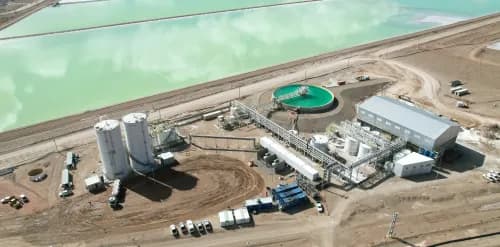
And development is already beginning to show new milestones. During the panel, it was announced that the commissioning of lithium plant expansions by Rio Tinto and Galan Lithium in Catamarca is expected toward the end of October, two new operations linked to the RIGI which, according to the business representatives, reflect that the investment stage has already begun to translate into concrete production capacity.