Argentina has once again positioned some of its largest copper projects within the investment plans of international mining companies. For Glencore, however, having world-class resources is only part of the equation: the challenge is maintaining the conditions needed to develop and operate them competitively for decades.
By Panorama Minero
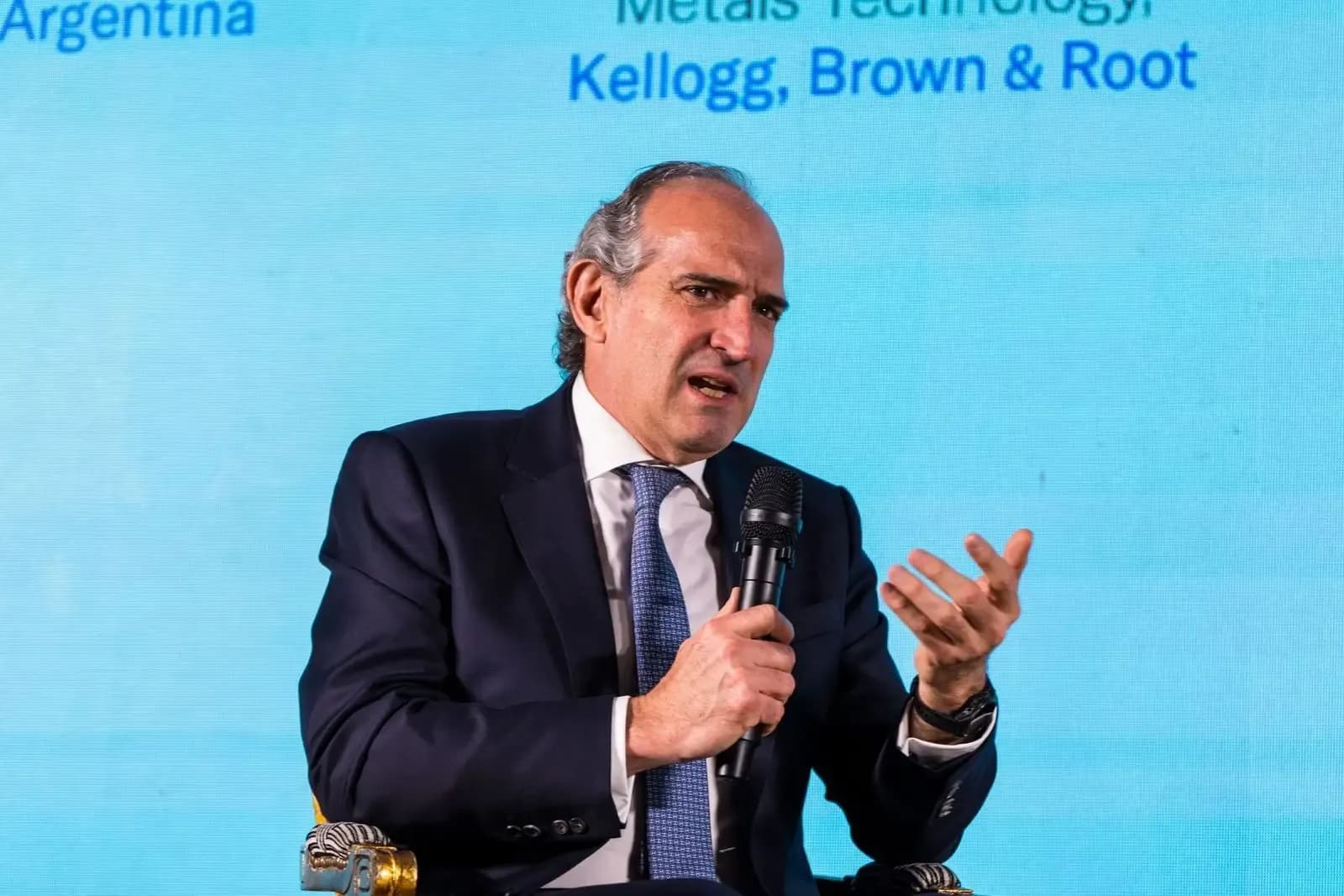
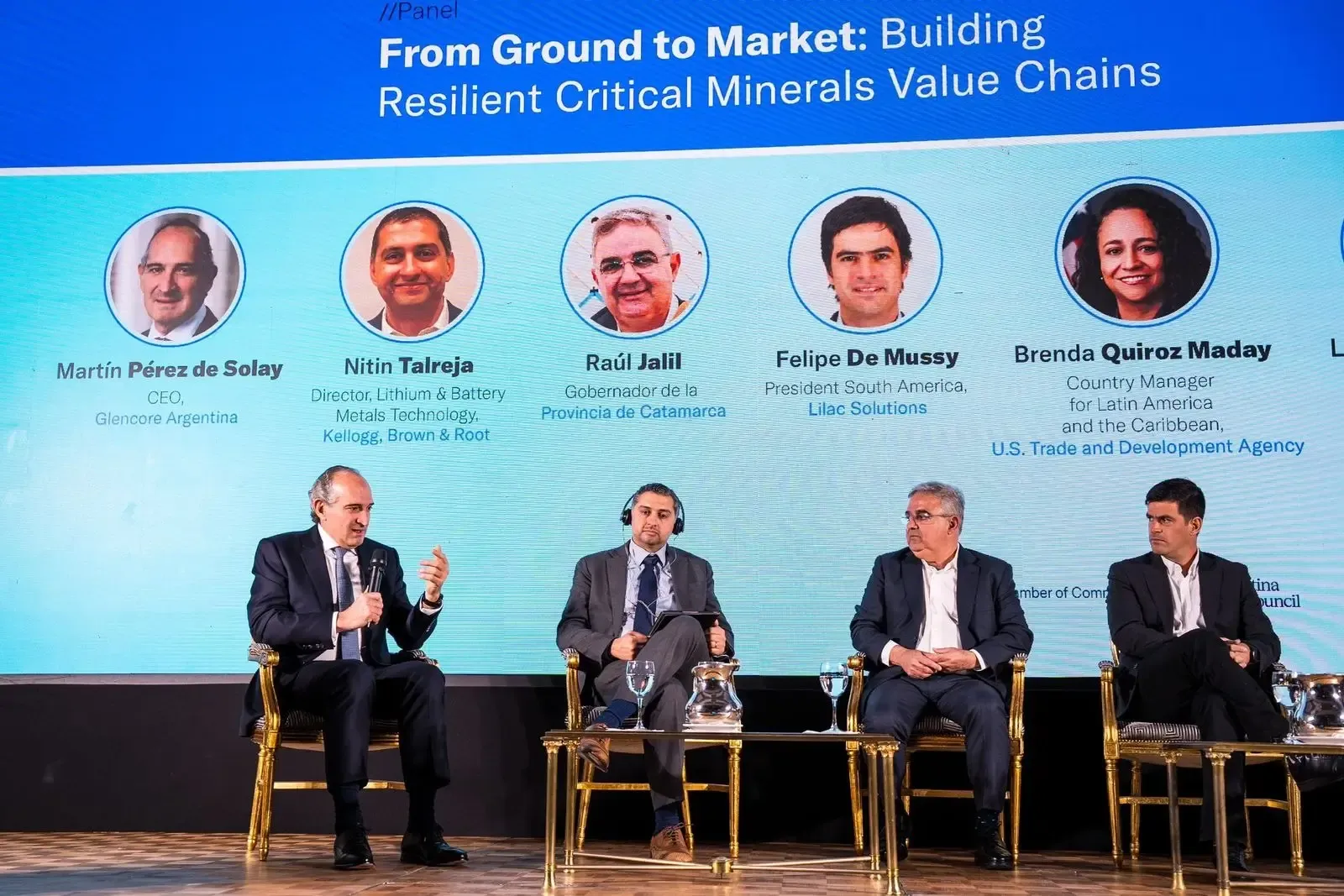
Martín Pérez de Solay, CEO of Glencore Argentina, addressed this issue during the US-Argentina Forum on Critical Minerals, held in Buenos Aires on September 3. The event was organized by AmCham Argentina together with the U.S. Chamber of Commerce’s US-Argentina Business Council and Citi, with support from the U.S. Embassy, bringing together mining companies, government officials, provincial governors and financial institutions.
During his remarks, Pérez de Solay focused on how Argentina’s Large Investment Incentive Regime (RIGI) has changed the equation for projects competing for capital within the global portfolios of major mining companies.
He explained that Argentina had been at a disadvantage compared with established mining jurisdictions such as Chile and Peru. In addition to its tax burden, the country faced macroeconomic instability, difficulties accessing and repatriating dividends, and a complex framework governing mining investment.
RIGI has helped narrow part of that gap and improve the conditions under which developers assess Argentine projects.
For Pérez de Solay, however, the discussion does not end there. Major copper projects can spend several years undergoing studies and de-risking before an investment decision is made, and then remain in operation for 30, 40 or even 50 years. That time horizon makes predictability a condition that necessarily “must extend beyond a political cycle.”
US$13.5 Billion Between MARA and El Pachón
Glencore currently has two of Argentina’s largest copper developments: MARA (Agua Rica-Alumbrera), in Catamarca, and El Pachón, in San Juan.
In August 2025, the company submitted both projects for inclusion under RIGI, outlining capital investments of US$4 billion for MARA and US$9.5 billion for the first phase of El Pachón over the next decade.
Together, they represent US$13.5 billion in potential investment and form a central part of Glencore’s copper growth strategy.
In Catamarca, the development of MARA is closely linked to Alumbrera. The Agua Rica deposit is located approximately 35 kilometers east of Alumbrera’s existing infrastructure, whose processing facilities are expected to be used as part of the future development.
In San Juan, El Pachón is different in scale. Glencore’s updated resource estimate brought the project’s inventory to approximately 6 billion tonnes of mineral resources, containing copper, molybdenum and silver.
Alumbrera as the First Step
Glencore’s strategy in Argentina does not begin directly with the construction of MARA or El Pachón.
The company is first moving ahead with the restart of Alumbrera, the copper and gold operation in Catamarca that ceased production in 2018.
During the forum, Pérez de Solay explained the rationale behind that sequence: bringing Alumbrera back online will allow the company to rehire and train workers, reactivate infrastructure and rebuild operating capabilities before moving on to larger-scale developments.
The strategy is consistent with Glencore’s official plans. The company expects the restart to allow it to recommission processing facilities ahead of time, keep critical infrastructure operational and retrain a workforce that could later contribute to the development of MARA.
The timeline has also been brought forward. In August, Glencore said it now expects first production from Alumbrera in the second half of 2027, compared with its previous estimate of the first half of 2028.
The plan envisages recovering approximately 75,000 tonnes of copper and 317,000 ounces of gold over roughly four years of operations, in addition to molybdenum.
But Alumbrera’s strategic relevance extends beyond those volumes.
Its infrastructure and workforce provide a platform for reducing risk ahead of MARA, a considerably larger project designed to make use of existing facilities.
The sequence outlined by Pérez de Solay would then continue with El Pachón, completing a portfolio of assets that could extend Glencore’s presence in Argentina for several decades.
Building an Industry Before Building the Mines
The need to rebuild capabilities becomes even more relevant when Argentina’s overall project pipeline is considered.
A major copper project requires more than financing. It needs engineers, technicians, operators, construction companies, electromechanical suppliers, infrastructure and logistics capabilities able to support large-scale construction over several years.
Pérez de Solay argued during the forum that this capacity must also be factored into the assessment of future developments.
The challenge becomes greater if several of the projects currently advancing in Argentina reach the construction stage within similar timeframes. The availability of skilled workers, suppliers and execution capacity could then become as important a factor as access to capital.
Glencore’s strategy at Alumbrera allows the company to anticipate part of that process by rebuilding operational experience before it is required for significantly larger assets.
Investments That Can Span a Dozen Governments
The mining industry’s time horizon was another central element of Pérez de Solay’s analysis.
A company can spend several years studying and de-risking a project before committing billions of dollars. Once that investment is made, a mine can remain in operation for three, four or five decades. In political terms, that means operating through numerous national and provincial administrations.
For that reason, a project’s competitiveness does not depend solely on the conditions in place when the investment decision is made. It also depends on fiscal and regulatory stability, access to foreign currency, permitting, infrastructure, community relations and the ability to maintain an efficient operation throughout the life of the mine.
RIGI is designed to provide predictability over some of those variables for an extended period. Others, however, will depend on the ability of Argentina and its provinces to support the industry as it grows.
Copper Is Competing for Capital in Argentina Again
The change in conditions comes as Glencore seeks to increase its global exposure to copper.
The company is targeting approximately 1 million tonnes of annualized copper production by the end of 2028 and around 1.6 million tonnes per year by 2035, supported by both existing operations and new projects. MARA and El Pachón are part of that growth portfolio.
For Argentina, the relevant point is that its projects are once again competing within an international capital allocation portfolio. RIGI has improved the conditions for investment, but construction decisions will still depend on the overall competitiveness of each development.
That is the central conclusion of Pérez de Solay’s argument: the opportunity for Argentine copper does not depend solely on geology or on securing an initial investment.
It also depends on building the capabilities required to execute large-scale projects and sustain them for decades.
The sequence Glencore is pursuing across Alumbrera, MARA and El Pachón illustrates that logic at the corporate level: first rebuilding infrastructure, workforce and operating experience to reduce the risks of the larger developments that follow.
Argentina’s challenge will be to achieve something similar across the industry as a whole: turning a portfolio of major resources into a sustained capacity to build, operate and compete over the coming decades.