The large copper projects Argentina hopes to bring into production over the next decade are operating on a scale unlike much of what the country’s mining industry has developed to date. Vicuña is perhaps one of the clearest examples: developing the resource also means building much of the infrastructure required to make the project possible.
By Panorama Minero
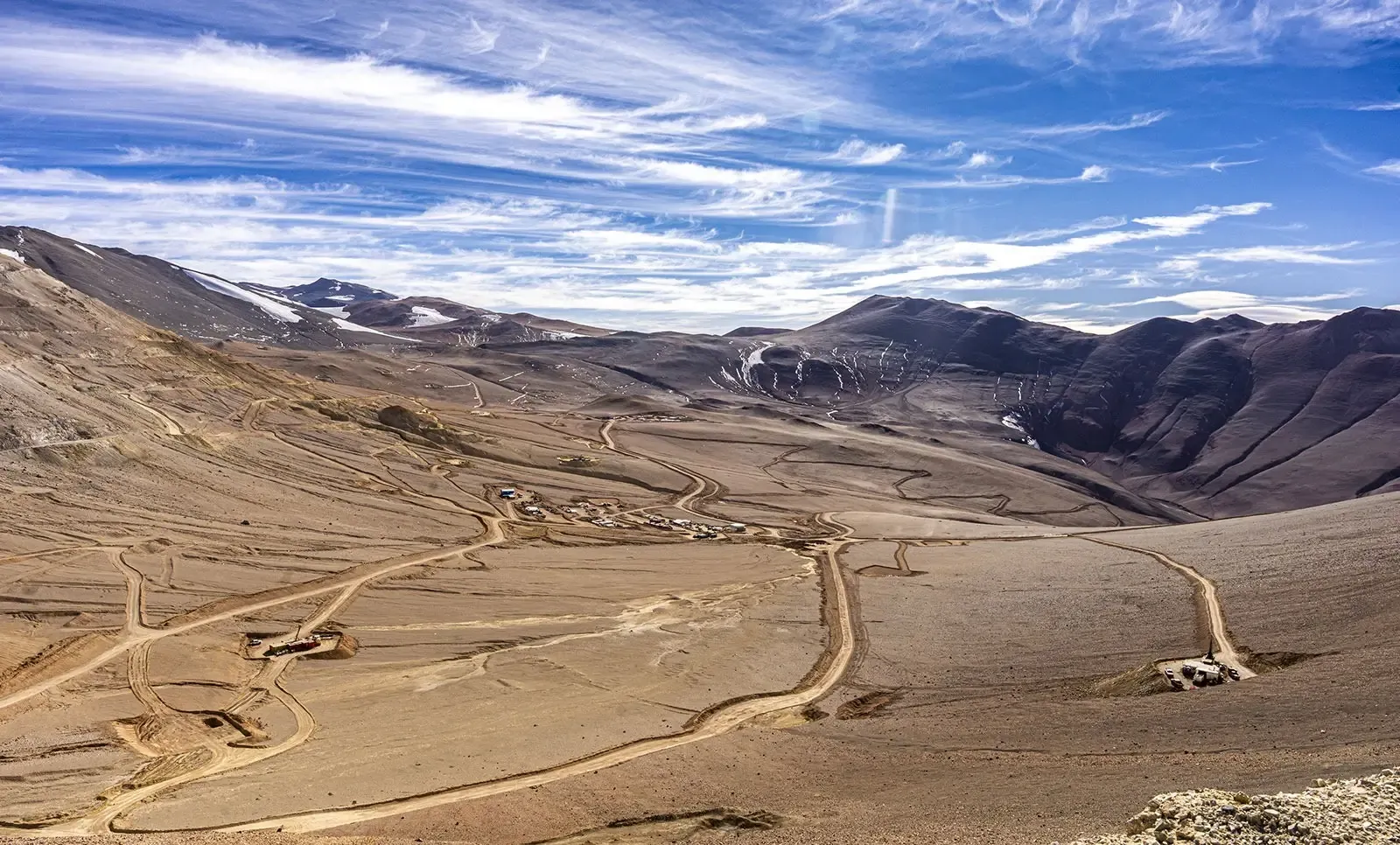
The challenge begins with location. The district combining Josemaría and Filo del Sol is situated in the Andes of San Juan Province, in a high-altitude environment where planned operations are above 4,000 metres and some areas exceed 5,000 metres.
The distance from population centres, the climatic conditions and the scale of the future operation make roads, power and connectivity far more than conventional support infrastructure.
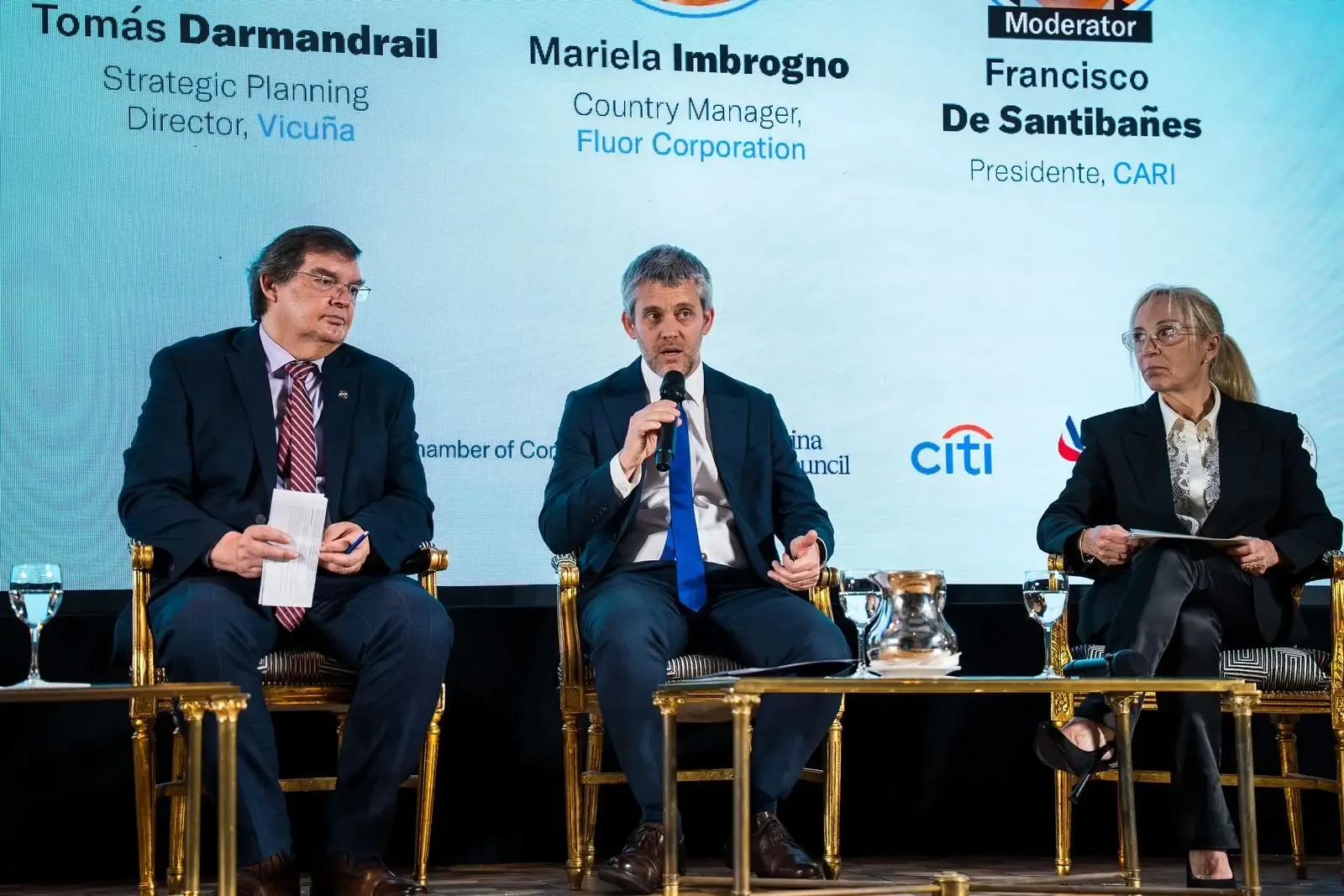
Tomás Darmandrail, Strategic Planning Director at Vicuña, addressed this issue during the US-Argentina Forum on Critical Minerals, held in Buenos Aires this week. He described a project located above 4,000 metres, with some sections exceeding 5,500 metres and roughly four hours from populated areas. In that context, he explained that the infrastructure required can effectively become projects within the mining project itself.
The challenge is not simply to build a mine. Development also requires creating the conditions to supply it, operate it and connect its production to the market.
260 MW for Josemaría’s First Phase
The power system provides one of the clearest indicators of the project’s scale.
In July, Argentina’s energy regulator authorized the grid access and transmission upgrades required to supply 260 MW of demand for Josemaría’s first phase.
The figure becomes easier to understand when compared with Argentina’s electricity system. The 260 MW required by Josemaría’s first phase alone represent roughly one-third of the generating capacity of Atucha II, one of the country’s three nuclear power plants.
And that would only be the first stage. Vicuña expects power demand to increase to approximately 400 MW and, in subsequent stages, around 700 MW. At that level, the project’s power requirement would be comparable, in terms of capacity, to that of an Argentine nuclear power plant.
The works include a new 500 kV extra-high-voltage transmission line of approximately 167 kilometres between Rodeo and Chaparro, as well as new facilities and upgrades at the Nueva San Juan, Rodeo and Chaparro substations.
At Chaparro, the project includes, among other installations, a 500/220 kV, 450 MVA transformer bank and two 220 kV outgoing lines to the Josemaría substation.
Darmandrail noted that the power consumption required by a copper development of this scale is substantial, particularly because of the process needed to produce concentrate. Energy availability and the infrastructure needed to deliver it therefore become part of the project’s overall viability and competitiveness.
Josemaría’s energy requirements illustrate one of the defining characteristics of Argentina’s next generation of large copper projects: before production can begin, substantial new infrastructure must first be incorporated into the surrounding system.
More Than 200 Kilometres of Road Infrastructure
The same logic applies to access.
Darmandrail explained that reaching the project requires more than 200 kilometres of road infrastructure from populated areas, crossing mountainous terrain where building and maintaining roads is a major undertaking in its own right.
During construction, those roads will have to accommodate equipment, materials, workers and oversized components. Later, they will become part of the permanent logistics network of an operation designed to run for decades.
He also linked that scale to the opportunities created around the project. Engineering, construction, power generation and transmission, mining services, financing, project finance and guarantees all form part of the capabilities needed to execute developments of this size.
That point is particularly relevant to Argentina’s broader project pipeline. The resources are there, and several projects have advanced considerably in their technical definition. Turning them into production, however, requires simultaneously delivering infrastructure that also demands engineering, permits, capital and execution capacity.
US$250 Million and a Broader Infrastructure Agenda for San Juan
The connection between mining infrastructure and provincial development was also reflected in the agreement reached between Vicuña and the Government of San Juan.
The agreement includes an extraordinary US$250 million non-refundable and non-compensable contribution to finance strategic infrastructure in the province before production begins, a point Governor Marcelo Orrego highlighted during the forum in Buenos Aires.
The agreement also includes a contribution equivalent to 1.5% of gross sales beginning in the sixth year of operations and stabilizes provincial royalties at 3% of revenue over the life of the project, within the applicable framework.
The discussion, however, goes beyond the financing mechanism itself.
Governor Marcelo Orrego argued that infrastructure developed around mining should also generate benefits for other sectors of San Juan’s economy. In a province where mining coexists with wine production, pistachios and other industries, the challenge is to ensure that some of the infrastructure required by major projects creates lasting capacity beyond the boundaries of the mines themselves.
Darmandrail also placed the project’s regional impact within that equation. Vicuña’s scale means that infrastructure and service needs extend beyond the operating area, creating demand and opportunities for suppliers, construction, energy and other activities linked to the project.
From Building a Mine to Delivering an Entire System
Around the world, new mineral deposits reaching the development stage are increasingly located in remote areas and require greater investment in energy, water, transportation and services.
In Argentina, the challenge takes on an additional dimension because several large copper projects could move into development within relatively similar timeframes, creating simultaneous demand for engineering, construction, specialized suppliers, workers and capital.
One of the recurring themes in the discussions was execution capacity. Mining companies can structure their facilities through EPC or EPCM contracts, but shared or public infrastructure does not always fit within the same framework.
For Vicuña, that discussion has already moved beyond theory. The electrical infrastructure is progressing through regulatory approvals, mechanisms to finance provincial works have been agreed, and access roads form part of the planning required to develop the district.
Infrastructure Will Also Shape Market Access
A second dimension will become increasingly important as Argentine copper moves closer to production.
The roads and networks being considered today to reach the projects will eventually have to move their output to market. And in copper mining, the product leaving the mine is not necessarily the finished metal used by industry.
Darmandrail explained that the planned operation will produce copper concentrate, a material that subsequently requires smelting and refining. That links the project’s infrastructure to a broader question beyond the mine itself: how that production will reach the market and which processing chains it will ultimately enter.
Today, much of the world’s smelting capacity is concentrated in Asia, particularly in China. For Argentina, it is still too early to determine how those supply chains will be configured for projects that have not yet entered production. However, the infrastructure built today will influence the options available in the future.
Access to Pacific ports, connections to Atlantic corridors, logistics costs and proximity to different markets and processing centres will all become increasingly important as projects advance.
It is a discussion that comes after the immediate challenge of building the mines, but it is not entirely separate from it. Infrastructure decisions made today will shape some of the commercial options available tomorrow.
The Scale of What Is Coming
Vicuña brings together some of the largest copper, gold and silver resources identified in Argentina and represents a development scale the country has yet to experience in its modern copper industry.
Its progress offers an early view of challenges likely to be repeated elsewhere: major energy requirements, hundreds of kilometres of infrastructure, high-altitude logistics and works whose impact could extend far beyond the mine site itself.
Argentina’s next generation of copper projects will therefore test capabilities that extend beyond the mines themselves. Roads, energy, shared infrastructure, suppliers and financing will all have to move at the pace of multibillion-dollar investments, often in regions where much of that infrastructure still has to be built from the ground up. How those works are executed and integrated with the provinces hosting the projects will be part of the equation determining the timing and competitiveness of the developments.
At the scale of Vicuña, building the mine and building the conditions that allow the mine to exist are becoming part of the same investment.