The provisional entry into force of the trade component of the European Union-Mercosur agreement opens a new chapter in relations between the two blocs, with critical minerals and natural resources among the strategic sectors offering the greatest potential for cooperation.
By Panorama Minero
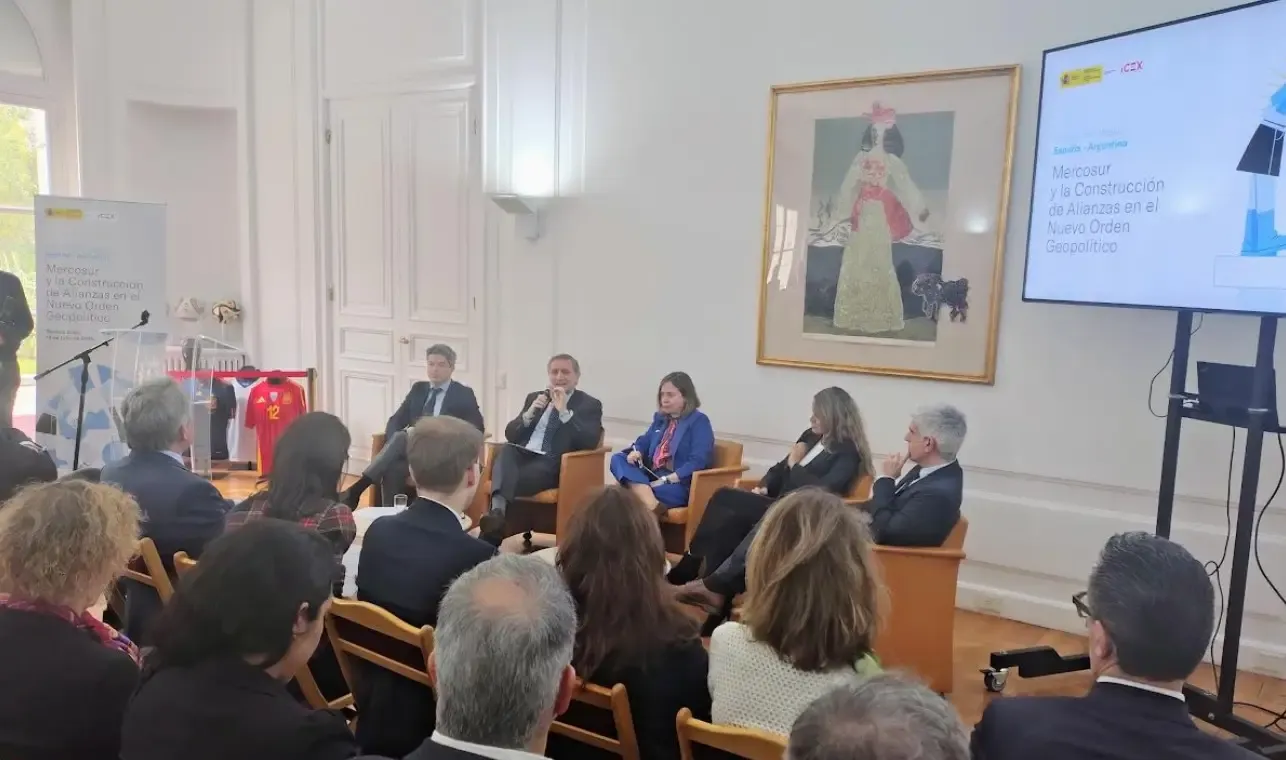
This was one of the key messages to emerge from the event “Mercosur and the Building of Alliances in the New Geopolitical Landscape,” organized by the Embassy of Spain in Argentina and the Economic and Commercial Office of Spain in Buenos Aires as part of the official visit to the country by Spain’s Secretary of State for Trade, Amparo López Senovilla.
The event focused on analyzing the opportunities arising from the EU-Mercosur agreement and the role that Spain, one of its main advocates throughout the negotiation process, can play in building a relationship that moves beyond trade toward a broader strategic alliance.
Participants noted that the international geopolitical landscape has changed and that, while multilateralism remains relevant, it must adapt to a more complex environment in which economics and geopolitics are increasingly intertwined. Against this backdrop, trade agreements are emerging as tools to open markets, leverage complementarities and strengthen relations between countries and blocs.
López Senovilla noted that Spain can contribute expertise in regulatory adaptation, internationalization and technical cooperation, while Mercosur offers resources and talent. The challenge, she said, is to turn these complementarities into tangible benefits and make progress on value chain integration, sustainability and market access, particularly for SMEs and strategic sectors.
Critical minerals and economic security
Mining is among these strategic sectors, particularly the critical raw materials required for the energy and technological transformations currently underway in Europe.
López Senovilla highlighted that these minerals are “fundamental to the green transition” and noted that Spain has been undergoing a major transformation in this area for many years. In this context, she stated that “Argentina is rich in these types of minerals and, therefore, there will be investment interest from companies in this regard.”
The official explained that Europe is pursuing agreements with countries and blocs that possess the raw materials required not only for the green transition, but also for the digital transformation. This strategy is part of an open trade policy with partners considered strategic and is aimed at reducing dependence on certain suppliers.
In this regard, López Senovilla said that in Europe “we are aware that we cannot be self-sufficient in everything because we do not have certain critical raw materials or certain rare earths,” but stressed that this limitation can be addressed through “an intelligent, open trade policy with other strategic partners that do have these materials.”
Diversified access to these resources, she explained, is directly linked to Europe’s economic security, at a time when major economies are seeking to reduce vulnerabilities across their supply chains.
For the Secretary of State for Trade, this relationship must also be built on agreements between equals. López Senovilla recalled that negotiations between the two blocs took 25 years and said that the agreement is based on “negotiations between equals,” under an approach in which both sides can benefit.
From a trade agreement to a broader alliance
The event also addressed the current status of the agreement. López Senovilla explained that its trade component is currently provisionally in force, while full ratification of the association agreement remains pending.
“We are talking about and celebrating the provisional entry into force of the trade component, but the association agreement goes much further,” she said. According to the official, moving toward the full agreement will deepen relations between the two blocs and broaden opportunities for cooperation.
One of the objectives now set by the European Union is to communicate the agreement’s benefits to businesses and citizens. The official said the aim is for the agreement to translate into “prosperity, wealth, innovation and employment,” and noted that there is a shared responsibility to communicate the opportunities it creates.
López Senovilla added that the challenge will be to “turn these ideas into tangible benefits for businesses and people,” while highlighting certainty as one of the agreement’s first benefits in an international environment characterized by growing unpredictability.
The importance of natural resources
The event also highlighted the importance to the European Union of Mercosur’s natural resources, both energy resources and minerals. In Argentina’s particular case, the combination of these resources with the availability of highly skilled human capital was identified as a factor that could contribute to greater integration of value chains between the two blocs.
The meeting brought together academics, international relations specialists, representatives of think tanks and business leaders to analyze the changes affecting the global economy and the opportunities emerging for Mercosur as international relationships are redefined.
The panel also included Pablo Sanguinetti, Executive Director of CIPPEC; economist Luciano Laspina; and Marisa Bircher, founder of Biglobal and former Argentina Secretary of Foreign Trade. The discussion was moderated by La Nación journalist Martín Rodríguez Yebra.
Meanwhile, representatives of the Spanish Chamber of Commerce told Panorama Minero that they expect to begin planning meetings during the second half of the year in which mining will take a priority role within their projects and areas of work.