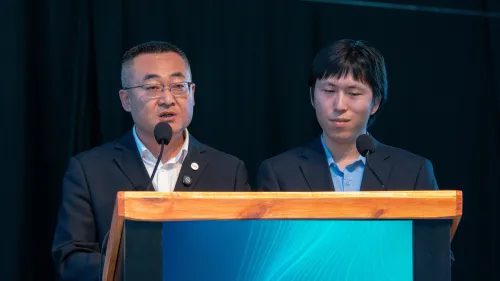
The Faculty of Engineering of the National University of Jujuy (UNJu) launched the Diploma Program in Mining Chemistry and Direct Lithium Extraction, a specialized training initiative promoted together with CIDMEJu, JEMSE S.E. and CNGR Advanced Material Co. Ltd., aimed at preparing professionals for the challenges and transformations of the lithium industry.
By Panorama Minero
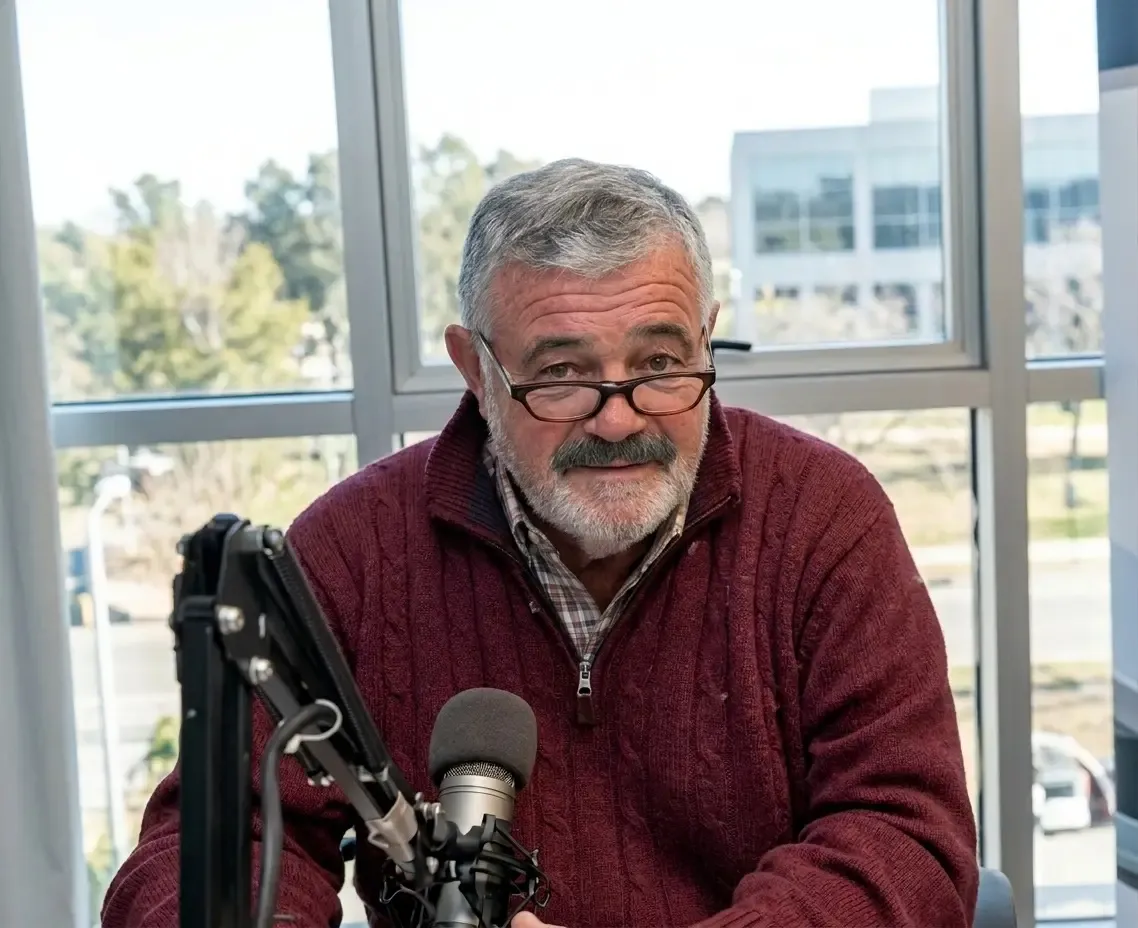
“We are already developing this university diploma program, which is being carried out jointly with the Faculty of Engineering, CIDMEJu, which is the research centre we have here in Palpalá, JEMSE (Jujuy Energía y Minería Sociedad del Estado) and the company CNGR (CNGR Advanced Material Co. Ltd.), which is promoting this training,” explained José Zacur, chemical engineer and professor at the Faculty of Engineering of the National University of Jujuy (UNJu).
He explained that the program comprises 100 hours, of which 92 correspond to content delivery and practical work, and eight hours to a final project that students must complete. The course runs until the end of September.
Training Focused on Direct Extraction
“This is precisely a diploma program that seeks to emphasize content that chemical engineers already know from their degree program, but which needs to be oriented and focused specifically on the type of professional practice involved in these kinds of projects. Specifically, we are talking about lithium extraction and a form of lithium extraction that is different from what we call conventional extraction, which is simply through evaporation in solar ponds,” the chemical engineer explained.
He explained that the diploma program addresses topics related to hydrogeology, corresponding to the first module, as well as content related to brine analysis and the chemical tests required to determine the type of material being handled, together with instrumentation, results and their formalization.
A second module incorporates laboratory practices that complement this specific orientation and are carried out at the facilities of CIDMEJu, JEMSE and the company participating in the project.
“The third module, which is the one I have been assigned, deals with process engineering. What we do there is refocus and orient something that the participating students already know, since they are students in the final years of their programs or about to graduate, but which we orient specifically toward this type of subject matter,” he highlighted.
He explained that this module studies and reviews content specifically related to lithium and associated techniques. Participants include not only students from the Faculty of Engineering, but also others interested in expanding their training and developing professionally in this field.
Asked about the lithium extraction method that serves as an alternative to the traditional evaporation process, the chemist explained: “Basically, it is a procedure or process that has the same steps as the conventional process up to the point of obtaining or extracting the brine from underground and homogenizing it, and from that point onward, it differs.”
He explained that the conventional method involves the successive concentration of lithium and the precipitation of other ions before obtaining lithium carbonate.
“Unlike this process, the process being addressed here is the direct extraction process, in which, instead of concentrating the lithium and separating the other ions, lithium is directly extracted and then processed for purification and subsequently precipitated as lithium carbonate,” Zacur explained. He noted that it is a chemical process.
Training and Professional Integration
He stated that most participants in the diploma program are at an advanced stage of their degree programs. “What we do here is reorient and refocus toward the specific subject matter in order to provide more clearly defined training for the professional work involved in this type of process,” he explained.
He also stated that this content can continue to be developed within the degree program. In fact, he explained that the Chemical Engineering degree includes an elective subject called Lithium Industry, in which interested students study content similar to that presented in the diploma program.
“In other words, this is not content that will end here, but they will be able to continue working with it. In fact, the elective subject is available, but this is for the Chemical Engineering degree, meaning they have to be students who will obtain their undergraduate degree,” he said.
He considered, however, that the diploma program has a broader scope and that its content can contribute to the integration of participants into the lithium sector.
“Fortunately, there is demand for the profile provided by the Chemical Engineering degree, demand that I can see in the fact that many of the faculty’s students are already working in the industry and, in some cases, in very important positions. So there is an opening toward this field for the professional profile that we train or develop,” he explained.
He also explained that CIDMEJu is incorporating scholarship students, both to complete their undergraduate studies and to pursue postgraduate studies.
“There are already quite a few graduates who have completed their postgraduate studies and doctorates through CIDMEJu,” he highlighted.
Asked about CNGR’s participation, Zacur noted that there is interest in ensuring that the diploma program provides training suited to the technological needs identified by the company. He added that this content may also be applicable to other companies with similar requirements.
He stated that companies are generally open to visits and professional internships. He recalled that one of the requirements for accreditation of the degree program is to complete a professional internship, and highlighted that many of these internships are carried out in areas associated with lithium.
The UNJu chemist and professor added that the diploma program currently has 25 students and explained that the number is limited by the available infrastructure and the company’s needs.
“These 25 students are currently working through the course content and will ultimately obtain an additional qualification to their chemical engineering degree, in cases where the students are studying one of the engineering programs,” he said.
Regarding the possibility of offering the diploma program again, Zacur explained that, depending on needs, there could be a second and even a third cohort, depending on the type of demand that may arise.
Demand for Related Degree Programs
Asked about demand for degree programs linked to the mining sector in light of the development of the lithium industry, Zacur highlighted the growth recorded in recent years.
“It has truly been a boom since it began in recent years, much more pronounced in the Mining Engineering and Chemical Engineering degree programs, which are in demand for this field, while other degree programs at the faculty also play a role: Industrial Engineering and Computer Engineering, which is cross-cutting but very necessary for proper management from the technological standpoint with which these types of industries are being implemented today.”
He explained that there is growing demand for these degree programs and that the Faculty of Engineering works to bring its academic offering closer to secondary school students and their families, so that they can learn about the characteristics of each degree program, its requirements and its employment opportunities.