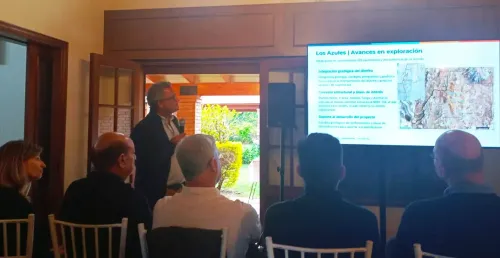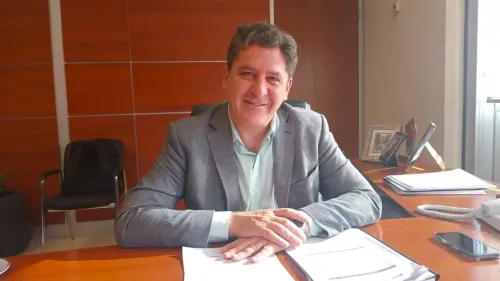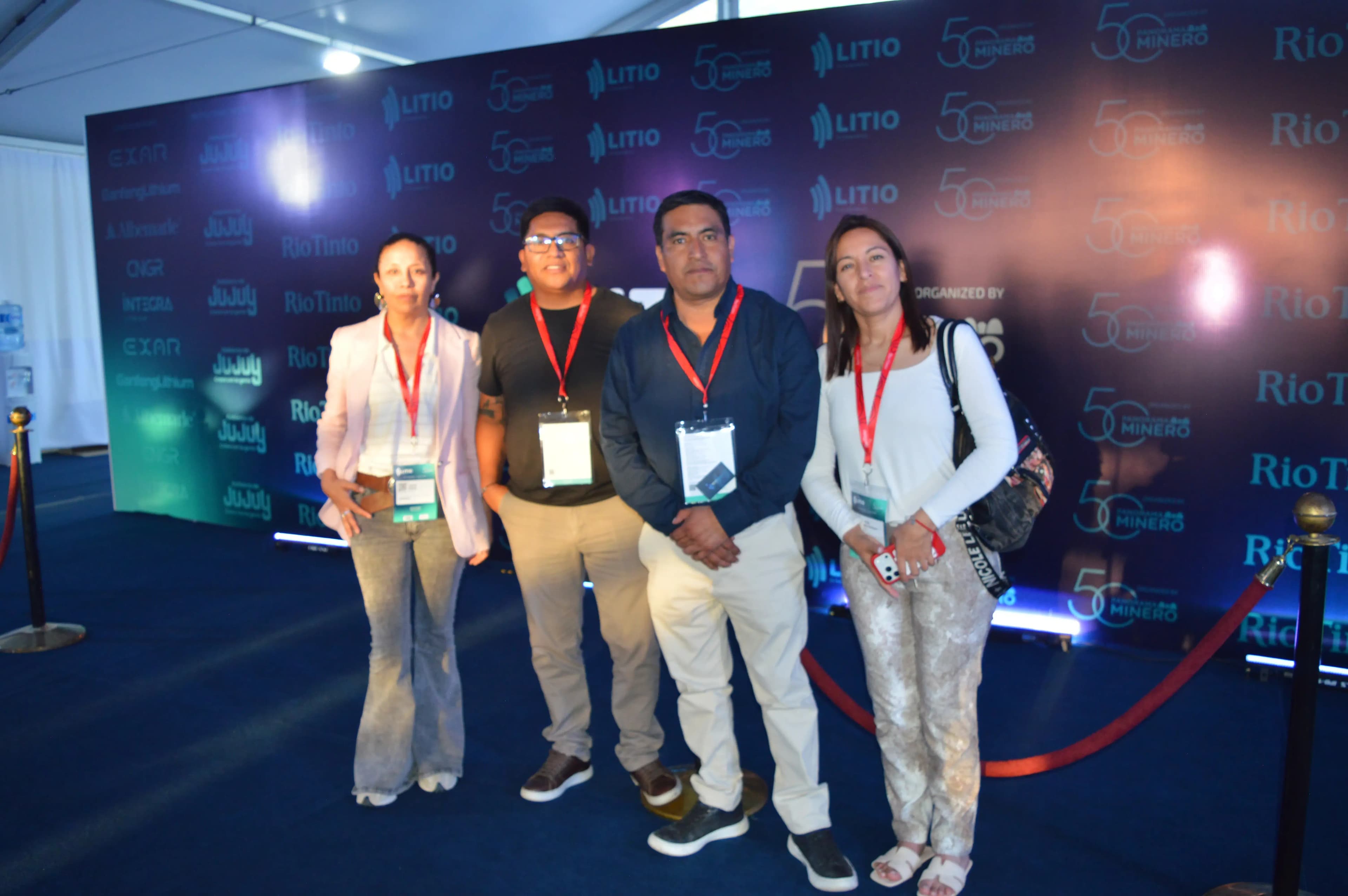
The growth of mining activity in northwestern Argentina is opening up new opportunities for companies supplying goods and services, which are seeking to establish partnerships and meet the industry’s increasingly demanding standards. At the 15th Lithium in South America Seminar, representatives of the Chamber of Mining Company Suppliers of Salta (CAPEMISA) and the Chamber of Mining and Tourism Service Providers of the Argentine Puna (CAPROSEMITP) agreed on the importance of training, competitiveness and the participation of local companies in the value chain.
By Panorama Minero
Pablo Robbio Saravia, Executive Manager of CAPEMISA, explained that Salta is experiencing a period of expanding exploration activity, with numerous companies advancing their projects. He therefore welcomed the development of the lithium industry and the commissioning of new facilities, such as POSCO’s plant in Salta, considering that investments should translate into greater productive activity throughout the region.
“We welcome companies carrying out drilling and then moving on to construction and production, so that the entire mineral value chain is productive, not only in the province but also across the region,” he stated.
He also noted that suppliers are anticipating future contracts, both directly and through partnerships with other companies in the sector. In this regard, he explained that provincial mining legislation includes provisions aimed at promoting the hiring of local workers and suppliers, without preventing companies from other jurisdictions from participating.
For Robbio Saravia, the challenge is to ensure that Salta companies can compete under appropriate conditions and meet the technical and operational requirements of mining companies. He therefore considered that partnerships with companies from other provinces and countries, as well as temporary business associations (UTEs), can help expand capabilities, generate employment and promote greater economic impact in the region.
He also explained that CAPEMISA has 320 suppliers operating across approximately 60 business categories, while Salta’s Provincial Mining Suppliers Register has around 800 registered companies. The range of activities includes drilling, construction, earthmoving, geological studies, consulting, catering and logistics, among other services.
Training is another central priority in supporting the growth of mining activity. In this regard, Robbio Saravia explained that companies must prepare to meet increasingly demanding standards. He noted that the chamber has agreements with educational institutions, including the Provincial University of Administration, Technology and Trades (UPATecO), the Catholic University of Salta and other higher education institutions, while also pursuing discussions with additional organisations.
He also recommended that young people explore educational opportunities related to engineering, technical qualifications and geology, given the diversity of professional profiles required by the mining industry.
The Puna Seeks More Opportunities
From a regional perspective, Gabriela Miranda, President of CAPROSEMITP, highlighted the role of small and medium-sized companies from the Puna in mining development. The organisation, whose origins date back to 2013 and which obtained legal status in 2019, represents business owners from the Puna regions of Salta, Jujuy and Catamarca.
The chamber currently comprises around 70 business owners, all originally from the region, with a presence in communities such as San Antonio de los Cobres, Olacapato, Tolar Grande and Pastos Grandes. According to Miranda, more than half of its members already work for mining companies, either directly or as subcontractors.
The chamber president explained that the organisation emerged from the need for representation, access to information and the establishment of business relationships that would enable local entrepreneurs to become involved in the industry. To achieve this, it promotes business matchmaking sessions, meetings with procurement managers and participation in specialised events, such as the Lithium in South America Seminar.
“Our objective is for chamber members to have all the tools they need to develop efficiently and meet the high standards demanded by mining companies,” Miranda explained when describing the organisation’s purpose.
She stated that training is one of the main challenges, although she believes it must go beyond isolated courses and workshops to become a sustained support process. The intention is to assist entrepreneurs from their first steps through to their consolidation as business owners, providing tools that enable them to professionalise their services and maintain their participation in the market.
Miranda also runs an engineering company and works on the assembly of trucks specifically intended for mining, an experience that reflects the diversification of services that can emerge within Puna communities themselves.
International Logistics and Supplier Development in Northwestern Argentina
Another key sector is logistics. Lizardo González, of Nortraders Argentina, highlighted the growth of international logistics, particularly through ports in northern Chile, and the strategic role of the Jama Pass and the Bioceanic Corridor in transporting supplies and exporting mining production.
“I do not talk about potential, because it is no longer potential; it is a reality,” he stated, emphasising the opportunities generated by the industry’s expansion. Nevertheless, he considered that financing and high interest rates continue to represent limitations for supplier companies.
The businessman considered it essential to strengthen strategic partnerships, exchanges between companies and early access to mining companies’ procurement plans so that suppliers can plan investments and respond to demand. He also highlighted the incorporation of young professionals and interns into the company as another way of bringing new talent into the sector.
He maintained that the objective is for mining investments to translate into greater local development and for regional companies to participate actively in the value chain, generating employment and opportunities for new generations.
In this regard, the company he founded has more than 30 years of experience in international trade and seeks to support mining growth in Jujuy, Salta and Catamarca through the supply of imported equipment and materials, as well as specialised foreign trade services.
He explained that the company also represents foreign manufacturers whose products are not manufactured in Argentina. Although it had already been working with the sector since 2008, in 2023 it decided to focus entirely on mining, expand its regional presence and establish offices in Jujuy, Salta and Catamarca, in addition to a subsidiary in Paraguay and a correspondent in Antofagasta, Chile.