Maximiliano Davico, Country Manager of Sandvik Argentina, highlighted the role of training and anticipated strong growth for the company in Argentina.
By Panorama Minero
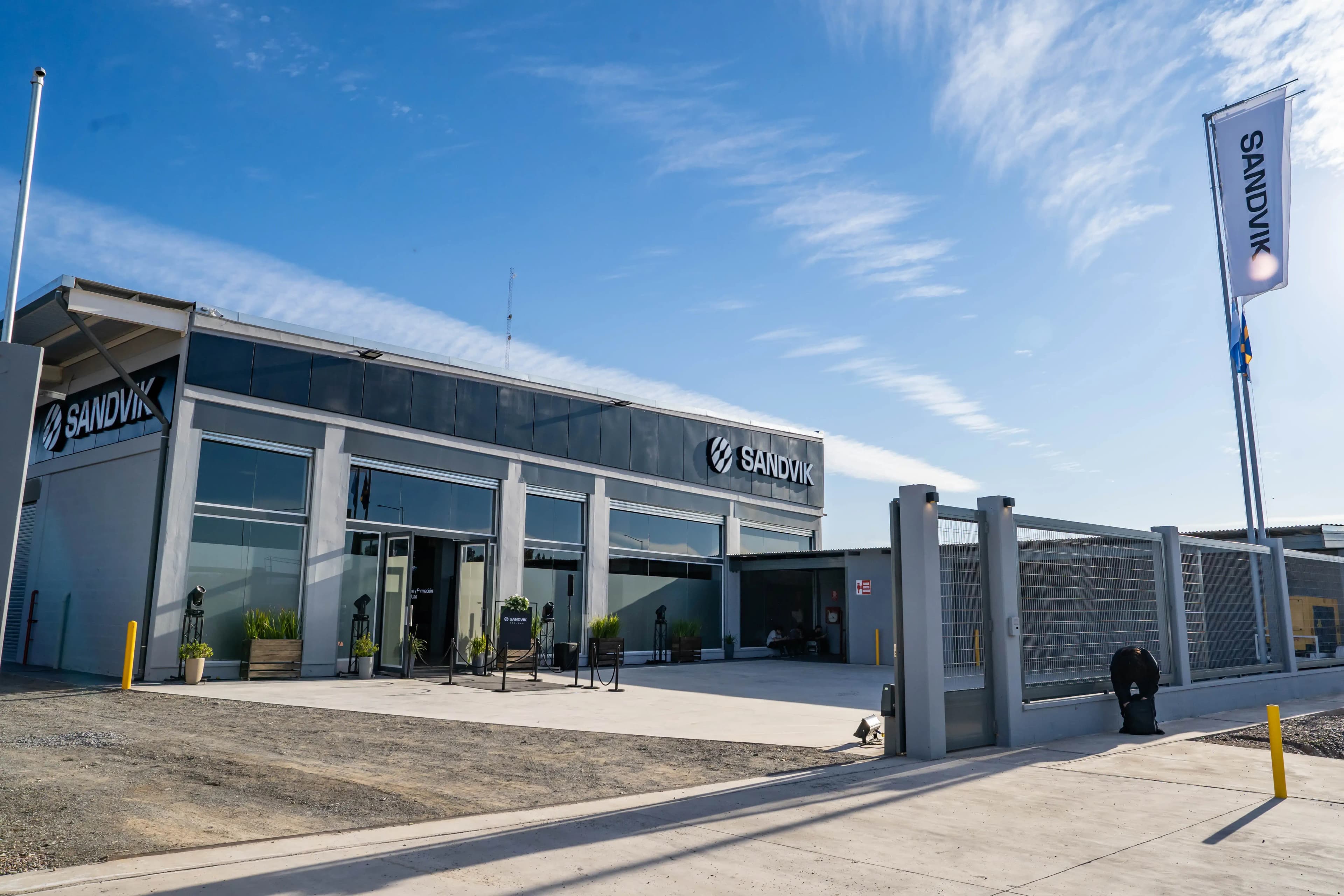
What does this inauguration represent in the history of Sandvik Argentina? Can it be considered a new milestone?
I believe it does indeed represent a new milestone, strengthening our presence in the province of San Juan and our commitment to the industry.
We have identified a significant knowledge gap among professionals, at both technical and higher education levels, particularly among engineers specializing in areas such as automation, digitalization and electrification. These are concepts associated with new technologies, but putting them into practice represents a major challenge.
What we are doing here is providing an opportunity for the province and, fundamentally, for more remote communities that do not have access to this level of technology, so that they can experience some of the most modern solutions available.
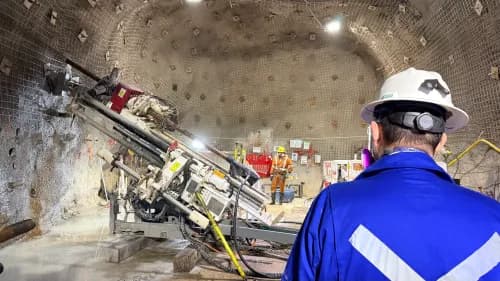
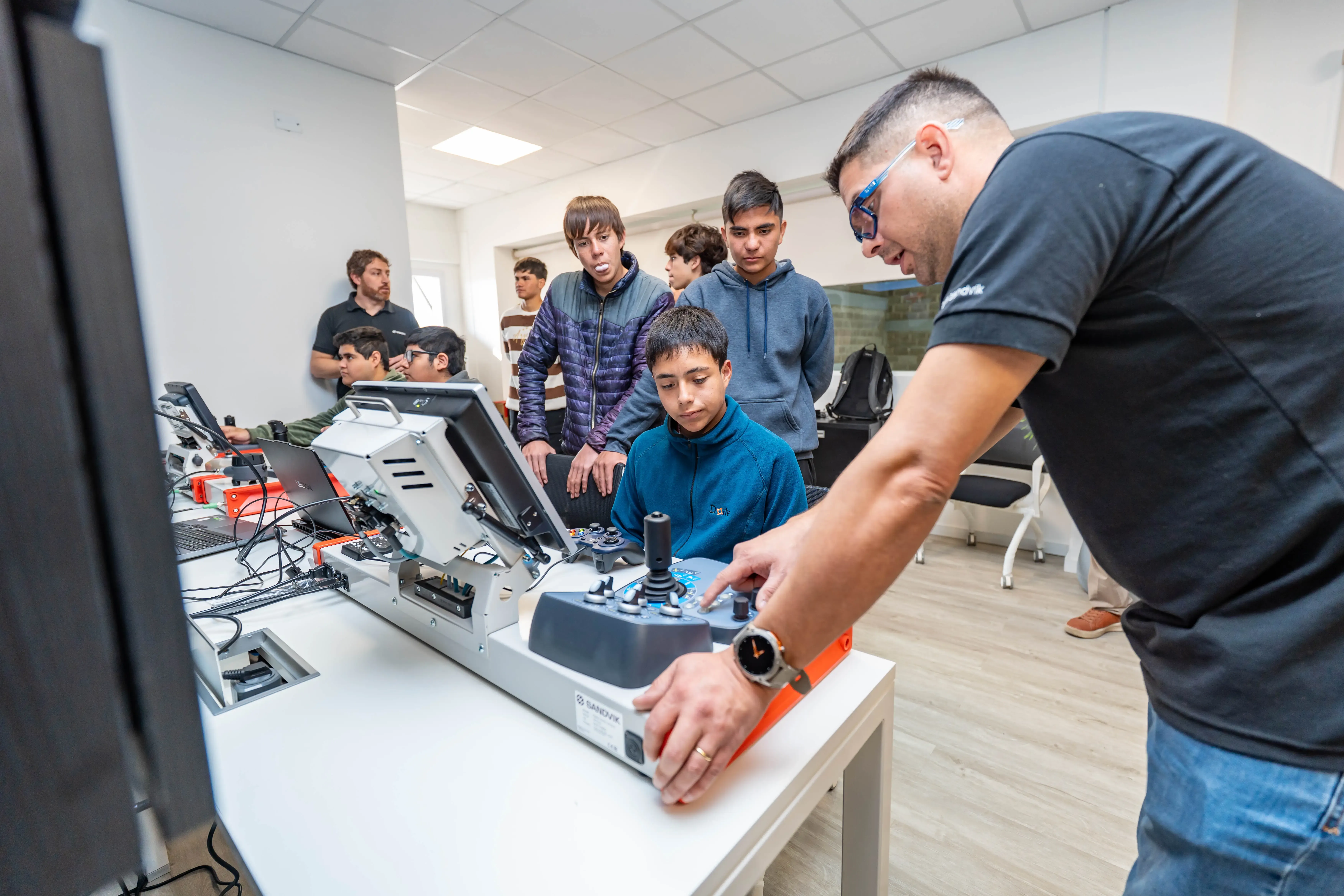
We have simulators for training operators of different types of equipment and profiles. In addition, we have incorporated two units that we will make available to technical schools, so that they can join us in training programs and use them for educational purposes.
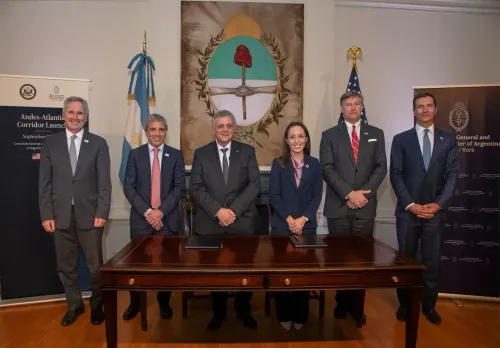
We have also just signed an agreement with the National University of San Juan. During this event, we signed a second agreement through which we will provide software, train faculty members and supply models to study the operation of certain equipment.
We have also signed an agreement with the University through Deswik, a Sandvik company. Deswik is a digital platform designed for the design, planning and execution of a mine throughout its life cycle. This initiative is already underway, and we are working on additional programs.
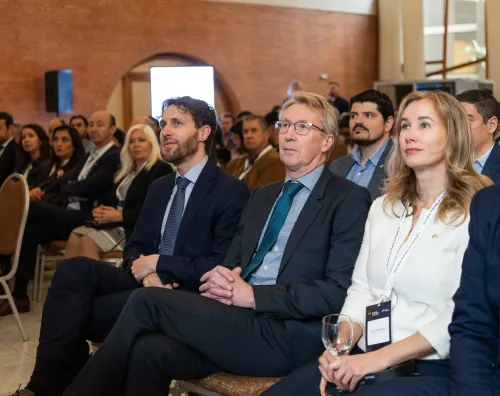
The presence of the Minister of Mining, the Minister of Production, the Secretary of the Governor’s Office, the Dean of the National University of San Juan and representatives of technical education demonstrates that we are moving in the right direction and strengthening our commitment to an industry in which we have participated for many years.
Will these facilities combine the functions of a training center, spare parts supply center and component repair facility?
Yes. I would say they will have a threefold role. First, they will operate as a center for supplying components and spare parts to operations located within a radius of approximately 600 kilometres. From here, we will be able to serve San Juan, Córdoba, Catamarca, Santiago del Estero and Mendoza, where we have numerous units in operation.
This includes not only metal mining, but also non-metallic mining, including quarries and dimension stone operations, as well as service companies and contractors.
Second, it will be a repair center for components coming from mining operations. The machines themselves will not necessarily be brought down from the mine, but their components will. We will also be able to repair equipment used by lime producers, quarries and construction companies.
The third pillar will be training. We seek to coordinate this training with secondary education and the University. There is foundational knowledge — hydraulics, electronics, electricity, networks and signals — that is not our core business to teach. We need those capabilities to be developed by specialists and, from there, complement that training with our knowledge and technologies.
Will this coordination include both the University and technical schools and technical degree programs?
Yes. The National University of San Juan offers different profiles, ranging from undergraduate and postgraduate degrees to technical degree programs. Those professionals will occupy an intermediate position between the technician or operator and the engineer.
We also have the profiles of those who graduate from secondary school and do not continue into higher education but can work as technicians or supervisors. In that case, coordination is carried out with the Directorate of Secondary Education of the Ministry of Education.
Those of us who have been in the sector for several years are beginning to observe a transformation in which new generations are starting to play an increasingly important role.
What role will artificial intelligence play in this transformation?
Artificial intelligence is a technology whose potential is still difficult to fully measure. Sandvik has around 70 research and development centers worldwide and more than 7,000 active patents. We are a company with a strong scientific and innovation-driven focus, and we seek to develop solutions for the industries in which we operate.
Naturally, we are working with artificial intelligence, but we still need to strengthen foundational capabilities.
The technology is available. Companies aspire to operate mines where people can remain outside areas exposed to risk and work from control rooms. That technology exists; the challenge is having professionals capable of implementing and maintaining it.
To achieve this, we need to work jointly with mining projects and companies, universities, the Ministry of Education and even trade unions. Training must involve all stakeholders that make up the industry.
We are not mining producers, but we are a part of the production process. If one of our machines stops, an operation can also come to a halt; and if it malfunctions, it can compromise people’s safety.
There are numerous developments related to artificial intelligence, but we are currently focused on building capabilities from the ground up. That is one of the fundamental aspects of advancing toward the mine of the future.
Autonomous and tele-remote operation is already a reality. Will these technologies also form part of the training?
Yes. The simulators we have here are designed for intelligent equipment. These machines can be operated from the cab, use automated functions or be connected to operate autonomously under human supervision.
Training will include these technologies. In fact, Sandvik autonomous equipment has been operating in Argentina for approximately five or six years.
The first implementation was not easy and encountered some resistance. However, once it was implemented, many of the people who initially had doubts became interested and sought to become part of that transformation.
On September 17, we welcomed students from a technical school located around 300 kilometres from here, in a town with fewer than 10,000 inhabitants. For those students, coming into contact with these technologies generated motivation while also opening up new perspectives.
That is precisely one of our objectives: to help generate that motivation and provide continuity through training.
What presence does Sandvik currently have in Argentina, and what growth do you expect over the coming years?
Our market share is very significant. We have been the leading player in the Argentine market for many years.
We currently have a team of approximately 220 people. Given the growth we anticipate, a new challenge arises: how to expand that workforce and secure the necessary human resources.
We expect significant growth and must prepare for it. For this reason, we launched Sandvik Academy, a program through which we recruit technicians and train them in collaboration with the University. They then spend time in our workshop and receive specific training on our equipment and technologies.
We expect to significantly increase our workforce over the next five years. It will probably double or even exceed that level.
Today we are inaugurating these facilities in San Juan, but we are already thinking about the next step in another province of Northwestern Argentina (NOA). We seek to strengthen and expand our presence because we consider local engagement and integration with communities to be fundamental.
What technologies is Sandvik developing to improve the environmental efficiency of its equipment?
We have several initiatives and technologies underway. First, we need to distinguish between diesel and electric equipment.
In diesel equipment, we have implemented a compressor management system that significantly reduces fuel consumption. In a large production drill rig, for example, one of the main sources of consumption is the air compressor.
Sandvik developed and patented a system that manages the compressor and uses it only when necessary. This makes it possible to reduce fuel consumption by between 20% and 25%. If we consider equipment that can consume between 100 and 200 litres per hour, the cumulative impact over time is considerable.
In electric equipment, we have grid support systems that provide a more uniform power supply and reduce the impact on electrical infrastructure.
In terms of sustainability, we also have a tungsten carbide recycling program, involving the material used in drill bit inserts. We are beginning to implement this program in Argentina. The recovered material is sent to Austria, where we have a processing plant.
That tungsten can subsequently be used to manufacture a new drill bit and return to a mining operation. In this way, we help reduce the need for primary tungsten extraction, reduce waste and move toward a more circular model.
These are some of the initiatives and technologies we currently have available. Our capacity for innovation and response is significant, but we need to understand the specific challenges facing the industry in order to develop solutions that address them.