Argentina occupies a central position in the global lithium market, supported by a combination of geological resources, rising production, a growing project pipeline and competitive operating costs. According to the latest lithium market report from Argentina’s National Mining Secretariat, the country holds approximately 21% of global lithium resources and nearly 12% of global reserves, positioning it as a regional leader and one of the world’s leading jurisdictions in terms of lithium resources.
By Panorama Minero
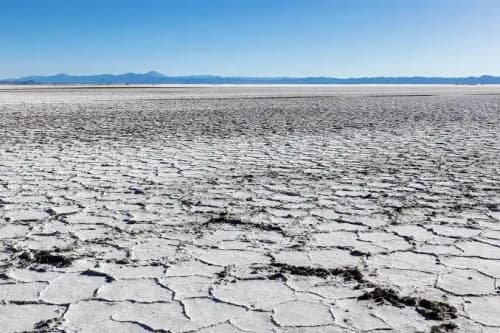
The figures take on greater significance within the Lithium Triangle, comprising Argentina, Bolivia and Chile, which together account for approximately 45% of global lithium resources. In Argentina, the main deposits are located in high-altitude salt flats across the northwest, with Jujuy, Salta and Catamarca serving as the country’s main development hubs.
Jujuy hosts large-scale operations such as Olaroz and Cauchari-Olaroz, while Salta’s Puna region is home to projects including Pozuelos-Pastos Grandes, Centenario-Ratones, Sal de Oro and Salar del Rincón. In Catamarca, operations and projects include Fénix, Kachi and Tres Quebradas, alongside the broader potential associated with the Salar del Hombre Muerto.
This geological base is complemented by a regulatory framework geared toward private investment. The report highlights Argentina’s Mining Investment Law No. 24,196 and the strengthening of investment incentives through Law No. 27,742, which established the Large Investment Incentive Regime (RIGI).
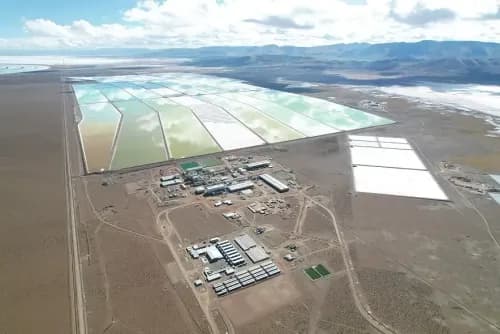
The result is a lithium project pipeline valued at more than US$12 billion in 2025, backed by a diverse range of investors and the growing adoption of technologies designed to improve process efficiency, including direct lithium extraction (DLE).
Higher Production and a Growing Project Pipeline
Argentina’s lithium industry accelerated during 2025. National production reached 120,000 tonnes of LCE, up 62% year over year. The increase was driven by seven projects at different stages of development and maturity, including operations undergoing ramp-up, expansion and optimization.
The performance of individual operations shows that production growth does not depend solely on new mines or processing plants. A significant share of the increase is coming from projects that are still ramping up toward nameplate capacity and from existing operations improving utilization rates through process optimization.
Fénix, in Catamarca, produced more than 31,000 tonnes of LCE during 2025, up 29% from the previous year, and is now operating close to full capacity. In Jujuy, Olaroz reached 34,000 tonnes, with utilization above 85% of installed capacity. Also in Jujuy, Cauchari-Olaroz produced more than 34,000 tonnes of LCE, with utilization exceeding 80% of capacity.
Other operations remain at different stages of ramp-up. Centenario-Ratones, Sal de Oro and Tres Quebradas have been producing for less than two years and therefore remain below nameplate capacity, leaving room for further production growth over the coming years.
Mariana joined this group after entering commercial production during the first half of 2026. Expansion plans are also being pursued at existing operations. Fénix, Cauchari-Olaroz and Sal de Oro have approved expansions aimed at increasing maximum capacity under the RIGI framework.
According to the Mining Secretariat, Argentina currently has 16 projects at advanced stages and more than 40 projects in prospecting and exploration. With the exception of Olaroz, all projects currently in operation have announced expansion plans for the coming years.
The combination of new operations, expansions and efficiency improvements points to a significant increase in national production.
Estimates based on company technical reports indicate that Argentina could exceed 400,000 tonnes of LCE in 2030 and reach approximately 573,000 tonnes by 2035.
Installed capacity is also expected to expand significantly. From 215,000 tonnes currently, it could reach 269,000 tonnes in 2026 and exceed 680,000 tonnes by 2035, more than tripling installed capacity compared with 2025.
Operating Costs Provide a Competitive Advantage in the Global Market
Production growth is taking place against the backdrop of a lithium market that has undergone a sharp price correction in recent years. In this environment, the ability to operate at competitive costs has become a key factor in determining which projects can remain viable, expand and advance to subsequent stages of development.
The Mining Secretariat’s report shows that the cash cost of lithium operations in Argentina fell 1.8% year over year in 2025.
The metric reflects direct operating costs, excluding depreciation of machinery and amortization of assets. The reduction was particularly significant because it occurred during a year in which the average price of lithium carbonate fell by 25%.
Lower costs were not sufficient to fully offset the decline in prices, but they helped maintain Argentina’s competitive position relative to other international producers.
The report identifies favorable geology, accumulated operating experience and the regulatory framework among Argentina’s main advantages, contributing to a globally and regionally competitive cost structure.
Reagents and plant expenses together accounted for more than 70% of total cash costs in 2025. Reagents include soda ash, calcium hydroxide and hydrochloric acid, while plant expenses cover maintenance, operating supplies, control equipment, health and safety, and insurance.
Both components recorded year-over-year declines during 2025, helping ease the overall cost structure.
Cost trends also varied by salt flat. Salar del Hombre Muerto, which includes Fénix, Sal de Oro, Sal de Vida, Hombre Muerto Oeste and Hombre Muerto Norte, reduced its cash cost by 1.3% year over year. At Salar de Olaroz, home to Cauchari-Olaroz and Olaroz, the reduction reached 6.8%, while Cauchari-Olaroz, considered individually, recorded a 2.3% decline.
Across all cases, reagents and other plant expenses increased their relative share of the overall cost structure. Royalties also represent a larger component at Salar de Olaroz.
These trends are particularly relevant for an industry that must sustain long-term investment through pronounced commodity price cycles.
Exploration: Argentina Remains Among the World’s Leading Destinations
The market correction also affected exploration activity. Argentina allocated US$67.3 million to lithium exploration in 2025, down 47% from 2024.
The decline came amid global oversupply and depressed prices, which led companies to reduce exploration budgets. However, Argentina’s contraction was slightly smaller than the decline recorded globally.
At that level of investment, the country remained the world’s third-largest destination for lithium exploration spending, behind Canada and Australia. This position is not new: between 2017 and 2025, Argentina captured approximately 13% of global lithium exploration budgets.
Junior companies played a decisive role. As in much of the world, prospecting and exploration activities were conducted primarily by smaller and junior companies, followed by major mining companies and, to a lesser extent, national and provincial government entities.
Public-sector companies are also playing a growing role in the search for new resources. YPF Litio is engaged in prospecting and exploration activities, with the potential for future brine production, while CAMYEN S.E., Catamarca’s provincial mining company, operates provincial areas in Salar de Pipanaco and the Catamarca Puna both independently and through partnerships, including a strategic exploration alliance with YPF Litio.
Higher Exports Despite the Price Cycle
Production growth translated directly into foreign trade. Argentina exported more than US$914 million in lithium products during 2025, up 42% year over year. Export volumes reached 113,000 tonnes of LCE, an increase of 57% compared with 2024.
The gap between volume growth and price performance highlights one of the main changes underway in Argentina’s lithium industry. Since 2023, export volumes have increased continuously, with year-over-year growth above 30% in 2023 and above 50% in each of the following two years.
This expansion occurred despite prices remaining significantly below the highs reached in 2022.
Lithium carbonate accounted for 90% of exports, with the remainder consisting of lithium hydroxide and lithium chloride. Export destinations, however, remain highly concentrated. China accounted for 81.1% of Argentina’s lithium exports, while China and South Korea together represented more than 87%.
The United States and Germany were the main destinations outside Asia, although together they accounted for only 15% of shipments.
This trade structure reflects the configuration of the global battery supply chain. China accounts for a substantial share of refining and intermediate component manufacturing and therefore remains the primary market for lithium carbonate produced in Argentina.
An International Market Beginning to Shift
The international market is showing signs of recovery following the sharp correction that began in 2023.
Lithium prices reached US$22,250 per metric tonne in May 2026, their highest level since January 2024, after falling to a five-year low in June 2025.
The improvement comes as the balance between supply and demand begins to tighten, making the market increasingly sensitive to potential supply disruptions and expectations surrounding future availability.
Another significant change has emerged in the relationship between carbonate and hydroxide prices. During the first half of 2026, lithium carbonate prices consolidated above lithium hydroxide, partly due to the expansion of lithium iron phosphate (LFP) batteries, which use carbonate as a feedstock and offer comparatively lower costs.
The price recovery has also improved producer margins. According to the report, EBITDA at companies including Tianqi Lithium and Ganfeng Lithium doubled during the first quarter of 2026 compared with the same period a year earlier. A similar trend was observed at SQM’s operations in Chile.
For Argentina, the changing international environment finds an industry with a larger production base, projects at different stages of maturity and an operating cost structure that improved over the past year.
From 120,000 to 573,000 Tonnes: The Scale of Argentina’s Projected Growth
The magnitude of expected growth illustrates the transformation the sector could undergo over the next decade. Argentina is projected to move from 120,000 tonnes of LCE produced in 2025 to approximately 573,000 tonnes by 2035.
The increase would be supported by expansions at existing projects, new operations and the advancement of projects currently under development.
Installed capacity is expected to grow even faster, from 215,000 tonnes in 2025 to more than 680,000 tonnes by 2035.
The potential impact on exports will naturally depend on international lithium prices. Based on estimated production of approximately 570,000 tonnes of LCE in 2035, the Mining Secretariat outlined three scenarios. Under the base case, assuming a price of US$20,000 per tonne of LCE, exports could reach US$11.4 billion.
Under a stress scenario, with prices at US$18,900 per tonne, exports would generate approximately US$10.77 billion. Under a favorable scenario, with prices at US$23,000 per tonne, exports could reach US$13.11 billion.
The projections show that Argentina’s challenge is no longer limited to confirming the existence of lithium resources. The country already holds one of the world’s largest lithium endowments and has significantly expanded its project pipeline. The focus is increasingly shifting toward converting those resources into production, maintaining competitive costs, expanding operations and achieving greater scale in an increasingly demanding international market.
In this process, cash cost performance takes on strategic importance. The reduction recorded during 2025, despite a sharp decline in prices, shows that Argentine operations continue to improve efficiency while increasing production.
Jujuy to Bring the Lithium Industry Together
These issues will be at the center of discussions during the 15th edition of Litio en Sudamérica, to be held in Jujuy on October 7–8. The event will bring together representatives from Argentina’s national government, lithium-producing provinces, mining companies, investors, international organizations and specialists from across the global lithium value chain.
Production forecasts, market trends, costs, emerging technologies, financing and Argentina’s competitiveness will form part of an agenda examining how the country is preparing for the industry’s next stage of growth.
The event will also provide perspectives from leading producers and the provinces at the center of Argentina’s lithium industry. Participants will include representatives from Rio Tinto, Albemarle, EXAR, Eramet Eramine, Lithium Argentina, Ganfeng and CNGR, alongside national and provincial government officials.
At a time when Argentina combines a leading position in lithium resources with expanding production, a diversified project pipeline and improving operating costs, the Jujuy event will provide a platform to examine the industry’s next challenge: turning geological potential into greater production, exports and long-term competitiveness.