South America holds more than 50% of global lithium resources and could exceed 915,000 tonnes LCE of production by the end of the decade. Argentina is expected to account for more than half of the region’s projected new supply, although infrastructure, financing and regulatory conditions remain among the main challenges.
By Leticia Simionato
Senior Price Reporter, Fastmarkets
At the Fastmarkets conference, one question served as the common thread running through the entire discussion: “Can South America unlock its full lithium potential?” One message clearly emerged from the discussions: although the market continues to navigate uncertainty and volatility, lithium’s long-term importance to the global energy transition remains undeniable, and South America will continue to play a central role in this story.
On August 5, the UK-based consultancy brought its market intelligence expertise to Buenos Aires through the first edition of the Fastmarkets Lithium South America: Market & Investment Outlook conference, providing key market insights.
The region is a key destination for those interested in investing in and developing the lithium sector. South America holds more than 50% of global resources and is home to many of the world’s most renowned projects. In Brazil, hard-rock production is concentrated mainly in the Vale do Jequitinhonha, in the state of Minas Gerais.
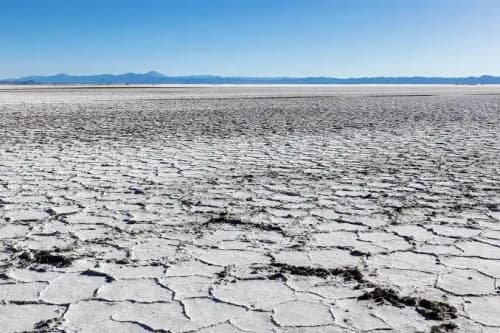
Above all, the region is home to the well-known Lithium Triangle, spanning Argentina, Chile and Bolivia, where lithium is extracted from brine deposits located in salt flats.
According to Fastmarkets’ research team, Brazil currently has three operational plants alongside 33 projects at various stages of development. Argentina has 86 lithium projects in exploration and construction, primarily located in the provinces of Catamarca, Jujuy and Salta, with 12 operations currently active. Chile has 23 projects at different stages of development and two operating facilities, while Bolivia has limited production, with only one producing company.
For Fastmarkets, South America remains one of the pillars of the global lithium supply chain. In 2025, the region accounted for 30% of global mined lithium supply, producing around 480,000 tonnes of lithium carbonate equivalent (LCE) out of a global total of 1.6 million tonnes. Chile represented the largest share at 300,000 tonnes LCE, while Argentina and Brazil contributed 130,000 and 32,000 tonnes LCE, respectively.
The region is expected to see significant growth through the end of the decade. These three countries are forecast to add 450,000 tonnes LCE of mined production, pushing South American output above 915,000 tonnes LCE, while maintaining its share of the global supply base, according to Fastmarkets’ research team.
The challenge of turning resources into competitiveness
However, geological potential alone is not enough. Countries have already identified abundant lithium resources, but the challenge has been financing them, as public funding announcements do not always translate into deployed capital.
Considering that having world-class resources is only part of the equation, the key challenge for market participants is transforming that geological advantage into long-term competitiveness through deployed capital. As projects advance and capital becomes increasingly selective, producers, investors and policymakers are asking the same questions: How competitive is South America on the global cost curve? What conditions are required to attract investment? And how can the region capture more value from the energy transition while building a resilient and sustainable industry?
The region’s main challenges
One of the most valuable aspects of Fastmarkets’ initiative in Buenos Aires was the depth of discussion around the challenges facing the industry and the areas where improvements are needed to unlock the region’s full production potential.
From my perspective, the main takeaways were:
-
Infrastructure remains the biggest growth constraint, highlighting the need for stronger public-private partnerships to address poor logistics, limited energy supply, labour shortages and underdeveloped transport networks.
-
Collaboration between the public and private sectors is essential to unlocking long-term investment.
-
Regulatory and political uncertainties continue to affect project development.
-
The outlook for direct lithium extraction (DLE) is increasingly positive.
-
Global competition for lithium supply is intensifying.
-
Licensing challenges, regulatory fragmentation and limited access to funding remain key obstacles.
-
The future development of South America’s lithium value chain, including downstream opportunities, remains a central question.
Argentina, facing a new stage of growth
Despite these challenges, all three major producing countries in South America are expected to expand production over the next five years, and Argentina stands out. For Fastmarkets’ research team, more than 50% of the additional mined supply forecast for the region is expected to come from Argentina, supported by strong investment from local, Western and Asian mining and lithium companies. At the same time, the adoption of DLE technologies is improving the flexibility and responsiveness of the region’s brine producers.
Furthermore, Fastmarkets’ research team forecasts a market deficit emerging in 2026 as demand growth outpaces supply. South America’s strong position in lithium carbonate production also places the region at the centre of future battery chemistry developments.
Globally, lithium iron phosphate (LFP) battery adoption continues to grow, driven by Chinese vehicle manufacturers. At the same time, the rapid expansion of energy storage systems (ESS), supported by renewable energy deployment and the growth of AI-driven data centers, further strengthens the importance of lithium carbonate and positions South America at the heart of the energy transition.
Looking ahead
Looking ahead, the lithium sector will continue to face cycles, challenges and changing market conditions. Yet South America’s resource base, innovation and ambition provide strong reasons for confidence in the region’s future role in global supply.
However, success will depend not only on bringing new tonnes to the market but also on building resilient supply chains, fostering collaboration across countries and maintaining transparency to attract investment in an increasingly dynamic market.