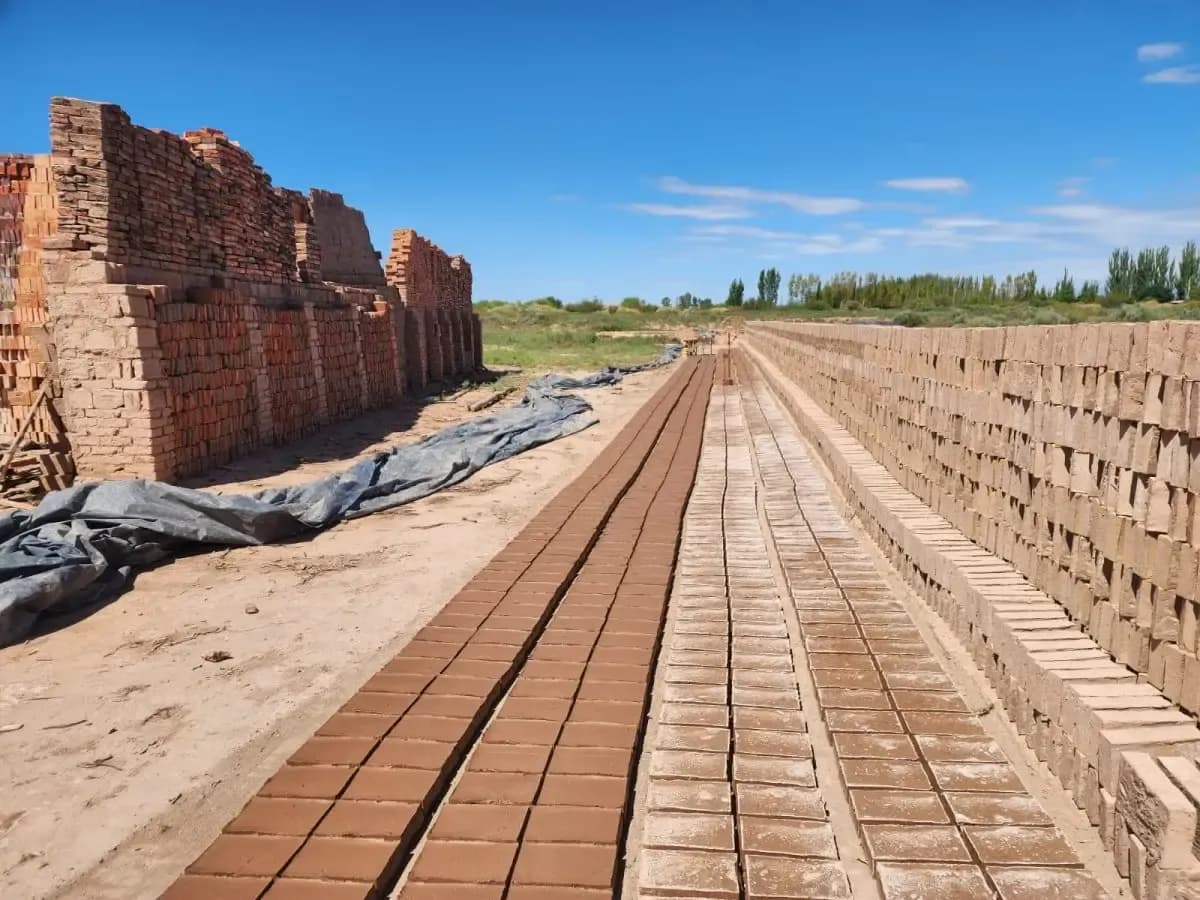
Active brickmaking operations in Mendoza will be required to submit a specific Baseline Report as a condition for continuing operations. The Province approved a new form designed to assess the productive and environmental status of each operation, evaluate its impacts, and establish the remediation and management measures required to comply with the provincial mining framework.
By Panorama Minero
The measure was established through Resolution No. 540/26 of the Mining Directorate and Resolution No. 55/26 of the Environmental Management and Inspection Directorate, which introduced a specific annex for the brickmaking industry. The requirement applies both to the holders of brickmaking operations—classified as third-category mines—and to their respective active processing plants.
The new instrument addresses an activity that combines clay extraction and its subsequent transformation at the same site through mix preparation, molding, drying and firing. The Baseline Report must determine how each production unit currently operates and assess its environmental status before establishing the measures required to bring it into compliance.
A Specific Framework for an Activity with Its Own Characteristics
The brickmaking industry was already covered by the environmental framework applicable to third-category mines and processing plants. In fact, the resolution itself acknowledges that the existing Annexes I and II could be applied to these activities. However, the Mining Environmental Authority decided to develop a specific form in recognition of the sector’s particular productive, social and economic characteristics.
These include family-run operations, informal employment, infrastructure limitations, artisanal production and processing, a smaller scale than industrial plants, and a lack of professional technical assistance. Brickmaking operations also combine extraction, processing and stockpiling activities at the same site.
The approach adopted was to keep these operations within the mining environmental framework while introducing an instrument tailored to their characteristics and designed, as established by the resolution, to avoid imposing disproportionate administrative burdens.
The decision is also linked to Resolution 450/25 of the Mining Directorate, which established criteria for processing plants. The new regulations specifically address this relationship, stating that the combination of extraction, processing and stockpiling activities at brickmaking operations requires a dedicated instrument.
A Productive and Environmental Snapshot of Each Brickmaking Operation
Annex III illustrates the scope of the Baseline Report. Each operation will be required to report the total surface area of the property and the area actually disturbed provide evidence of its legal right to use the property, and describe how clay extraction is carried out.
This includes the method used—from manual work to backhoe loaders—the typical extraction depth, characteristics of the working faces, any potential disturbance of watercourses, and extraction or production volumes expressed in cubic metres or tonnes per day, month or year.
The entire production process must also be documented: extraction, molding, drying, firing, raw-material storage, stockpiles and waste materials. Information on machinery, available utilities and the number of workers must also be provided, along with whether the operation is family-run, organized as a cooperative, or operates under another organizational structure.
The assessment will also include a spatial component. Operations must submit a georeferenced map identifying the clay extraction area, molding and drying areas, kiln, raw-material stockpiles, finished-product and waste storage areas, as well as internal roads and access routes. The filing must also include a photographic record containing at least six images.
Kilns and Their Relationship with Surrounding Populated Areas
One of the areas for which the form requires the greatest level of detail is the firing process. Each operation must identify the type of kiln used and disclose the fuels consumed—firewood, gas, diesel or others—together with estimated monthly quantities and their source.
The assessment will not be limited to the boundaries of the site. The Baseline Report must identify homes, neighboring productive activities, community infrastructure, public-use areas, and frequently traveled roads or highways. It must also establish the approximate distances between the firing area and the nearest sensitive receptors.
From there, the analysis will incorporate atmospheric dispersion conditions. Producers must report prevailing wind direction and intensity, typical kiln operating schedules and durations, and the relationship between nearby receptors and prevailing winds.
The form specifically requires an assessment of particulate matter, smoke and combustion gas emissions associated with the firing process. Where populated areas are present, the assessment must also consider the proximity of homes and other facilities, the frequency, duration and intensity of visible emissions, and weather conditions that may affect their dispersion. The impact must ultimately be classified as minor, moderate or significant, with justification provided for the assigned category.
Subsequent measures may even affect the way kilns are operated. The Environmental Management Plan provides for adjustments to operating hours, measures to improve combustion efficiency, chimney specifications—including height and design—proper management of fine-material stockpiles, and preventive measures under adverse weather conditions.
Mandatory Remediation with a Maximum Six-Month Deadline
The environmental assessment must subsequently translate into concrete actions. Annex III establishes a mandatory Remediation and Restoration Plan covering extraction faces, dust and air-quality control, wastewater and sewage management, and site rehabilitation.
Regarding water management, the destination of water whose quality has been altered by the activity must be specified. The form establishes that such water may not be discharged into watercourses without treatment and the corresponding authorizations from the General Department of Irrigation. Site rehabilitation must also include a revegetation plan using adapted native species.
Implementation will be subject to a specific timeframe. The schedule must establish milestones and may not exceed six months from approval of the plan, unless a duly justified exception is granted.
The obligation must also have adequate financial backing. The minimum documentation required includes an estimated budget and the resources allocated to implementing the Remediation Plan. Finally, the operator must formally commit, through a sworn statement, to complying with both the remediation program and the Environmental Management Plan within the approved deadlines.
From Remediating Existing Impacts to Managing Ongoing Operations
The framework distinguishes between the remediation of existing impacts and the environmental obligations that will subsequently apply throughout continued operations.
Accordingly, in addition to the Remediation Plan, the form requires comprehensive plans covering waste management, fuels and lubricants, and occupational health and safety. Environmental contingency measures must also address earthquakes, Zonda winds, storms and fires, along with a simplified environmental monitoring program and operational records and logs.
The Baseline Report therefore establishes a sequence that begins with an assessment of each operation, continues with the identification and evaluation of its impacts, and ultimately leads to remediation and environmental management measures designed to support continued operations.
From Field Assessments to a Specific Regulatory Framework
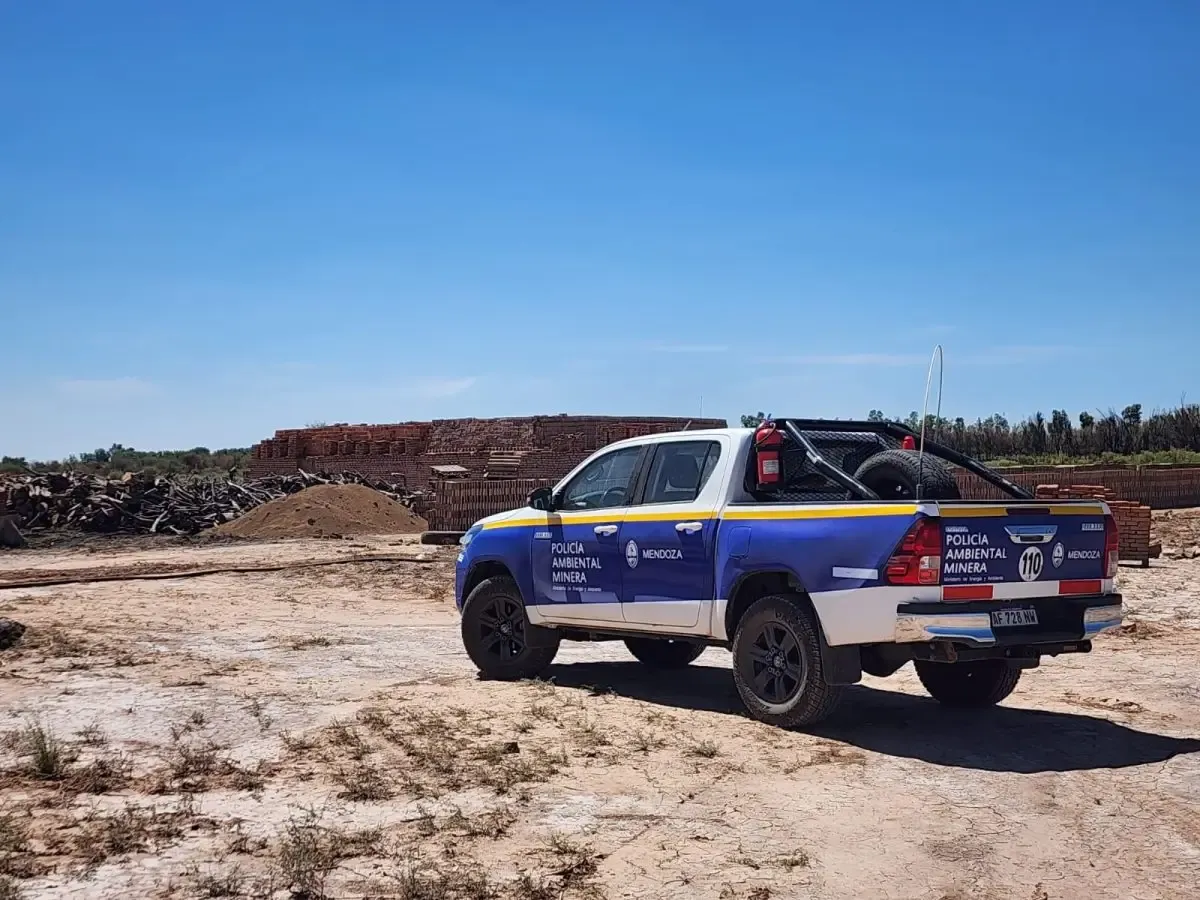
Approval of the form follows a period of fieldwork focused on the brickmaking industry. In March, the Mining Environmental Authority conducted an assessment in Jocolí, Lavalle, aimed at identifying active producers, workers and families connected to brick production and understanding the technical conditions under which clay was being extracted and processed.
The August resolution itself cites as background the work carried out by the Sustainability Area of the Mining Directorate, together with municipalities and stakeholders from the brickmaking sector. This work included kiln surveys, interviews, interinstitutional meetings and the handling of complaints, based on which technical teams assessed the need to incorporate a specific annex into the Baseline Report framework.
The result is a differentiated instrument within a broader process aimed at regulating third-category mining activities. The Province initially moved forward with the environmental regularization of these operations, subsequently strengthened inspection and mineral traceability, and extended oversight to the plants where these materials are processed. The new Annex III applies this framework specifically to the realities of brickmaking operations, defining the information they must provide, the impacts they must assess, and how they must address environmental compliance in order to continue operating.