Catamarca’s Ministry of Mining has approved an update to the Environmental Impact Assessment (EIA) for the production stage of the Sal de Vida Project, operated by Rio Tinto (formerly Galaxy Lithium S.A.). The update includes the implementation of a Direct Lithium Extraction (DLE) process developed in partnership with ILiAD Technologies. This method separates lithium from brine through selective adsorption or other separation technologies, aiming to accelerate production timelines and improve processing efficiency.
By Panorama Minero
Following the public participation process, the Ministry approved the conditioning of previously authorized works and the pilot implementation of Direct Lithium Extraction (DLE) at the Sal de Vida project. This will allow the deployment of technology developed by U.S.-based ILiAD Technologies, with which Rio Tinto has been collaborating for several years to advance the project.
The Direct Lithium Extraction process still requires brine to be pumped from the salar in the conventional way. The brine is then processed through selective separation systems designed to capture dissolved lithium. These technologies aim to reduce processing times compared to traditional evaporation-based methods. In Argentina, Eramet already operates a DLE-based system at its Centenario-Ratones project, where the company reports lithium recovery rates close to 90%.
For the Sal de Vida project, the Ministry clarified that this activity is specific to the pilot phase and “does not imply changes to the project design or production method,” while noting that “any future modification or change of operator will require a new evaluation.”
At Sal de Vida, the pilot will implement technology developed by ILiAD Technologies, providing a real operational demonstration designed to evaluate performance, efficiency and scalability under field conditions. The company has been associated with Rio Tinto since 2023, when the operation was still under Livent.
The system uses adsorbent materials capable of selectively capturing lithium from the brine, which is subsequently released through a desorption process for further processing. Unlike traditional evaporation pond systems, these processes may allow the reinjection of processed brine and potentially reduce the water and environmental footprint of operations. They also allow different brine compositions to be treated more rapidly and selectively.
ILiAD has spent nearly a decade developing and piloting this extraction technology, and the objective at Sal de Vida is to evaluate long-term performance and operational efficiency under real salar conditions. When the pilot program was announced, ILiAD CEO Samuel Moore said that “recent improvements in our DLE technology offer significant cost savings for projects.”
“This collaboration reflects growing industry interest in high-performance DLE technologies, amid sustained global demand growth for lithium used in electric vehicles and energy storage systems,” he added.
Recently, after a meeting with company representatives in New York, Catamarca Governor Raúl Jalil highlighted that Rio Tinto “has nearly thirty years of operations at Fénix and is advancing the Sal de Vida project, which is expected to begin production in the second half of 2026.”
“We are working to ensure that this growth translates into more employment, more development and greater opportunities for the people of Catamarca,” he said.
About the project
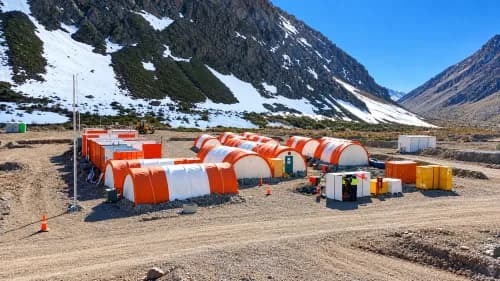
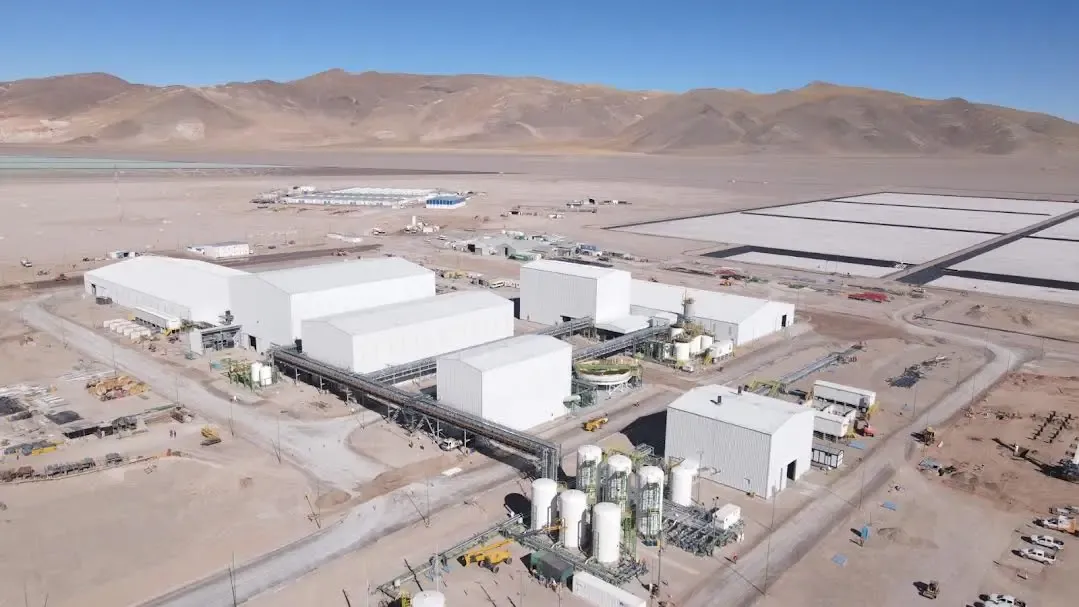
Sal de Vida is located in the Salar del Hombre Muerto, in the department of Antofagasta de la Sierra, Catamarca province, and involves several mining properties and infrastructure easements related to facilities, camps and water use.
According to Rio Tinto’s 2025 Annual Report, the project, which is 100% owned by the company, has a planned capacity of 15,000 tonnes per year of lithium carbonate, with US$700 million in committed investment and first production expected in the second half of 2026.
At the end of the reporting period, construction had been completed and commissioning activities were approximately 40% advanced.
For Rio Tinto, Sal de Vida is one of two Catamarca-based projects defining its near-term development schedule in Argentina. The other is Fénix 1B, also expected to begin production in 2026.