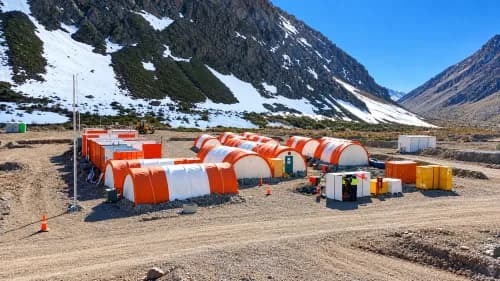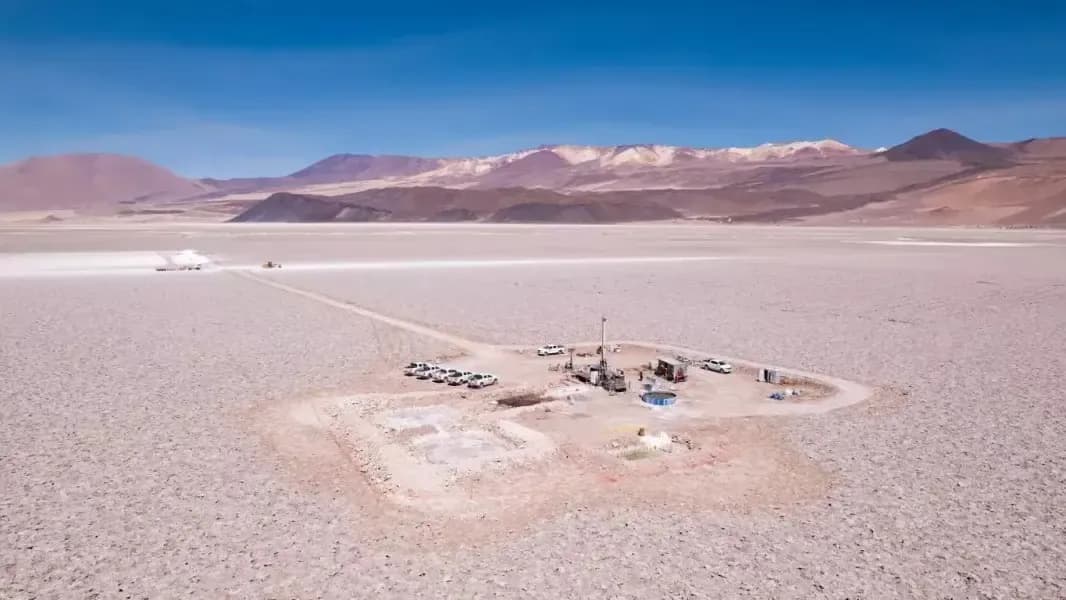
The new exploration campaign aims to deepen hydrogeological understanding of the brine system, optimize resource models, and strengthen the project’s positioning within one of the most prospective basins in the Lithium Triangle.
By Panorama Minero
The Río Grande Project, located in the province of Salta, is entering a decisive stage with the start of the 2026 exploratory drilling campaign by NOA Lithium Brines. The company confirmed the beginning of mobilization and field preparation activities, with drilling expected to commence next month.
This phase is part of a technical roadmap aimed at completing the Prefeasibility Study (PFS). The program will focus on drilling new wells in areas near previous holes, such as Sulfa X and El Camino II, with the objective of evaluating hydraulic parameters in deep brine-bearing aquifers.
The data obtained will help refine hydrogeological and resource estimation models—critical elements for reducing technical uncertainty in early stages and improving the design basis for future development phases, noted Gabriel Rubacha, CEO of NOA Lithium Brines.
The company reported that the drilling plan has been reviewed and validated by Montgomery & Associates, a specialized firm also involved in water balance modeling and PFS preparation, providing independent technical support to the process.
Geological Potential and Project Scale
NOA Lithium Brines controls 100% of approximately 37,000 hectares in the Río Grande Salar, a system located at around 3,600 meters above sea level in the Salta Puna, with geological conditions comparable to other lithium and potassium-producing salars in the region.
The asset presents a relevant competitive context: it shares the basin with Pluspetrol, one of the main concession holders in the salar, which acquired LSC Lithium Corporation in 2019. LSC had previously defined an inferred resource of 2.2 million tonnes of lithium carbonate equivalent (LCE) with an average grade of 374 mg/l lithium, based on drilling up to 100 meters depth.
However, more recent studies suggest brine potential down to 500 meters, opening a significant expansion window for projects like Río Grande, particularly in adjacent blocks controlled by NOA Lithium Brines.
Strategic Location and Infrastructure
The project benefits from a strategically advantageous location: it lies near Provincial Route 27, 185 km from National Route 51—a key corridor to Pacific ports in Chile—and approximately 50 km from the international railway station at Caipe. Additionally, the InterAndes energy corridor is located just a few kilometers from the salar.