Caleras San Juan has entered a new institutional stage following the sale of 80% of its shares to the international Belgian group Carmeuse. Businessman Raúl Cabanay explained that he will retain his stake and highlighted the continuity of employment and the investment plan.
Cabanay emphasized that the transition will be gradual and that the new partners share the same values regarding safety and environmental protection.
The transaction will enable the integration of the activities of both companies and strengthen their regional leadership in lime production.
By Panorama Minero
Caleras San Juan has entered a new phase in its institutional development following confirmation of the sale of 80% of its shareholding to Belgian company Carmeuse. The transaction was formally completed with the signing of the definitive agreement in the City of Buenos Aires. The transfer of the shares marks the conclusion of a process of analysis and negotiations that extended over several months.
During the period leading up to the signing of the agreement, Caleras San Juan attracted the interest of the leading international corporations in the lime market. According to engineer Raúl Cabanay, the San Juan-based company became a highly valued and sought-after asset among the world’s leading groups in the sector, which expressed their intention to either become partners or acquire all of the company’s shares. The groups that submitted formal proposals included Carmeuse, considered the world’s number one company in the lime industry; Lhoist, which ranks second globally in the market; and Peru’s Grupo Gloria.
Faced with the different alternatives proposed by the investment groups, the two shareholders of Caleras San Juan held extensive discussions regarding the corporate direction to be followed. After assessing the situation within his family, Raúl Cabanay decided to retain his shareholding. His decision was based on the Cabanay family’s deep roots in San Juan Province, its long-standing tradition in lime production, and his 40-year career and strong personal passion dedicated to the industry. In contrast, his former partner Daniel Van Lierde took a different position regarding the company’s future and decided to sell his entire stake, equivalent to 80% of the shareholding.
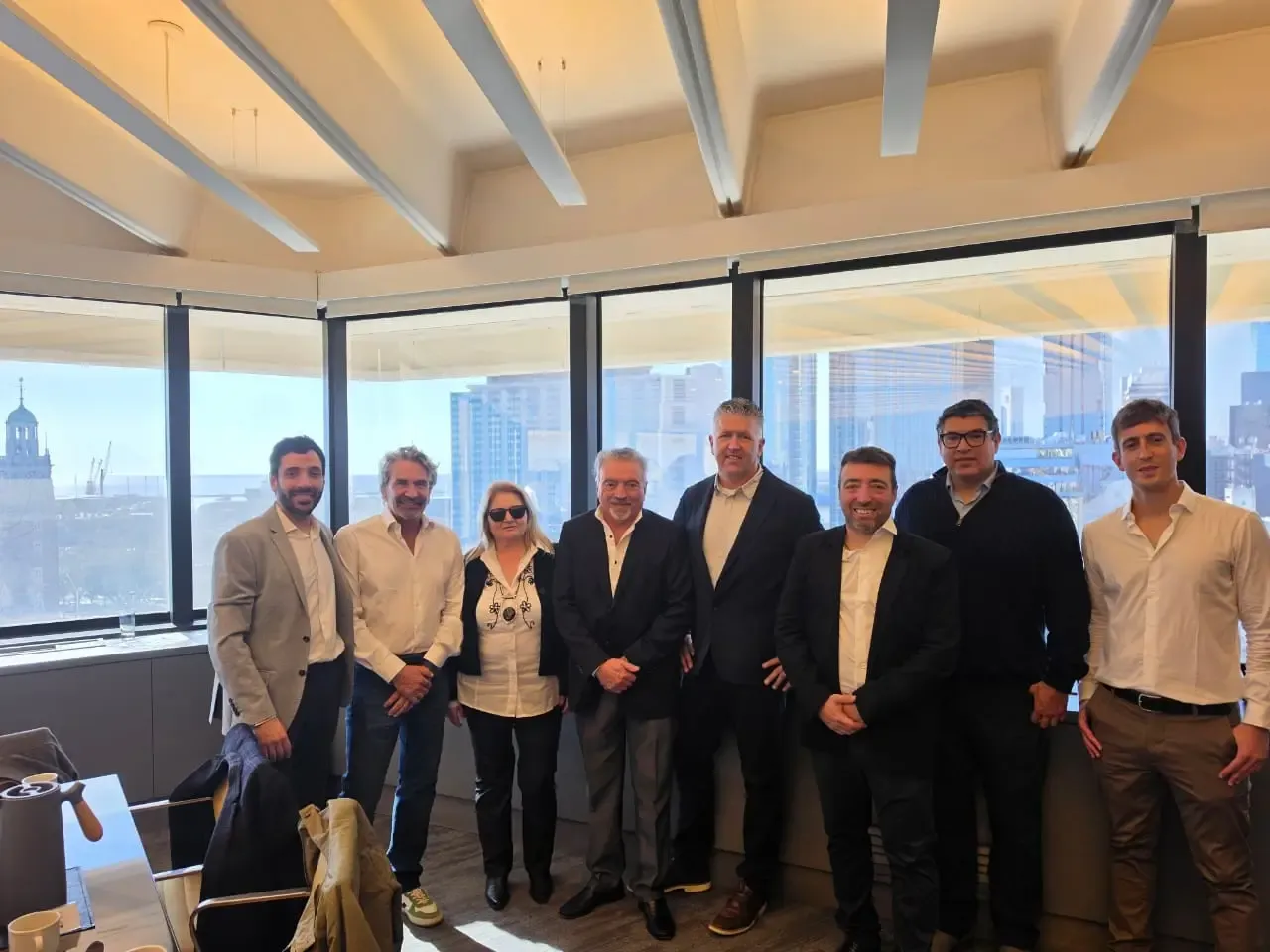
Because Raúl Cabanay remained firm in his decision not to sell his shares, he did not participate in the sale negotiations. The entire negotiation process with the buyers was handled exclusively by his former partner, who conducted the negotiations and finalized the terms of the agreement. Cabanay’s presence in the City of Buenos Aires was therefore solely for the purpose of formally signing the documents and establishing initial personal contact with representatives of the company’s new partner.
Reflecting on the conclusion of this period, Cabanay said he experienced mixed emotions, highlighting that he maintains an excellent friendship with his former partner, whom he described as a person of great human qualities. The two businessmen shared a decade of management during which they acted as entrepreneurs focused on radically transforming the company. Cabanay described those ten years as an extremely successful and productive period, during which the company was restructured through the incorporation of cutting-edge technology, the installation of a photovoltaic solar park and the implementation of reforestation initiatives, among other measures.
A central point addressed by Raúl Cabanay was conveying an explicit message of reassurance to the company’s employees and the San Juan community. Cabanay emphasized that Caleras San Juan will maintain its normal operations and will continue to grow and generate economic value for the well-being of the so-called “lime industry family” and the communities surrounding the plant. In this context, he stated that the investment plan will continue as scheduled, providing a guarantee of job stability and continuity for all personnel.
It was also reported that representatives of the new majority shareholder provided explicit assurances that the transition will take place gradually and without disruption. Cabanay emphasized that the company is not arriving to take anything away or alter day-to-day operations, but rather to add opportunities for long-term development and progress. Consequently, employees will continue carrying out their usual duties, backed by the planned investments and the financial strength of the new corporate alliance.
During these initial discussions, Carmeuse executives highlighted that they share the same fundamental values that have guided Caleras San Juan throughout its history. According to Cabanay, both parties fully agree on giving absolute priority to people’s safety in the workplace and to the implementation of environmental protection policies, positioning both areas as matters of the highest operational importance.
The acquisition of 80% of Caleras San Juan adds to other major transactions recently carried out by Carmeuse in the region. The international group had previously acquired Cementos Bio Bío (CBB) in Chile and, through that transaction, the El Refugio deposit located in Jáchal, San Juan. In Chile, the group has an estimated production capacity of 800,000 tonnes of lime per year for the domestic market.
Through the integration of these operations, the alliance between Caleras San Juan and Carmeuse will become the leading regional lime producer, positioning itself as the number one player in the sector across the geographic area comprising Argentina and Chile. This position will strengthen the competitiveness of the San Juan plant and enable the integration of high-performance technical processes throughout the industrial value chain.