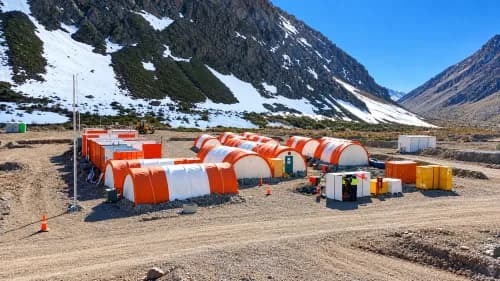
For years, Hierro Indio in the Malargüe department was presented as a reference point in Mendoza’s mining debate. Not because of its geological size, but because of its institutional relevance. It was the first metalliferous project to obtain legislative approval for its exploration stage under the framework of Law 7,722. Now, following the filing of the Environmental Impact Report for the mining stage, the project returns to focus, but with an operating scale closer to an industrial quarry than to a conventional metal mine.
By Panorama Minero
The technical document describes a small scale iron operation based on open pit extraction from two quarry pits. The mining plan includes drilling, blasting, loading, hauling, crushing and sizing the ore for direct shipment to customers.
The project does not include metallurgical processing, concentration, or chemical reagents. Planned output is up to 80,000 tons per year of crushed material, with an estimated mine life of ten years.
The report estimates total development capital of about US$3 million. The capital plan also includes an initial phase using rented equipment during the first 24 months, including a mobile crushing plant and mining fleet, aimed at limiting upfront spending and financial exposure.
A Project That Became a Political and Institutional Milestone
To understand the current phase, it is necessary to look back. Hierro Indio gained visibility in 2019 when the Mendoza Legislature approved the Environmental Impact Declaration for exploration. Within the province’s regulatory framework, that approval marked the first time a metalliferous project completed the institutional path required by Law 7,722.
At the time, the provincial government positioned the project as a case study to demonstrate that metalliferous mining could move forward under Mendoza’s rules. After the political approval, development slowed due to limited financing for exploration campaigns.
Activity resumed after an agreement involving the state owned Potasio Río Colorado, a process that later led to the creation of Impulsa Mendoza Sostenible S.A. In that context, the province allocated funding to support geological exploration.
Public spending for that stage was around US$1 million, used for drilling, geological studies and technical work to evaluate the deposit’s potential.
A shareholder dispute followed and resulted in the exit of the project’s original promoter and owner, Guillermo Re Kühl. According to the Environmental Impact Report, the board of Hierro Indio S.A. is composed of Rafael Dahl as president, Santiago Fernández Herrero representing Impulsa Mendoza as vice president, and Ezequiel Yusin and Andrés Berengua as company directors.
Investment Scale and Economics
The environmental filing provides a clearer view of the scale under consideration. If total development requires roughly US$3 million and the province has already allocated about US$1 million for exploration, publicly funded exploration spending represents more than 30% of the capital required to start the operation.
In mining, exploration typically represents a smaller share of total capital for a mine. The exploration to CAPEX relationship indicated in the Hierro Indio case stands out from an economic perspective.
Operating scale also reinforces that reading. At 80,000 tons per year, the project falls within small scale mining parameters. By comparison, many mid scale iron operations globally produce between one and five million tons per year.
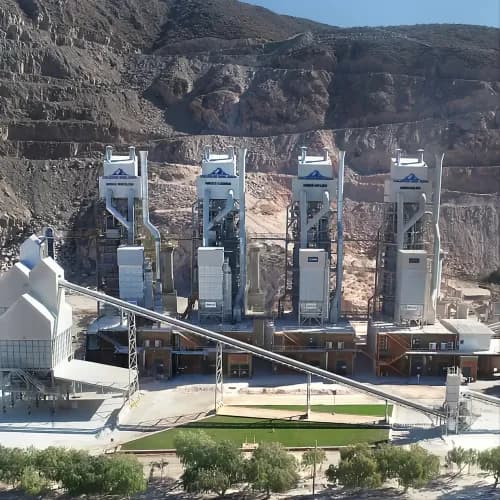
In Mendoza, the operation is framed as a magnetite quarry serving specific industrial markets, including the cement industry.
Impulsa Mendoza’s Role in the Next Phase
A central question relates to Impulsa Mendoza’s role in the development stage. The state backed company appears as a shareholder as a result of the agreement reached with Hierro Indio S.A., but the Environmental Impact Report does not detail the corporate structure or capital allocation expected for the mining stage.
The issue is whether Impulsa will participate in funding the investment required for production, or whether its contribution will remain limited to the resources already allocated to exploration.
Hierro Indio carried institutional weight within Mendoza’s mining discussion. Its evolution toward a smaller scale operation has opened a new round of questions about the role of the state and the expectations attached to the project since its early stages.