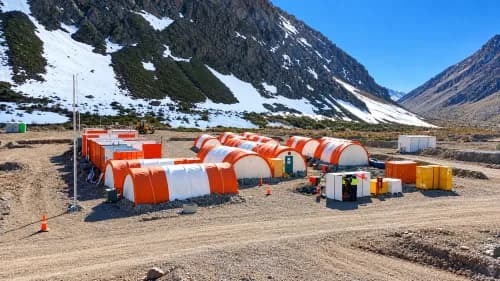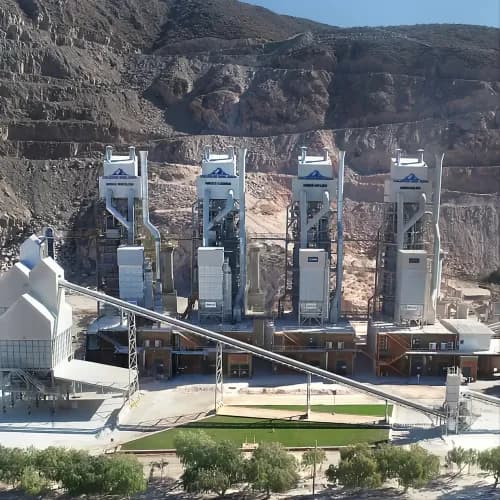
The Directorate of Mining and the Directorate of Environmental Management and Control of Mendoza granted the Environmental Impact Statement (DIA) for the prospecting stage of the Potasio Cancambria project, located in the department of Malargüe and submitted by Cancambria Exploración S.A. The resolution considers the Environmental Impact Assessment procedure fulfilled, authorizing the start of activities aimed at determining the geological potential of the area, without requiring legislative approval due to its classification as a salts project.
By Panorama Minero
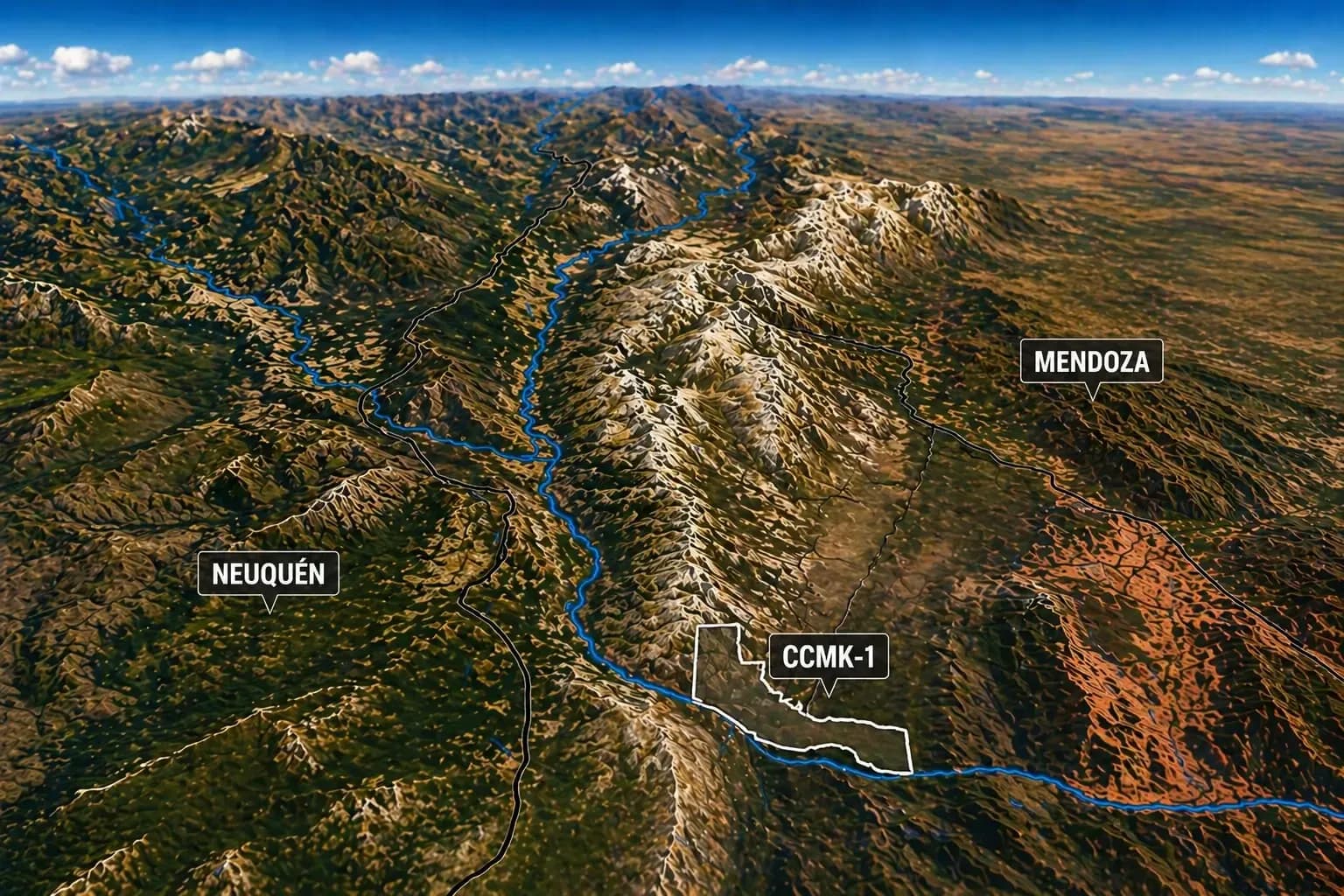
The project includes four exploration permits—CCMK1, CCMK2, CCMK3, and CCMK4—which were unified into a single administrative file for environmental evaluation. The objective is to identify potassium salt resources, mainly sylvinite, in the subsurface, within a mineral system classified as a non-metallic second-category resource, corresponding to evaporites or industrial minerals.
Cancambria Exploración S.A. is a subsidiary of Argentina Potash and manages a portfolio of properties in southern Mendoza, a region with favorable geological conditions for evaporite mineralization.
In the specific case of Cancambria in Malargüe, the exploration permits under analysis cover more than 19,000 hectares in this detailed evaluation phase, with the aim of assessing continuity, thickness, and quality of potassium-bearing layers.
Prospecting Methodology
The approved stage corresponds to prospecting and is based on the reinterpretation of existing geological and geophysical data. The work includes analysis of 2D and 3D seismic lines, review of historical oil well logs, and basin data processing, aimed at identifying anomalies associated with potassium presence at depth.
At this stage, no drilling, road construction, or significant earthworks are planned. There is also no use of industrial water, chemical inputs, or generation of effluents, resulting in a limited-impact approach focused on office-based work.
This methodology is required due to the characteristics of potassium salts, which are highly soluble and do not outcrop at the surface, making direct identification impossible without indirect subsurface studies.
Advanced Exploration Scenario
Depending on the results of the prospecting phase, the project contemplates a possible second stage involving deep drilling. In that scenario, the execution of wells approximately 8 inches in diameter and 1,000 to 1,500 meters deep is being evaluated, aimed at extracting core samples of up to 60 meters to confirm the presence of sylvinite in the K1 and K3 horizons.
The preliminary design includes work platforms of approximately 100 by 100 meters, lined with 1.5 mm geomembranes, and based on dry-site layouts, fluid recirculation systems, and zero-discharge schemes for waste and effluent management.
Environmental Assessment and Participation
The environmental file includes the evaluation of the Environmental Impact Report, input from technical agencies, and sectoral opinions related to water resources, biodiversity, and land-use planning.
As part of the process, a public hearing was held on December 20, 2025, in Malargüe. According to participation records, 91% of the interventions supported the project, allowing the process to move forward to the environmental decision stage.
Scope of Authorization
The granted DIA authorizes only the prospecting stage and establishes the obligation to comply with the technical and environmental conditions defined in the file. Progression to advanced exploration stages will be subject to the submission of new environmental instruments and their corresponding evaluation by the competent authority. The mining rights associated with the project remain valid and under processing within the provincial mining framework.