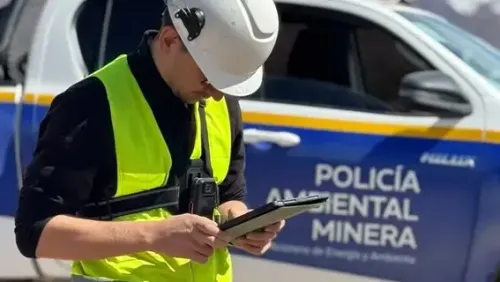
Leonardo Viglione, PwC Argentina Partner and Mining Industry Leader, discusses the findings of the Mine 2026 report.
By Panorama Minero
The “PwC Mine 2026” Report Provides a New Snapshot of the Global Mining Industry. What are the Main Conclusions of This Year's Edition?
As it does every year, the report aims to reflect the key trends that shaped the industry's performance over the past year while anticipating the challenges it will face in the future.
In this edition, we observed that the world's 40 largest mining companies increased their revenues by 3.3%, while profits rose by 23%. This performance was driven primarily by stronger commodity prices, as production levels generally remained stable and, in some cases, even recorded slight declines.
Beyond these results, the report delivers one very clear conclusion: discovering new mineral resources alone will no longer be enough. Mining companies will need to become increasingly efficient in their operations, operate within stable regulatory frameworks, and secure access to capital—a factor that will be critical in transforming projects into producing operations.
Was Revenue Growth Driven Primarily by Higher Commodity Prices or Increased Production?
The main driver was the increase in commodity prices. At the same time, companies maintained strong control over operating costs, allowing them to capture much of the market upside and significantly strengthen their cash generation.
That surplus cash now opens several strategic paths. Some companies may allocate those resources to corporate acquisitions, while others will prioritize the development of new projects, debt reduction, or dividend distributions to shareholders.
Ultimately, this will be one of the industry's major strategic debates over the coming years.
Is the Mining Industry Facing an Excessive Debt Burden?
Mining companies have used their stronger cash generation to reduce debt and strengthen their balance sheets. However, that does not mean they will be able to finance the next generation of large-scale projects exclusively with internal resources.
Many developments will inevitably require external financing. And this is where one of the mining industry's greatest challenges emerges: access to capital. Global liquidity remains abundant, yet the mining sector is not attracting a significant share of those financial resources.
Why Is the Mining Industry Facing Greater Difficulty in Attracting Investment Today?
Because it is now competing with sectors that offer highly attractive growth prospects for financial markets.
Investments related to artificial intelligence, semiconductors, software, and hardware are absorbing a substantial portion of the capital available worldwide. As a result, mining finds itself in a less competitive position when seeking access to those financial resources.
It will be interesting to see how this situation evolves, as access to capital could become one of the principal bottlenecks affecting the development of numerous mining projects over the coming years.
Public Perception of Mining Has Changed Significantly Over the Past Few Decades. How Do You Assess That Evolution?
I believe the industry's public image has improved considerably over the past twenty years. Argentina is a good example of that transformation. Two decades ago, mining was a difficult topic to place on the public agenda. Today, it has become part of the country's economic and productive debate and regularly features in the nation's leading media outlets.
That shift reflects the industry's sustained efforts in building social licence to operate, strengthening community engagement, improving environmental management, and maintaining ongoing dialogue with all stakeholders.
Today, no one questions the importance of securing social licence in order to develop a mining project. Twenty years ago, the primary objective was almost exclusively to develop projects as quickly and efficiently as possible from a technical and economic standpoint. Today, that approach is no longer sufficient.
No project can move forward without sound environmental management, meaningful engagement with local communities, and a strong social licence that supports the project throughout its entire life cycle.
The Energy Transition Is Reshaping the Critical Minerals Landscape**. How Do You View the Growing Importance of Metals Such as Lithium, Nickel, Cobalt, and Rare Earth Elements?**
Minerals have always been strategic, but their applications evolve over time, and that changes their relative importance.
A few years ago, for example, lithium had a much smaller market and was primarily associated with pharmaceutical uses and early battery applications. Over the past decade, the energy transition, decarbonization, and greater environmental awareness have driven unprecedented demand for minerals such as lithium, copper, nickel, cobalt, and rare earth elements.
That does not mean that traditional commodities such as iron ore, coal, or precious metals have lost their relevance, as they remain fundamental to the global economy. However, minerals associated with the energy transition are attracting far greater attention today because they will be essential to supporting electrification, energy storage, and emerging technologies.
The discussion is no longer limited to which minerals the world consumes today, but rather which minerals it will require over the coming decades.
In This Context, China and Emerging Asian Companies Are Also Playing a More Prominent Role. How Do You Interpret This Trend?
China occupies a unique position because it combines two decisive characteristics: it is one of the world's largest consumers of minerals while simultaneously being one of the leading producers and processors.
That reality is driving the growth of Asian companies that only a few years ago, had a much more limited presence in the mining industry but are now actively participating in major projects, investments, and strategic decisions.
It is a phenomenon similar to what occurred in the automotive industry. A few years ago, few people imagined the position Chinese manufacturers would achieve. Today, they compete on equal footing with companies that have been operating for more than a century.
Mining is undergoing a comparable transformation. The map of the industry's leading players is changing, and Asia will play an increasingly significant role in that process.
Geopolitics Has Become One of the Main Drivers of Mining Development. Where Does Argentina Stand Within This New Landscape?
Argentina once again finds itself in a highly favorable position because it possesses precisely the resources the world needs most.
International projections indicate that the copper market could face a significant supply deficit between 2027 and 2033. The main challenge is the lack of new world-class discoveries capable of closing that gap in the short term.
In that context, Argentina possesses one of the world's most attractive copper project pipelines. Several projects are already advancing toward development, and although they will not eliminate the projected deficit on their own, they can make a meaningful contribution to global supply.
If development schedules remain on track, some of these projects could begin production by 2030 or 2031, bringing new supply to the market at a particularly opportune time.
In Addition to Copper, Argentina Has Rapidly Become One of the Leading Players in the Lithium Market. How Do You Assess That Evolution?
The growth has been remarkable. In just five years, Argentina has reached a position comparable to long-established producers such as Chile and Australia.
This evolution demonstrates not only the country's geological potential but also the industry's ability to bring new projects into production during a period of rapidly expanding global demand.
Another important factor is that Argentina is located in a region with relatively low levels of geopolitical conflict, has projects that generally advance with a strong emphasis on social licence, and offers a regulatory framework designed to encourage mining investment.
The combination of these factors provides the country with a significant opportunity to expand its share of the global critical minerals market and establish itself as a strategic supplier over the coming decades.
The Incentive Regime for Large Investments (RIGI) Represents an Important Step Forward for the Sector. What Other Challenges Must Argentina Address to Fully Unlock Its Mining Potential?
The RIGI is a highly valuable tool, but on its own it is not sufficient to guarantee project development.
Most of the large-scale mining projects currently under evaluation or in advanced stages of development are located in regions where infrastructure is limited and, in some cases, virtually nonexistent.
This means that, in addition to building the mine itself, it will be necessary to develop roads, power transmission lines, logistics systems, and, in some cases, port infrastructure capable of transporting production to international markets.
These are major investments that require careful planning and time. They are not projects that can be executed overnight.
What Role Does the RIGI Play?
The RIGI's principal contribution is to complement the stability framework already established under Argentina's Mining Investment Law.
Mining projects involve exceptionally long investment horizons. Several years may pass between the initial investment and the start of production, and many operations remain active for three or four decades—or even longer.
Such long-term horizons require a stable and predictable regulatory framework that enables investors to make long-term decisions with a reasonable degree of certainty.
In that sense, the RIGI strengthens the conditions necessary to attract investment while providing greater predictability for projects whose life cycles typically extend across multiple government administrations.
Mining Is Often Measured in Decades. Nevertheless, the Next Five Years Will Be Critical for the Sector. How Do You Envision Argentina's Outlook?
I am optimistic by nature, and I believe that optimism is also part of the mining industry's DNA.
Argentina is facing an extraordinary opportunity. If it succeeds in maintaining stable policy framework and consolidating mining as a genuine State policy, its growth potential is enormous, regardless of changes in government.
That development will have an especially significant impact on provinces located far from the country's traditional economic centers, where mining can become a powerful driver of investment, employment, and regional development.
Moreover, if this process is complemented by the continued development of Vaca Muerta and other natural resource sectors, Argentina will have a historic opportunity to diversify its productive matrix and strengthen its economy.
What Long-Term Impact Could Mining Have on Argentina's Economic Development?
Mining possesses one characteristic that sets it apart from many other economic activities: it operates continuously, 24 hours a day, 365 days a year.
That continuity generates employment, sustained demand for goods and services, business opportunities for local suppliers, and a steady flow of export revenues.
For that reason, I believe mining can become one of Argentina's principal engines of economic development over the coming decades.
This is not an unprecedented path. There are numerous international examples demonstrating how a long-term mining policy can become a decisive factor in a country's economic growth.
There is no need to look very far—one only has to observe the experience of some of Argentina's neighboring countries.