At the UIA's 32nd Industrial Conference, the Minister of Economy forecast that mining exports would grow by a further 200% over the next five years. He also reported that the RIGI includes 49 projects worth US$218 billion and highlighted the engagement of 1,800 local suppliers, alongside new measures to improve their access to financing.
By Panorama Minero
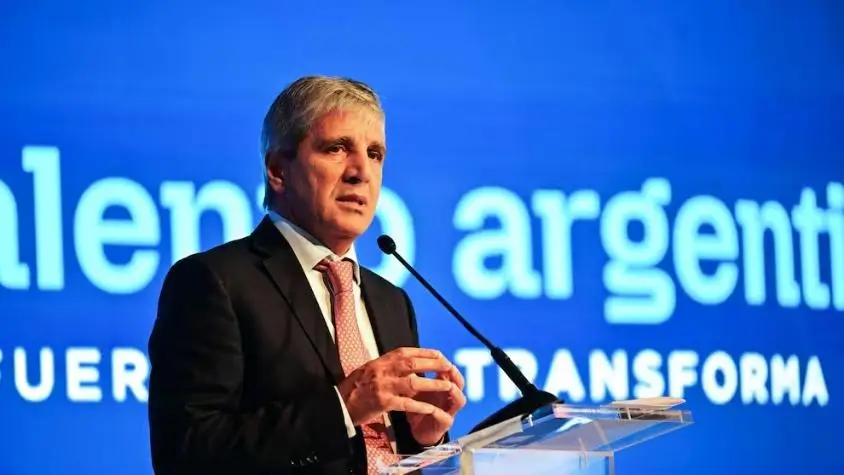
Minister of Economy Luis Caputo highlighted the growth prospects for Argentine mining exports and the expected impact of major investments under the Large Investment Incentive Regime (RIGI). During his presentation at the 32nd Industrial Conference organised by the Argentine Industrial Union (UIA), he also focused on the integration of local suppliers into these projects and the measures designed to facilitate their participation in the value chain.
Referring to export prospects, Caputo stated that mining would experience significant growth in the coming years. According to the Minister, the sector's exports have increased by 95%, and he forecast a further 200% increase over the next five years.
The Minister linked this development to macroeconomic predictability and the conditions required to support medium- and long-term investment. In this regard, he maintained that Argentina now has a more stable fiscal, monetary and exchange-rate environment, which will help sustain export growth.
"There are dollars today, there will be more tomorrow, more the day after, many more next year and vastly more in six years," he stated, referring to the outlook for foreign currency generation.
According to Caputo, this projection is particularly relevant for companies evaluating long-term investments.
The RIGI and Investment Flows
In another part of his presentation, the Minister of Economy reported that the RIGI currently includes 49 projects representing a total of US$218 billion. Of these, 30 have already been approved, with committed investments amounting to US$80 billion.
Caputo stated that projects included in the regime could generate more than 250,000 jobs.
He also indicated that investments actually made to date total approximately US$7.5 billion and suggested that the largest volume of expenditure would take place over the coming years.
The Minister particularly highlighted the first RIGI business matchmaking event, held in Rosario, which brought together approximately 2,500 small and medium-sized enterprises (SMEs) and recorded more than 2,500 business meetings.
According to Caputo, 1,800 local suppliers have already been contracted across 20 jurisdictions in Argentina, while 82% of the amount invested corresponds to local purchases.
"RIGI projects establish direct contact with local suppliers," he explained, referring to the purpose of these meetings.
He also announced that the Government intends to continue organising these events on a monthly basis to facilitate follow-up on business opportunities.
Financing and Supplier Participation
Caputo also addressed the financing difficulties faced by small and medium-sized enterprises and outlined a measure aimed at improving their access to credit.
Specifically, he proposed that large companies should approve their suppliers' invoices upon receipt, even when the agreed payment terms are 30, 60 or 90 days.
This would allow SMEs to use these documents to obtain financing by discounting the invoices in the market, rather than relying on bank loans carrying higher interest rates.
According to the Minister, an SME could discount an invoice issued to one of these companies at an interest rate of approximately 25%, compared with bank financing costs that, according to his presentation, can range from 80% to 100%.
"Instead of having to borrow money from a bank at 80%, 90% or 100%, a company can discount an invoice from Rio Tinto or YPF at 25% and save a tremendous amount of money," he stated.
The Minister said that the proposal had been discussed with mining companies during the business matchmaking events and that the companies had expressed their agreement to begin implementing the mechanism.
He also noted that YPF is already applying it.
Measures for SMEs
Towards the end of his presentation, Caputo announced measures aimed at easing the financial situation of small and medium-sized enterprises.
These included the suspension of asset seizures by ARCA until May 2027, the extension of 18-instalment payment plans for debts overdue as of 31 October, and the possibility of using credit balances arising from exports and export VAT to settle customs obligations.
He also announced a proposal to the provinces to eliminate stamp duty through a national compensation mechanism for those that join the RIGI and the Regime for the Extinction of Reciprocal Obligations.
According to the Minister, this tax generates between ARS 4 trillion and ARS 5 trillion annually.