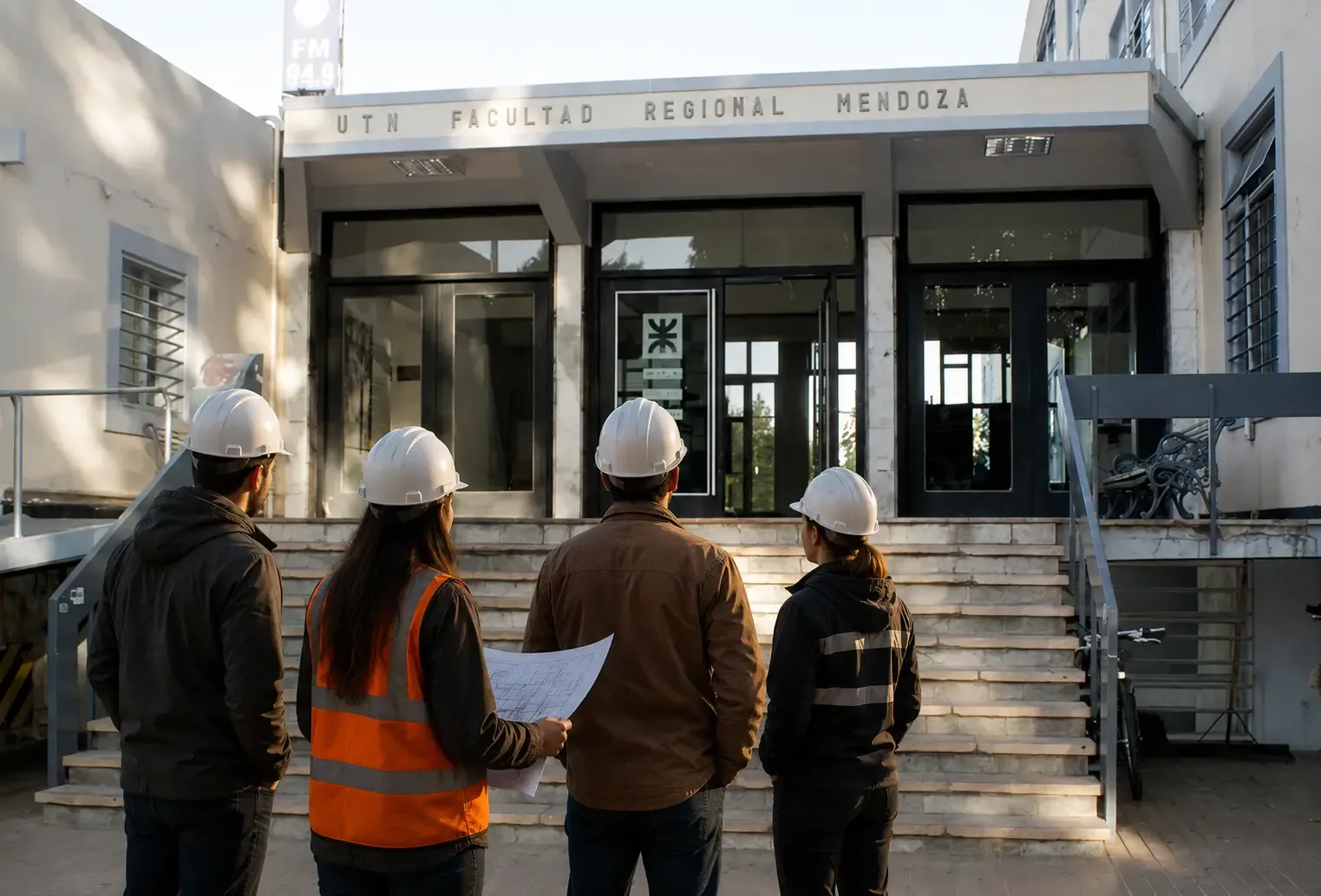
Will Mendoza be able to train its own professionals before its mining industry needs them? The question is beginning to take shape as the province moves forward with its first Mining Engineering degree program, which the National Technological University (UTN) plans to launch in 2027 with a five-year curriculum.
By Panorama Minero
The academic calendar is beginning to run alongside the mining calendar. Mendoza already has PSJ Cobre Mendocino, a project expected to move toward construction and production in the short term, while several exploration projects seek to advance through their own stages of development. After years of limited metalliferous mining activity, the province is now also beginning to rebuild the specialized training required by the industry.
The new degree program highlights another dimension of Mendoza’s two-decade slowdown in mining. During that period, not only did exploration and the generation of new geological information decline. Mendoza is entering this new stage without locally training mining engineers, a gap that the UTN itself identified when it began working on the proposal.
The national academic offering is also limited. Currently, only five national universities offer Mining Engineering degree programs, located in San Juan, San Luis, La Rioja, Catamarca and Jujuy. Mendoza will join that map beginning in 2027 if the planned process for launching the program is completed.
Five Years to Train the First Engineers
Time is one of the key variables. The academic proposal involves five years of study, meaning that the first cohort entering in 2027 will need to complete the entire program before Mendoza can produce its first locally trained mining engineers.
The UTN decided to give the program a particularly technical profile. According to its Dean, José Balacco, the aim is to train “field engineers”, prepared to work across different stages of the mining cycle. Graduates will be able to participate from project development and the study, analysis and prospecting stages through to production.
The program also includes content related to water and energy management, circular economy, process digitalization, Mining 4.0, and a comprehensive view of the entire project cycle, from exploration through closure and environmental remediation.
Given the time required to complete an engineering degree, an intermediate qualification will also be available. The program will award a Mining Operations Technician qualification, designed to allow students to obtain a credential before completing the full five-year degree and enter the labor market more quickly.
The starting point also illustrates the scale of the gap. The UTN has faculty members available for many of the planned courses, but has indicated that for specialized subjects where it lacks experts, it will turn to professionals from the mining industry itself. Funding to begin offering the degree at the Mendoza and Santa Cruz regional campuses has already been incorporated into the program agreement, while for the subsequent development of laboratories, the university plans to seek support from the government and mining companies.
A Degree in Mendoza to Work in Argentina’s Mining Industry
The timeline of Mendoza’s mining projects will not necessarily determine the future of its graduates. The creation of the Mining Engineering program also establishes Mendoza as a new educational alternative for an industry with operations and projects distributed across several provinces in Argentina.
This broadens the discussion. A student from Mendoza who begins the program in 2027 does not need to wait for a mine to enter production within the province before joining the industry. San Juan, Santa Cruz, Catamarca, Salta and Jujuy, among other jurisdictions, are part of a mining labor market that extends beyond provincial boundaries.
The limited existing university offering reinforces this possibility. Mendoza’s addition to a map currently comprising only five national universities creates an alternative for young people who, until now, had to relocate to other provinces if they wanted to specifically study Mining Engineering.
It is also a long-term consequence of the slowdown experienced by Mendoza. An entire generation went through much of its academic education during a period when metalliferous mining had only a limited presence among the professional opportunities available in the province. The current revival finds Mendoza attempting to advance simultaneously on mining projects and the training of the people who could eventually work on them.
The Gap Also Extends to Suppliers
The challenge of developing local capabilities is not limited to university professionals. While the UTN moves forward with Mining Engineering, the Directorate of Mining has concluded the first edition of the + Local Capacity Program, an initiative aimed at connecting industry needs with Mendoza-based companies, institutions and professionals.
The program held 10 meetings during 2026, involving more than 300 participants and representatives from over 50 institutions. Participants included representatives from the academic and scientific system, private companies, consulting firms, foundations, independent professionals and public agencies.
Part of the work focused on analyzing the demand generated by operating companies during the different stages of metalliferous mining projects and comparing it with the existing capabilities in Mendoza that could respond to those requirements. The program also addressed industry-specific standards, adaptability, and business organization and supplier internationalization.
Professional training and supplier development are therefore addressing the same underlying need, although through different tools and timelines. In one case, Mendoza is beginning a process that will require years before producing its first mining engineers. In the other, it is seeking to identify existing capabilities and align them with the industry’s specific requirements.
Project Timelines and Training Timelines
Mendoza is attempting to simultaneously rebuild two processes that saw limited development for years: mining activity and the specialized training associated with it. However, their respective timelines will not necessarily advance at the same pace.
The Mining Engineering degree planned for 2027 begins to address a specific academic gap and adds a new alternative to a national educational offering that remains limited. For Mendoza, it also creates the opportunity for a new generation to receive training within the province and subsequently join both local projects and an Argentine mining industry that extends far beyond its borders.
Whether these professionals will be available before Mendoza’s own mining industry needs them will ultimately depend on two processes that are only now beginning to intersect: the pace at which mining projects advance and the years required to train the people who will work on them.