The expansion of Vaca Muerta is generating mining demand that Neuquén is seeking to meet with its own production, but it is also serving as the starting point for a broader strategy involving the province’s subsurface resources. The quartz or silica sands used in hydraulic fracturing currently represent the development most closely linked to a growing productive activity, while gold, silver, potash, copper, uranium and rare earths remain at different stages of exploration or evaluation.
By Panorama Minero
The President of the Neuquén Mining Corporation (Cormine), Mariano Grillo, explained this scenario in an interview conducted by AM Cumbre, where he noted that the province is seeking to support the growth of the hydrocarbon industry while also organizing a mining activity that it considers strategic for diversifying Neuquén’s extractive sector.
Sand as a Link Between Mining and Vaca Muerta
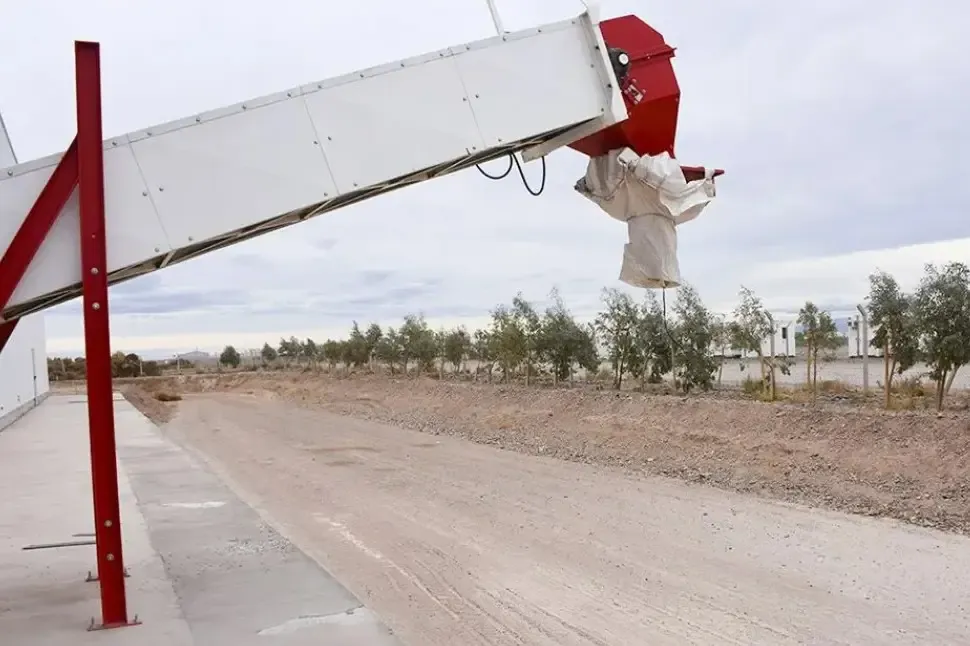
Cormine has been working for several years on the analysis of sands intended for the oil industry, an area that has gained greater importance with the growth of unconventional activity. It is an input used in hydraulic fracturing operations, with demand increasing as new wells are added and the scale of Vaca Muerta’s development expands.
“Cormine has a more comprehensive vision of mining,” Grillo said, although he emphasized that silica sands occupy a priority position because of the advantage Neuquén has in hosting a large-scale hydrocarbon industry.
The head of the state-owned company stated that positive results have already been obtained in the province and mentioned the case of operators that are reportedly using sand from Neuquén. According to Grillo, one of them is currently operating with 100% sand produced in Neuquén, a precedent that, in his view, confirms the possibility of developing a local supply.
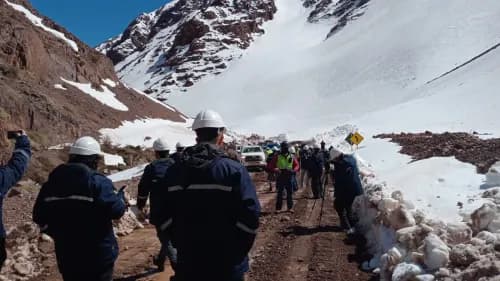
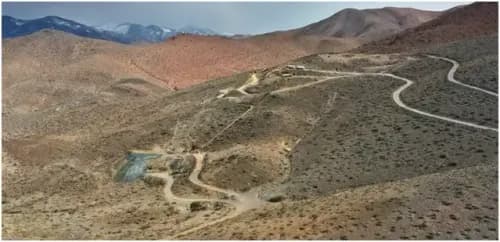
The province has several areas under evaluation, including areas located between Zapala and Cutral Co, Rincón de los Sauces, Senillosa and areas near Añelo. Grillo said that favorable results had been obtained at several locations, although he clarified that each material must undergo specific studies before it can be used.
The sand is not incorporated directly into the fracturing process after extraction. It requires analysis of its physical properties, classification, washing and other treatments. Based on the results, operating companies determine whether it can be used on its own or whether it must be blended with materials from other sources.
Demand That Will Exceed Neuquén’s Capacity
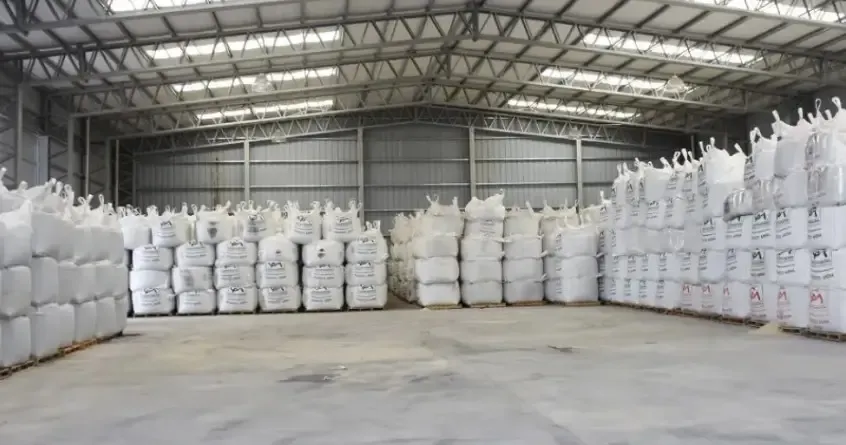
Developing local production will not eliminate, at least in the short term, the need to source material from other provinces. Grillo estimated that from 2027, demand for sand for Vaca Muerta could exceed 8 million tonnes.
“Neuquén will not be able to meet the demand,” he said. In this context, he noted that material from Entre Ríos is already being used and that alternatives are also being analyzed or sought in Chaco and Chubut. He also mentioned studies carried out in provinces such as Santiago del Estero and Misiones.
The scenario creates competition to develop new sources of supply, but also a need for coordination among jurisdictions. Cormine is promoting the creation of a sand working group involving provinces with potential resources.
The objective would be to unify criteria, share best practices and organize a supply chain that, according to Grillo, is growing rapidly but without common planning. The discussion is not limited to determining where sand is available, but also includes establishing conditions for production, treatment, transportation and control.
The Logistics Impact of Supply
The scale of demand is already having an impact on infrastructure. Grillo mentioned the arrival of approximately 3,000 trucks carrying sand into Neuquén every day, a volume he compared with several full trains travelling along the roads.
The figure highlights one of the main limitations of the current model. Vaca Muerta’s growth requires ensuring the supply of this input, but also addressing how it is transported, from where, under what controls and according to which environmental standards.
“It has to be approached seriously, comprehensively and with great care for the environment as well,” the head of Cormine said. The state-owned company’s position is that supply cannot be analyzed solely in terms of the geological availability of the material, but must also include logistics and the associated territorial impact.
Within this framework, the development of Neuquén-based suppliers would reduce some transportation distances, although it would not eliminate the participation of other provinces. Grillo’s own demand estimate points to a market that will require multiple sources of supply.
Andacollo, the First Metalliferous Asset
Neuquén’s mining agenda is not limited to sand. The second priority for the state-owned company was the reactivation of Andacollo, the gold and silver project located in the north of the province.
Grillo explained that the province recovered the asset following judicial and bankruptcy proceedings that lasted approximately six years. According to him, the project could be put out to tender again in the coming months.
The future tender would require bidders to demonstrate their own funds, concrete guarantees and the capacity to sustain development. The official intention is to prevent the project from being placed in the hands of a company without sufficient financial backing or being used as an exploration venture without operational continuity.
Cormine would also have a direct stake in the future structure. “The decision is to participate in everything,” Grillo said, explaining that the state-owned company would participate with a percentage that has yet to be defined and would have oversight functions regarding environmental, labor and operational matters.
The model would seek to replicate, within mining, the participation structure that Gas y Petróleo del Neuquén (GyP) applies in the hydrocarbon sector. According to Cormine’s President, the difference compared with previous experiences would be that the province would not simply grant the asset, but would retain a presence within the operation.
Grillo also stated that only around 10% of the Andacollo area has been explored and that there is potential to expand the geological knowledge of the project. If carried out, the tender will be a test of the state participation model Neuquén is seeking to apply to mining.
Potash, Infrastructure and New Resources
Potash is another resource considered strategic. Grillo said that northern Neuquén has potential for this mineral and that global demand for fertilizers could support a new assessment of the sector.
To move forward, he identified the railway as a key piece of infrastructure. Restoring rail service would improve the transportation of minerals and could open the possibility of processing potash in Neuquén or transporting it to other industrial centers.
The official also referred to copper, uranium and rare earths. In these cases, development is at a more preliminary stage. Regarding rare earths, Grillo acknowledged that information remains limited and that the identified indications are distributed across different areas, a condition that could make their eventual extraction more difficult.
He also mentioned a bill that would incorporate rare earths into the first category of minerals, a change that could improve their status under the mining regime and encourage further research.
From Sand to a Broader Mining Strategy
Sand production for Vaca Muerta is currently the area in which Neuquén’s mining industry has the most direct connection with an expanding industry. The existence of demand, operating companies and areas under evaluation makes it possible to address a specific need of the hydrocarbon sector.
However, the development of this supply chain also reveals the limitations of available infrastructure and the lack of coordination among provinces with production potential. The interprovincial working group proposed by Cormine seeks to address this issue before demand reaches a larger scale.
At the same time, Neuquén is seeking to reactivate metalliferous projects and attract new investment in gold, silver, potash and other resources.
The challenge will be to transform geological availability into operations with financing, infrastructure, environmental controls and local economic participation.