The project combines its inclusion in MDMO III, currently under environmental assessment for exploration, with an individual file that has already moved forward to the Public Hearing stage for the production of copper oxide.
By Panorama Minero
The San Romeleo mining project reappears on Mendoza’s mining agenda, this time through its inclusion in the latest group of the Malargüe Western Mining District, MDMO III, which is currently undergoing environmental assessment. The novelty does not lie solely in its inclusion within the district scheme, but in the fact that it is the same project that, in parallel, is already proceeding through an individual file for the production of copper oxide —and a subsequent sulfate stage— which constitutes a particular case of dual administrative progress over the same deposit and the same territory, but with clearly differentiated objectives and scopes.
Exploration within the Malargüe Western Mining District scheme
San Romeleo is part of the set of properties that Impulsa Mendoza Sostenible S.A. included within MDMO III, a model that groups exploration projects under a unified environmental file, supported by a regional baseline and standardized technical protocols.
Within this framework, the project is evaluated exclusively for geological prospecting and exploration activities, without authorization for exploitation or production, with the objective of increasing knowledge of the mineral potential of the area, particularly in relation to deep structures and possible copper porphyry-type systems.
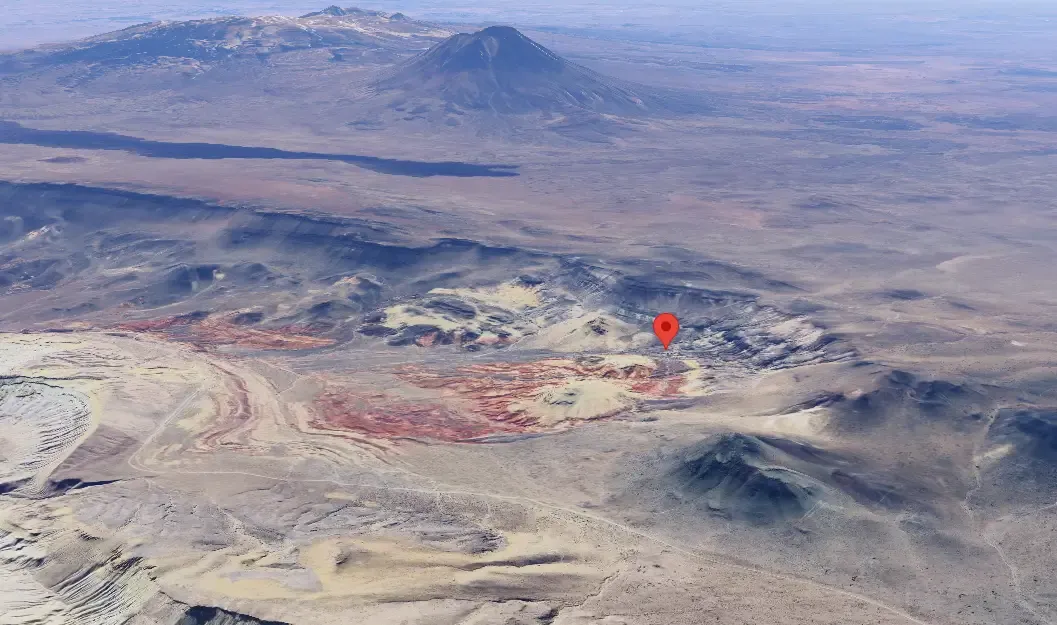
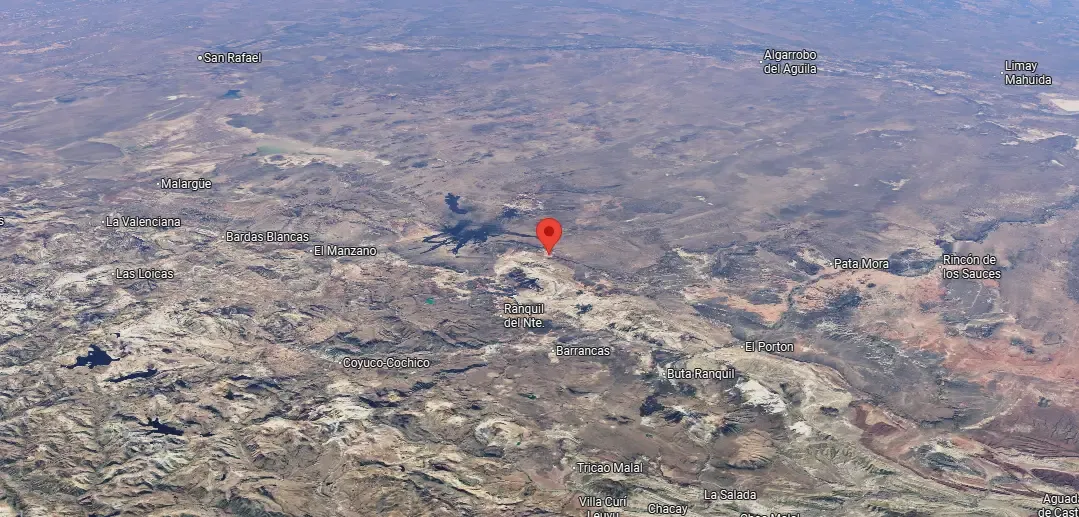
The incorporation of San Romeleo into the MDMO does not imply a new deposit or a new location, but rather the same mining property located in the department of Malargüe, in a geological environment dominated by units of the Neuquén Group and the La Payunia Volcanic Massif. The central difference lies in the type of activity evaluated and the administrative instrument used for its environmental analysis.
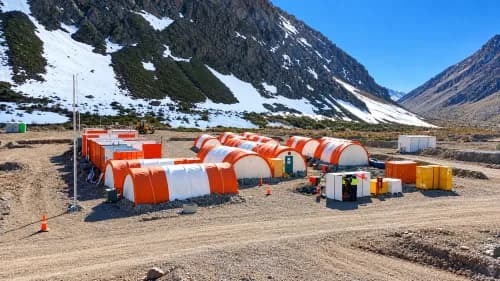
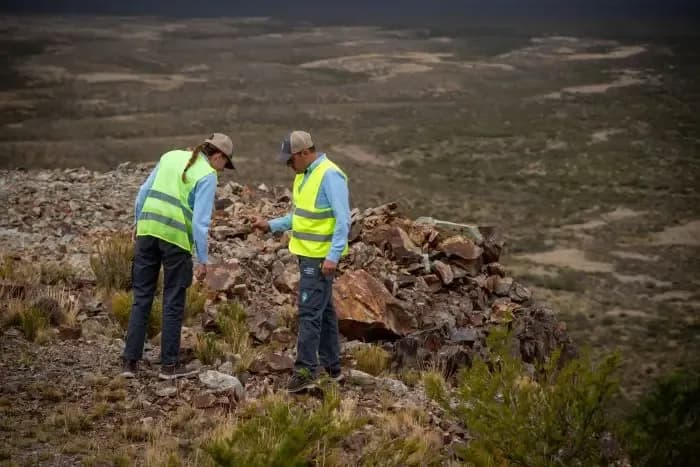
Within the district scheme, the activities planned for San Romeleo include surface geological mapping, sampling, geophysical studies, and direct exploration through diamond drilling, along with low-impact auxiliary works such as the opening and reconditioning of roads and the construction of drilling platforms. All these activities are subject to specific protocols for environmental release of areas, prior verification of the absence of sensitive sites, and progressive closure of the intervened areas, in line with the environmental criteria defined for the MDMO.
The individual file for the production of copper oxide and sulfate
This exploration process advances in parallel with the individual file that the San Romeleo project is processing for its productive reactivation. In this second administrative track, originally promoted by LABSA S.A. and currently operated by AREX Mining S.A., the objective is the exploitation of a small-scale oxidized copper body and the operation of a mineral processing plant within the same property, with a planned processing capacity of 40 tons of ore per day and an estimated useful life of 20 years.
The productive project is aimed at obtaining copper oxide as the main product, intended for the manufacture of agricultural inputs, particularly fungicides used in organic viticulture, and contemplates at a later stage the production of copper sulfate. From a technical and environmental standpoint, the scheme is based on predominantly oxidized mineralization, with minimal presence of sulfides, a central aspect that significantly reduces the risk of acid mine drainage generation and that runs throughout the Environmental Impact Report.
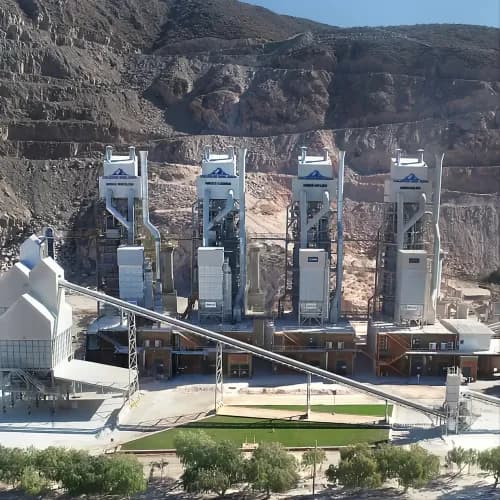
The planned exploitation is carried out through an open-pit quarry with low-height benches and a predominantly mechanical extraction scheme, complemented occasionally with low-frequency blasting. The extracted ore is conditioned in a crushing and classification plant installed on the property, where the required particle size is prepared for subsequent chemical treatment, incorporating dust control systems through water spraying and bag filters.
The core of the industrial process is alkaline ammoniacal leaching in a closed circuit, in which the ore is treated in closed reactors with an ammonium carbonate solution, generating a copper-rich solution that is then subjected to thermal decomposition to precipitate cuprous oxide as the final product.
This individual file already has a final technical opinion prepared by the Faculty of Applied Sciences to Industry of the National University of Cuyo, sectorial opinions issued by provincial agencies, and the corresponding Public Hearing instance, which marks a significant degree of progress within the environmental procedure.
Two parallel processes on the same mining asset
In this way, San Romeleo is consolidated as a singular case within the current Mendoza mining scenario, advancing simultaneously through two different administrative tracks over the same mining asset. While the process integrated into the MDMO authorizes exploration activities under a district scheme designed to generate strategic geological information, the individual file aims at the concrete production of copper oxide and sulfate with local value added, both under differentiated environmental assessments, clearly defined scopes, and without overlap of permits.