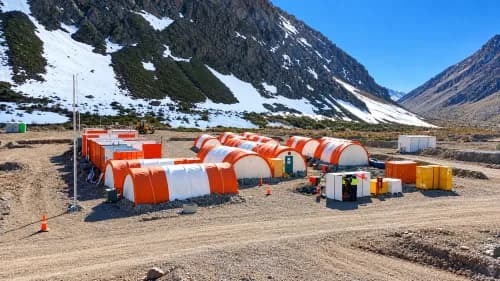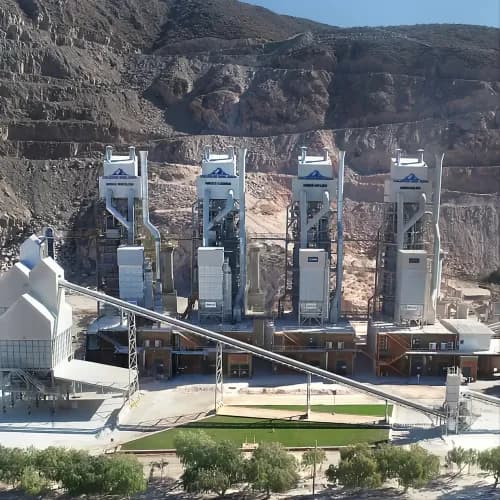
Mendoza’s return to the Fraser Institute Annual Survey of Mining Companies 2025 represents a relevant institutional development. After three years absent from the ranking due to not reaching the minimum number of responses required by the survey methodology, the province once again appears among the 68 jurisdictions evaluated globally, in the context of a renewed provincial mining agenda.
By Panorama Minero
To be included in the survey, a jurisdiction must receive at least five evaluations from executives who declare operational familiarity with it. In practical terms, the recent reactivation of mining activity allowed Mendoza to generate sufficient interest and responses to reenter the report. As a result, the province returns to the comparative map used by companies and investment funds to assess exploration destinations.
Overall positioning and regulatory perception
In the Investment Attractiveness Index, which combines geological potential with public policy variables, Mendoza obtained 53.06 points, ranking 56th out of 68 jurisdictions.
In the Policy Perception Index, which evaluates exclusively regulatory and institutional factors, the province scored 46.94 points, placing it in the lower third of the ranking.
The results show that recovering institutional visibility does not yet translate into competitive positioning within the global ranking. Evaluations remain concentrated mainly in variables related to the regulatory environment.
Where the main penalties appear
Regarding labor regulations, 42.9% of respondents consider them a strong deterrent to investment, while another 42.9% describe them as a mild deterrent, meaning that more than 85% perceive some level of obstacle in this area.
For socioeconomic agreements, 44.4% classify them as a strong deterrent and 33.3% as a mild deterrent. In infrastructure, 50% identify it as a mild deterrent and 25% as a strong deterrent. Regulatory duplication also appears as a relevant factor, with 33.3% considering it a strong deterrent and 22.2% a mild one.
In protected areas, 33.3% perceive a strong deterrent and 11.1% say they would not invest for that reason. In land claims, 44.4% identify a strong deterrent. Regarding uncertainty in the administration and interpretation of regulations, 30% consider it a strong deterrent and 10% cite it directly as a reason not to invest.
Areas where Mendoza is not penalized
In terms of security, 42.9% of respondents believe it encourages investment and 28.6% consider it not a deterrent.
For trade barriers, 62.5% view them as not discouraging investment, while only 25% identify them as a strong deterrent.
Even in environmental regulations, 50% of respondents state that they do not represent an obstacle, although 20% describe them as a strong deterrent and 10% consider them prohibitive.
The role of Law 7,722 in investor perception
The Fraser Institute survey does not evaluate individual laws, but rather captures perceptions of the overall regulatory framework. In Mendoza’s case, Law 7,722 indirectly affects several dimensions of the index, particularly environmental regulation, uncertainty in regulatory administration and the perception of institutional complexity.
The prohibition of certain substances, such as sulfuric acid, represents a concrete technical restriction. However, from an investor perspective, the most sensitive factor appears to be the legislative stage following the Environmental Impact Statement (EIS). The requirement that the EIS be approved by the provincial legislature introduces a political component after the technical evaluation, increasing perceived risk.
The fact that around 30% of respondents consider environmental regulation a strong or prohibitive deterrent, and that nearly 40% perceive high uncertainty in regulatory administration, reinforces this broader institutional interpretation.
Direct comparison with San Juan
In San Juan, nearly 60% of respondents consider environmental regulation not to be a deterrent, around 10% define it as encouraging investment and another 10% see it as a strong deterrent, with no responses in the prohibitive category.
The difference does not necessarily lie in the level of environmental requirements, but rather in the predictability of the regulatory process. While in Mendoza around 30% place environmental regulation in the strong or prohibitive deterrent category, in San Juan that segment is significantly smaller and does not include outright rejection.
In terms of administrative uncertainty, Mendoza registers 30% strong deterrent responses and 10% indicating no investment, whereas San Juan shows a higher proportion of neutral or positive responses and a lower share in high-risk categories.
San Juan obtained 76.94 points in the overall index, placing it in the upper half of the global ranking, with a more favorable regulatory perception and a lower proportion of critical responses.
A province in transition
Mendoza’s return to the Fraser survey confirms that recent activity has helped restore international visibility. However, the report indicates that the central challenge lies in the perception of the regulatory framework and in the institutional predictability of the mining process.
In the competition for exploration capital, returning to the international radar is a first step. Advancing in the ranking will depend on reducing perceptions of regulatory complexity and institutional uncertainty compared with other Argentine jurisdictions such as San Juan.