The main lithium-producing territory in Catamarca seeks to improve the quality of the workforce it offers to the mining sector. “We will have mining activity for 20 years or more, so we need to train our young people,” the mayor said. During the 35th edition of the Feria de la Puna, the Antofagasta de la Sierra Mining Suppliers Chamber obtained its legal status.
By Panorama Minero
The mayor of Antofagasta de la Sierra, Catamarca, Mario Cusipuma, explained that the municipality is advancing several initiatives aimed at the development of the department, working in coordination with mining companies and the provincial government. Among them are projects funded through the mining trust fund, extraordinary contributions from companies, and corporate social responsibility programs.
One of the key initiatives is the creation of a Training Center, which the municipality plans to coordinate with the recently formalized Antofagasta de la Sierra Mining Suppliers Chamber, with the aim of strengthening the training of local workers linked to the mining industry.
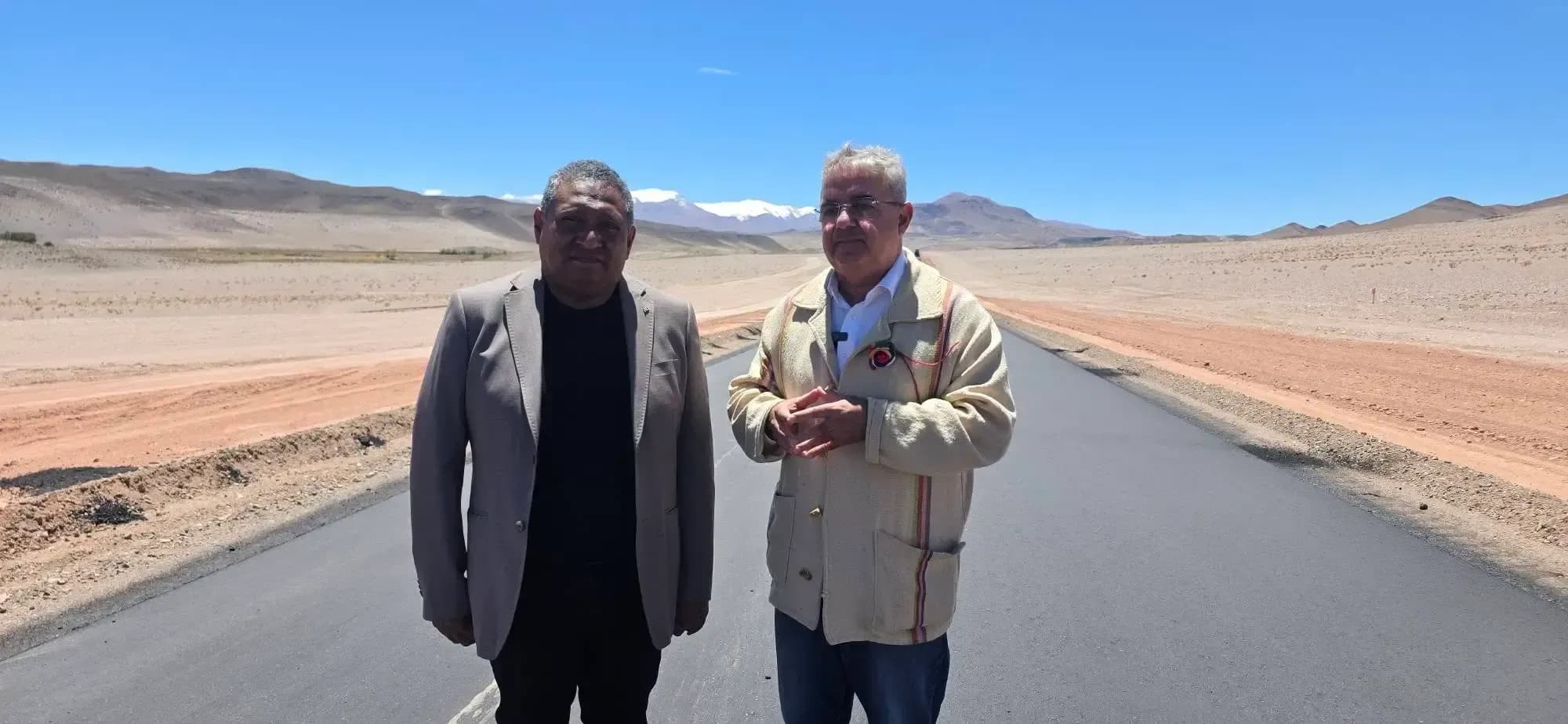
“We are moving forward with the completion of the Antofagasta hospital, two wastewater treatment plants, and Route 43, which continues to progress steadily. These are all projects funded by mining contributions and respond to needs that our community has,” Cusipuma said. He also mentioned other initiatives underway, including a Municipal Training Center, a Primary Health Care Center in El Peñón, and an energy infrastructure project in Ciénaga Redonda that will supply electricity to around 50 families working as mining suppliers.
“This energy project will represent a major step for us because those families are part of the mining supply chain and currently lack electricity service,” he added.
Cusipuma also highlighted the recent institutional formalization of the Antofagasta de la Sierra Mining Suppliers Chamber, an organization that originated from a municipal initiative to bring together local companies interested in participating in the mining supply chain.
“When I speak with suppliers, I always tell them that their role has two dimensions: local development and job creation, but also a social commitment to the community, to schools, and to the health system,” he said.
The formalization of the organization is also expected to facilitate training opportunities in a region located more than 600 kilometers from the provincial capital.
“Many opportunities remain far from us due to distance. Through the Chamber we will be able to organize training programs for the community,” he explained.
In this context, Cusipuma also highlighted ongoing dialogue with mining companies and provincial authorities regarding the infrastructure required to establish a mining-oriented school, which would also include tourism-related education to broaden opportunities for young residents.
“Mining will be present for the next 20 years or more. We need to create the conditions for our young people to study, train, and return to Antofagasta as skilled workers, which is exactly what mining companies require,” he said.
The mayor also referred to provincial regulations that establish a minimum of 70% Catamarca workforce participation in mining projects. According to Cusipuma, the main challenge in remote departments is strengthening technical training so that local communities can access those jobs.
“It is an important benchmark, but many times we simply do not yet have all the qualified workers locally. We cannot expect 100% local employment if we are not prepared, but if we prepare ourselves, we can achieve it,” he said.
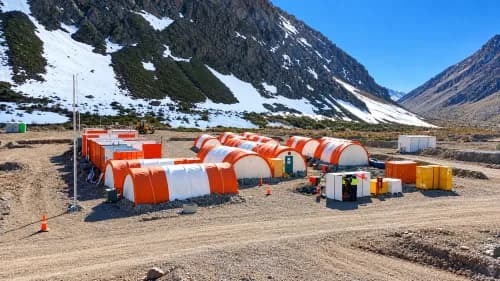
Antofagasta de la Sierra currently hosts some of Catamarca’s most significant lithium projects at different stages of development. These include the Fénix Project and the Sal de Vida project, both now under the control of Rio Tinto. Other companies operating in the Salar del Hombre Muerto include POSCO and Galan Lithium.
In the same department, near the border with Salta, the Diablillos project, focused on gold and silver, is operated by AbraSilver Resource Corp.
Antofagasta suppliers
The Antofagasta de la Sierra Mining Suppliers Chamber was created in 2024 and obtained its legal status in February of this year. Its formal recognition took place during the 35th edition of the Feria de la Puna, held between February 26 and 28.
During the event, Catamarca Governor Raúl Jalil delivered the decree formally establishing the chamber.
Speaking at the ceremony, Jalil emphasized the importance of mining revenues for local development.
“Mining is a non-renewable resource. For that reason, while it lasts, we must ensure that its revenues help strengthen the local economic matrix, including tourism and regional production,” he said.
Jalil also highlighted the impact of infrastructure projects financed through the mining trust fund, including bridges and roads that improved access to Antofagasta de la Sierra.
“Today it is possible to reach Antofagasta by car through fully paved roads. This means integration, development, and growth with inclusion,” he stated.