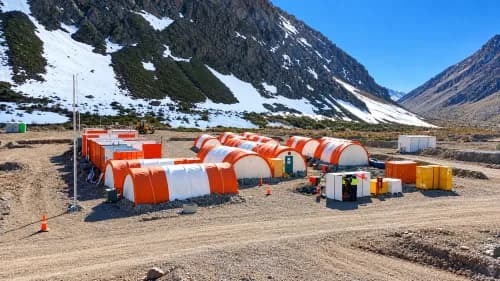
Mendoza’s provincial government said the Canadian mining company First Quantum will set up an exploration base in the province, one of the delegation’s headline announcements during PDAC 2026 in Toronto. According to the government statement, the company expects to open offices in the coming weeks, a step officials interpret as a concrete signal of international interest in Mendoza’s geological potential.
By Panorama Minero
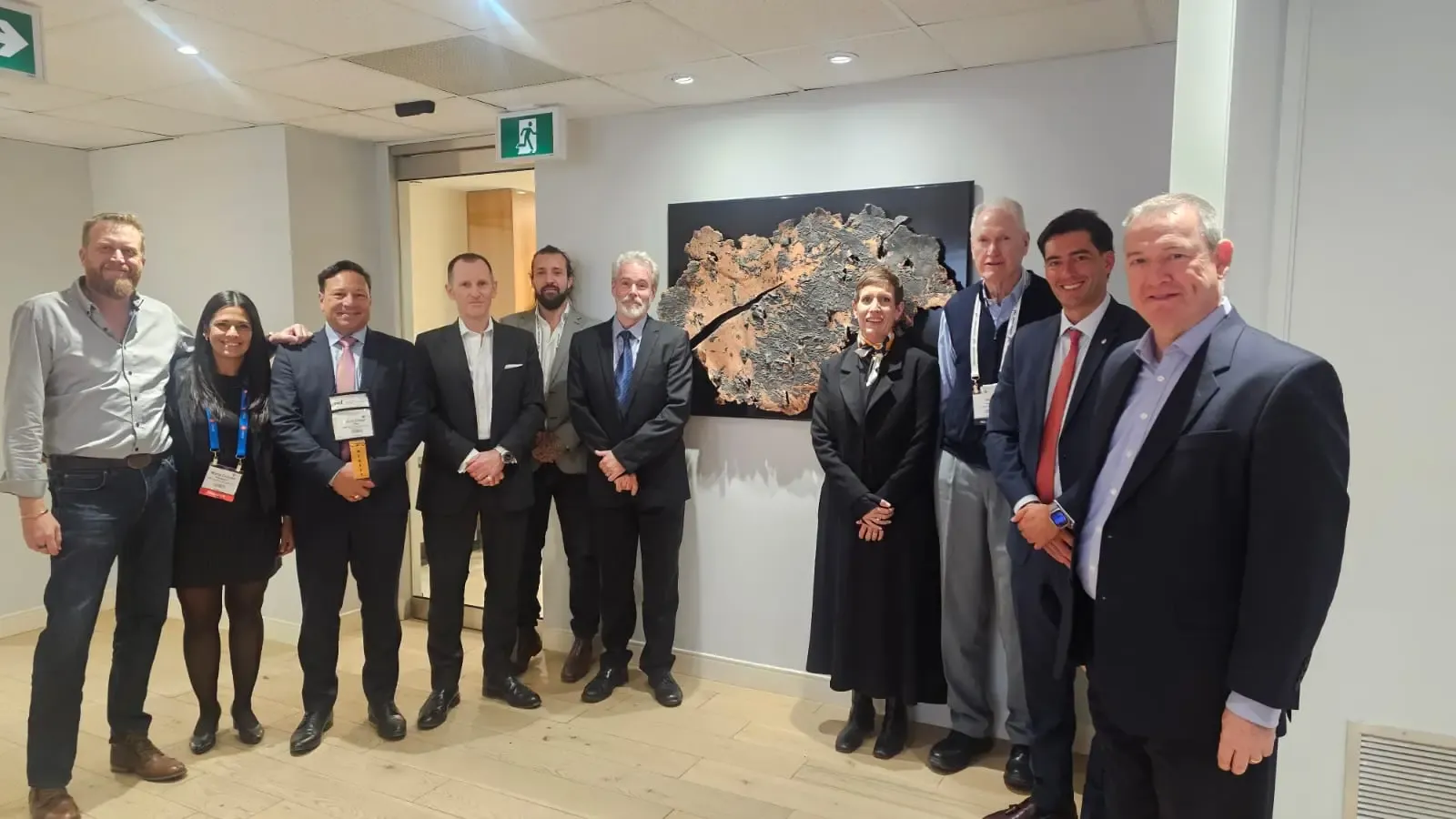
Energy and Environment Minister Jimena Latorre made the announcement as part of Mendoza’s official agenda at the world’s largest mining convention. She said the company’s local presence follows meetings with major miners reviewing exploration opportunities in the province.
Provincial officials said the decision aligns with investor views of Mendoza’s institutional process aimed at attracting mining investment.
According to sources close to the company, the plan is to install First Quantum’s national exploration base in Mendoza, coordinating work linked to local projects the company expects to add to its exploration portfolio in the coming months.
Such structures typically involve locating geological and technical teams, planning early stage prospecting and exploration campaigns, completing geophysical and geochemical studies, and evaluating prospective areas that may progress toward drilling and longer term project development.
A Return of Exploration Hubs
The establishment of an exploration base places Mendoza back into a role it held decades ago within the central Andes geological map.
During the 1980s and 1990s, numerous mining companies used the province as an operational platform to coordinate exploration campaigns across parts of the central Andes. Mendoza hosted technical offices, geological teams and logistics centers that supported prospecting programs in different provinces and mountain regions.
That model began to fade in the early 2000s, alongside the consolidation of a political and social climate opposed to metalliferous mining, which later took legal form with the enactment of Law 7,722 in 2007. After that, Mendoza ceased to function as a regional operations center and many international teams moved to jurisdictions with higher mining activity, particularly San Juan and Argentina’s northwest.
Within that context, the provincial government describes First Quantum’s decision as a relevant signal as Mendoza seeks to reposition itself within international mining circles.
A Major Global Copper Producer
First Quantum Minerals is among the world’s leading copper producers, with large scale operations in countries including Zambia, Turkey, Spain, Finland and Australia. The company focuses on developing large copper deposits, frequently linked to porphyry systems, the same geological model that dominates along the Andes and hosts some of the world’s largest copper resources.
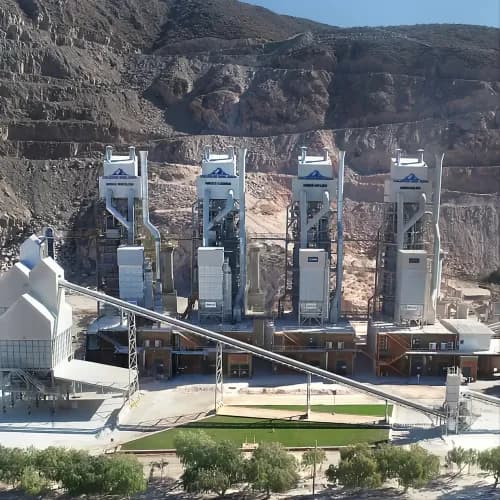
In Argentina, First Quantum controls Taca Taca in Salta, one of the country’s largest copper projects yet to be built. The deposit is a copper gold molybdenum porphyry system and the development concept includes an open pit mine and a processing plant based on crushing, grinding and flotation to produce copper concentrate.
Technical studies for Taca Taca point to processing capacity near 60 million tons of ore per year and estimated annual production around 250,000 tons of contained copper, alongside gold and molybdenum by products. The project contemplates investment around US$5.200 billion, placing it among Argentina’s largest proposed copper developments.
Internationally, First Quantum also owns Cobre Panamá, a world class copper operation currently halted. The mine produced more than 350,000 tons of copper per year and had processing capacity near 85 million tons of ore annually, making it one of Latin America’s largest copper mines.
The operation was shut in late 2023 after a political and judicial dispute that resulted in the cancellation of the mining contract and the closure of the mine. The government statement noted the operation represented about 1% of global copper supply at the time.
BHP’s Exploratory Interest
Separately, Mendoza’s meetings in Toronto included discussions with executives from BHP, the world’s largest mining company. According to Minister Latorre, BHP maintains an active global exploration function focused on Argentina, including Mendoza, where it reviews opportunities linked to Andean geological potential.
During PDAC, provincial officials met with members of the company’s exploration group, including global executives involved in identifying new mineral districts and long term project development.
While the company did not announce a specific decision, the provincial government described BHP’s exploration interest as another indicator of Mendoza’s growing visibility among major international miners.