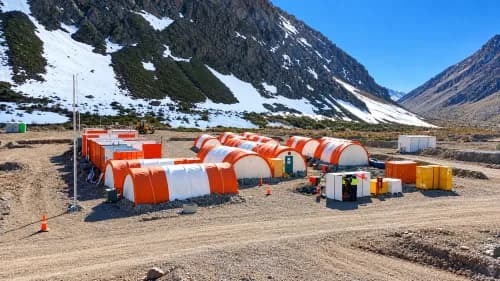
Basalto S.R.L., a family-owned company based in the province of Córdoba, with production plants in San Luis and more than 50 years of experience in non-metallic mining activity, is undergoing a stage of strategic transformation based on technological innovation and commitment to environmental preservation. The company, which began as a producer of aggregates for construction, is now expanding its productive horizon with developments oriented toward sustainability, regenerative agriculture, and new industrial materials.
This reconversion process is supported by strong technical and operational planning, led by Cristian Pinto, Engineering and Operations Manager of the company, through his specialized consultancy Libermine, which supports the design and execution of the main strategic developments.
In providing details about the company, Pinto emphasizes that although aggregate production continues to be one of its main activities, in recent years there has been a qualitative leap with the launch of two innovative projects: one linked to the use of basalt dust as a natural fertilizer with the capacity to capture carbon dioxide, and another oriented toward the production of basalt fiber, a high value-added material that can replace fiberglass in different industries.
Productive base and strategic location
Since it began its activity, Basalto S.R.L. has had a presence in different parts of the country. Currently, its main production units are concentrated in the province of San Luis, one located near the city of Justo Daract, and another near Almafuerte, called Los Cóndores.
The San Luis unit is the one that supplies the construction sector, both for road works and building works. In this regard, the company remains attentive to the announcement by the national government regarding the tender for 9,000 kilometers of roads, a process that could boost demand for materials. Most of the production is generated at this plant, whose location is key from a logistical point of view.
The proximity to national routes 8 and 7 — fundamental axes that connect San Luis with Córdoba, Mendoza, and the center of the country — represents a competitive advantage in terms of transportation and freight costs. Added to this are two storage units: La Avanzada, in Justo Daract, and another in Open Door, near Pilar, in the province of Buenos Aires, from where trains of crushed stone are dispatched both to customers and to company stock.
Large-scale mining technology
Unlike other provinces where the alluvial material is only classified, in San Luis the basalt must be processed through drilling and blasting, in a manner similar to conventional mining. Subsequently, the material goes through a crushing and classification process at the plant.
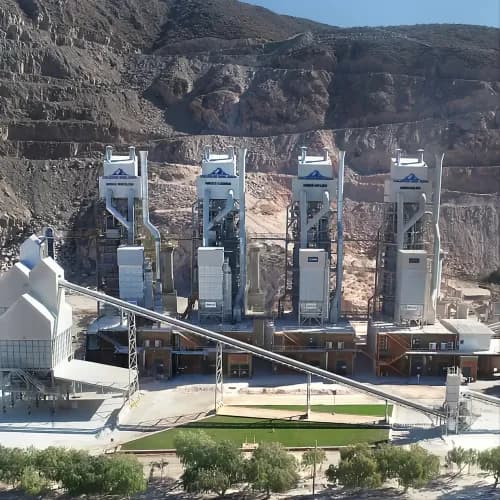
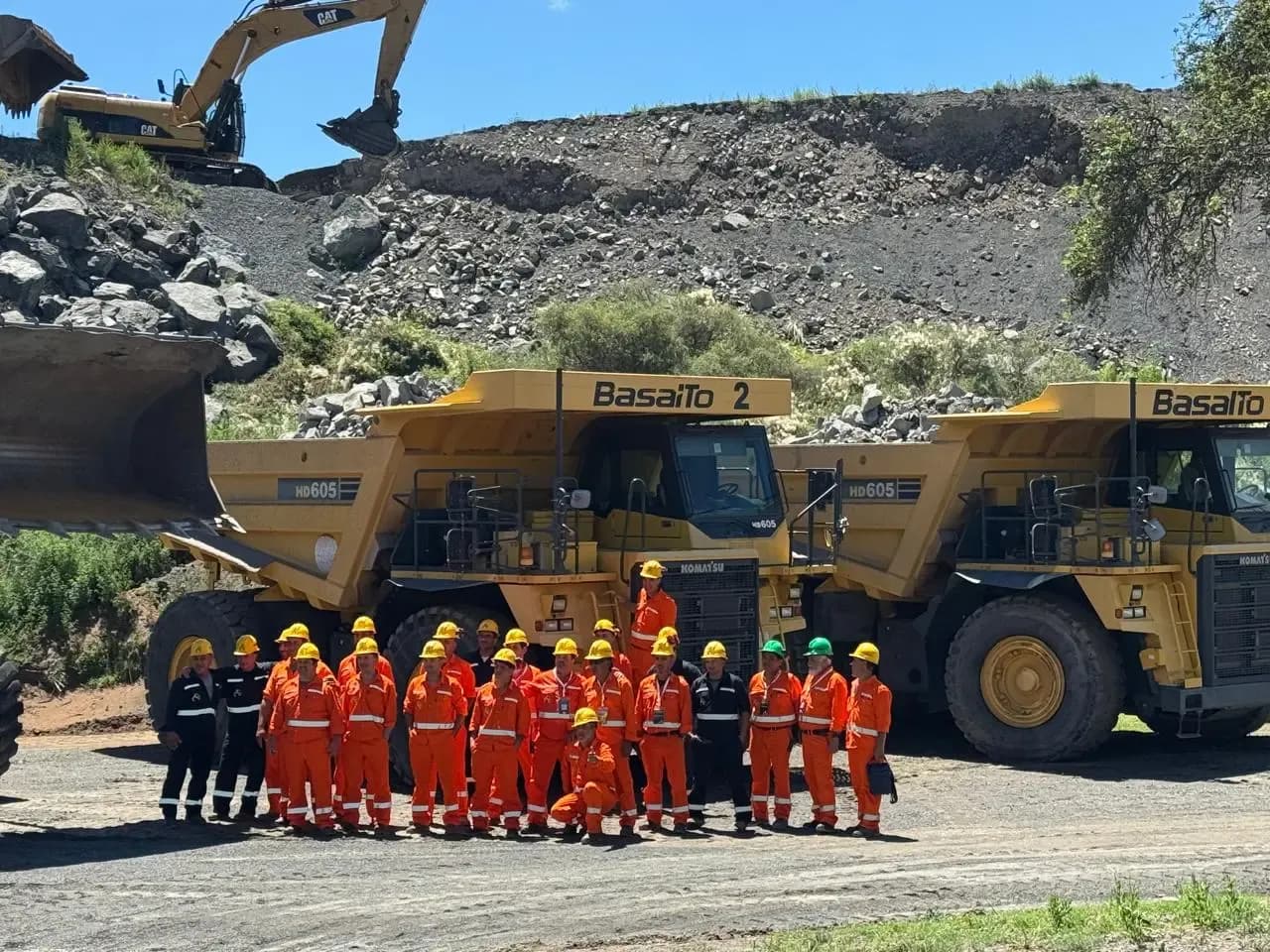
Within this framework, Basalto S.R.L. completed one of the most important investments in its recent history. The company installed a large-scale plant that is now among the largest in Latin America, equipped with state-of-the-art technology. The total investment amounts to around US$30 million, including heavy loading and transport machinery from international brands and a plant capable of processing approximately 1,300 tons of basalt per hour.
This infrastructure positions the company as a relevant player for large infrastructure projects, with the capacity to respond at a regional scale.
Basalt dust and carbon dioxide capture
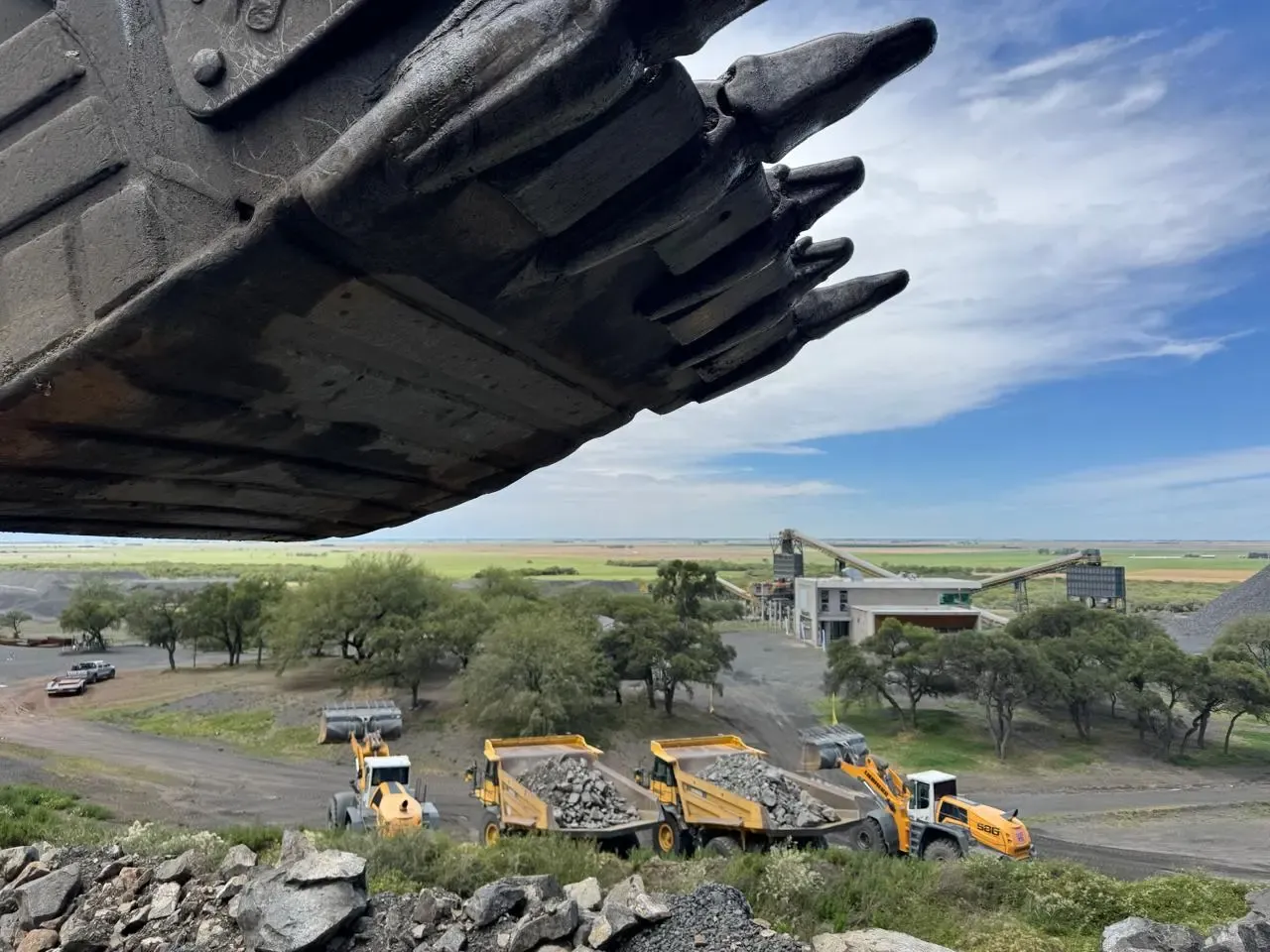
One of the most innovative pillars of Basalto S.R.L.’s strategy is the development of basalt dust for the improvement and transformation of agricultural soils. According to the company, this material generates a mineralogical transformation of the soil and has the capacity to capture carbon dioxide, contributing to the mitigation of global warming.
The studies and tests carried out indicate that for every three tons of basalt dust applied to the soil, one ton of carbon dioxide is captured. In this way, it is a non-metallic mining activity directly associated with global environmental improvement.
In addition, the remineralization of soils makes it possible to move toward agricultural production of organic origin, without the use of synthetic fertilizers derived from petroleum. The incorporation of this natural fertilizer not only improves soil quality, but could also increase the value of agricultural products in the region.
For the development of this project, significant investments were made, especially in the grinding area. The company advanced in the quotation of two vertical ball mills, one for San Luis and another for Córdoba, with the objective of producing 100-mesh basalt dust at an industrial scale.
Basalt fiber: a pioneering development
The third business unit of Basalto S.R.L. is linked to the production of basalt fiber, an innovative material that is already widely used in countries such as China and Russia, but is still little known in Argentina. This development is being carried out with the participation of U.S. engineers and aims to replace traditional materials such as fiberglass and, in certain uses, carbon fiber.
Basalt fiber has potential applications in strategic industries such as automotive and aerospace, which opens a concrete opportunity for integration into high-level technological value chains. According to the company, tests have already been carried out in the city of Río Cuarto with positive results that will allow progress in the coming months.
This project also presents a key differential in financial and environmental terms, as it could access Green Bond schemes, positioning the firm as a pioneer in this type of initiative in the region.
Employment, investment, and projection to the RIGI
Currently, Basalto S.R.L. employs more than 150 people directly and indirectly. However, the comprehensive development of the three projects — crushing, basalt dust, and fiber — would have a much greater employment impact. Company estimates indicate that around 1,000 jobs could be generated, between direct and indirect employment, in the San Luis project alone.
In particular, the basalt dust project, with an estimated production of 200 tons per hour, would imply the circulation of more than 100 trucks daily, generating a multiplier effect in complementary activities such as transportation, mechanical workshops, lodging, and maintenance services.
The magnitude of the projected investments, around US$200 million, would allow the company to aspire to enter the Large Investment Incentive Regime (RIGI). Basalto S.A. indicates that the current regulatory framework makes it possible to reach that level of investment and that the company seeks to establish a scheme with external investors to enhance growth.
A new industrial drive for San Luis
The company emphasizes that these projects not only have a productive and environmental impact, but also a strong component of regional development. San Luis historically had an industrial profile linked to Industrial Promotion, a process that over time lost momentum.
Basalto S.R.L.’s commitment aims to contribute to the resurgence of the provincial industry through projects with national relevance and global projection, positioning San Luis as a strategic node in the development of sustainable mining, new materials, and environmental solutions with international scope. In this way, value could be given to San Luis production that was historically shaped by its growth process through industrial promotion regimes.
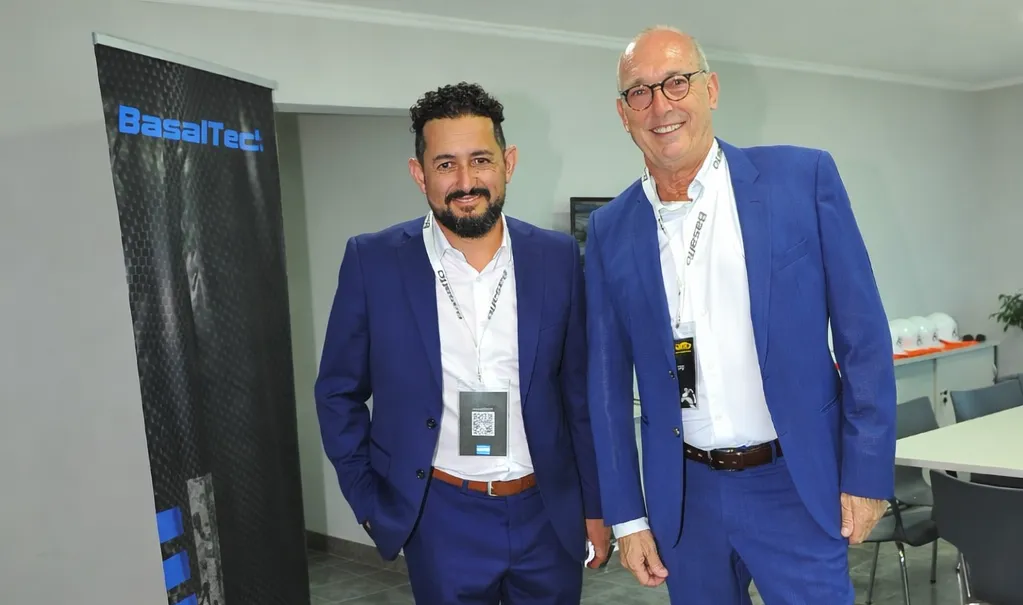
Cristian Pinto (Engineering and Operations Manager) and Marcelo Mallo (Managing Partner of Basalto S.R.L.)