The so-called Rare Earths, a group of 17 elements essential for cutting-edge technologies—from superconductivity to fusion energy—have reached the center of the global technological and geopolitical agenda. In the race for dominance in Artificial Intelligence and the energies of the future, led overwhelmingly by China, Argentina faces the challenge of transforming its promising geological potential into a real strategic advantage.
By Panorama Minero
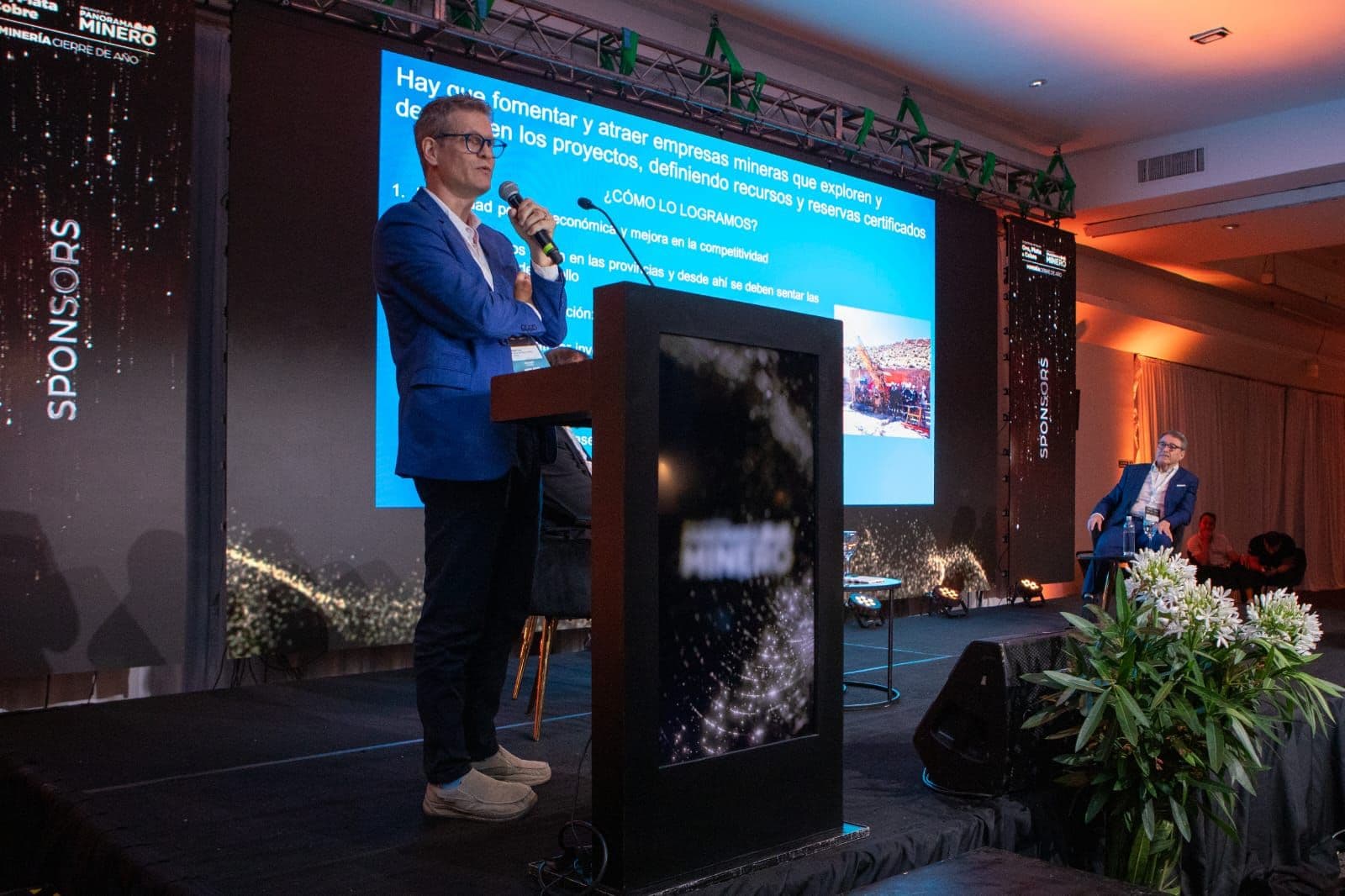
The second day of the International Gold, Silver and Copper Seminar organized by PANORAMA MINERO provided an opportunity to analyze Argentina’s prospects for integrating into this rapidly growing global demand. The discussion emphasized the urgency of moving from scarce historical information to intensive exploration, attracting high-risk capital, and consolidating a state policy capable of turning resource indications into concrete reserves—overcoming years of inaction in this crucial segment.
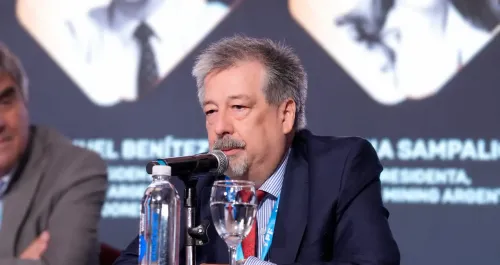
Eduardo Barrera, adviser to the European Union and former Secretary of Mining of Argentina, dismantled the misconception behind the term Rare Earths, noting that these elements “are neither earths nor that rare,” but rather a group of 17 essential elements. Their strategic importance, he explained, lies in the fact that they are “linked to superconductivity for fusion energy.”
The expert highlighted China’s overwhelming dominance in this sector, extending from production to processing. “China not only accounts for around 70% of global production, but processes 90% of these elements—and holds 99% of the installed capacity to transform them into metal.” This near-total hegemony is reflected in frontier technologies, evidenced by China’s recent breakthroughs in superconductivity and fusion.
“This race will dominate geopolitics in the coming years,” Barrera warned, directly linking competition for Rare Earths with the global struggle over Artificial Intelligence. He summed up the argument succinctly: “There is no AI without abundant and cheap energy.” In this regard, China installed an energy capacity in 2024 that is ten times that of the United States, underscoring the widening power imbalance.
Martín Gozálvez, Director of the Institute of Geology and Mineral Resources (IGRM) of the Argentine Geological and Mining Survey (Segemar), addressed the central question: What opportunity does Argentina have in this scenario?
Based on a 2022 study, Segemar identified favorable areas, although most geological information remains “old, and the reported resources are unreliable—everything must be recalculated and re-evaluated.”
According to the survey, 190,000 tonnes of Rare Earths were quantified as “inferred or low-certainty resources.” However, applying international methodologies, the potential yet to be discovered in Argentina could reach 3.3 million tonnes, Gozálvez noted.
“The potential is still in an early stage of exploration and evaluation. We know very little about Rare Earths in Argentina,” he stated, identifying three promising exploration regions. The most important is the belt of alkaline systems in northwestern Argentina, spanning roughly 800,000 km², revealing the enormous lack of competitive geological information.
He also highlighted two additional favorable regions:
• The Litoral provinces, due to geological indications in neighboring Paraguay and Brazil.
• The Valdivian Forest belt in the south, shared with Chile, where Chile has already discovered a heavy Rare Earths deposit.
Gozálvez stressed that Argentina’s most urgent need is “greater development, baseline geological information, and precompetitive data as necessary steps to discover new deposits and reduce investment risk.”
Finally, Miguel Soler, consultant and former Secretary of Mining of Jujuy, focused his analysis on investment and policy management. Soler noted that Argentina “still does not appear in any report of Rare Earths reserves, which means it cannot yet qualify real resources.”
He emphasized the need to attract high-risk capital, explaining: “The major challenge is to communicate clearly—without creating false expectations—yet still attract investment in exploration and development to better understand our resources.”
Soler underscored that the required investments are of extremely high risk, and that despite the strategic importance of these minerals, “the provinces—owners of the resources—must take the lead. Yet for years little was done to define resources under international standards.”
He also warned against the premature imposition of restrictions on exploration, referring to proposals that Argentina halt all Rare Earths development until it can refine them domestically. Without first defining real resources, he argued, Argentina will be unable to negotiate or plan downstream value-chain stages—risking exclusion from the global race due to lack of competitive geological data.
“This opportunity will not be won overnight. It will take 5 to 10 years just to achieve a solid understanding of the resources,” Soler concluded, urging immediate action to seize the window these minerals offer for national development.