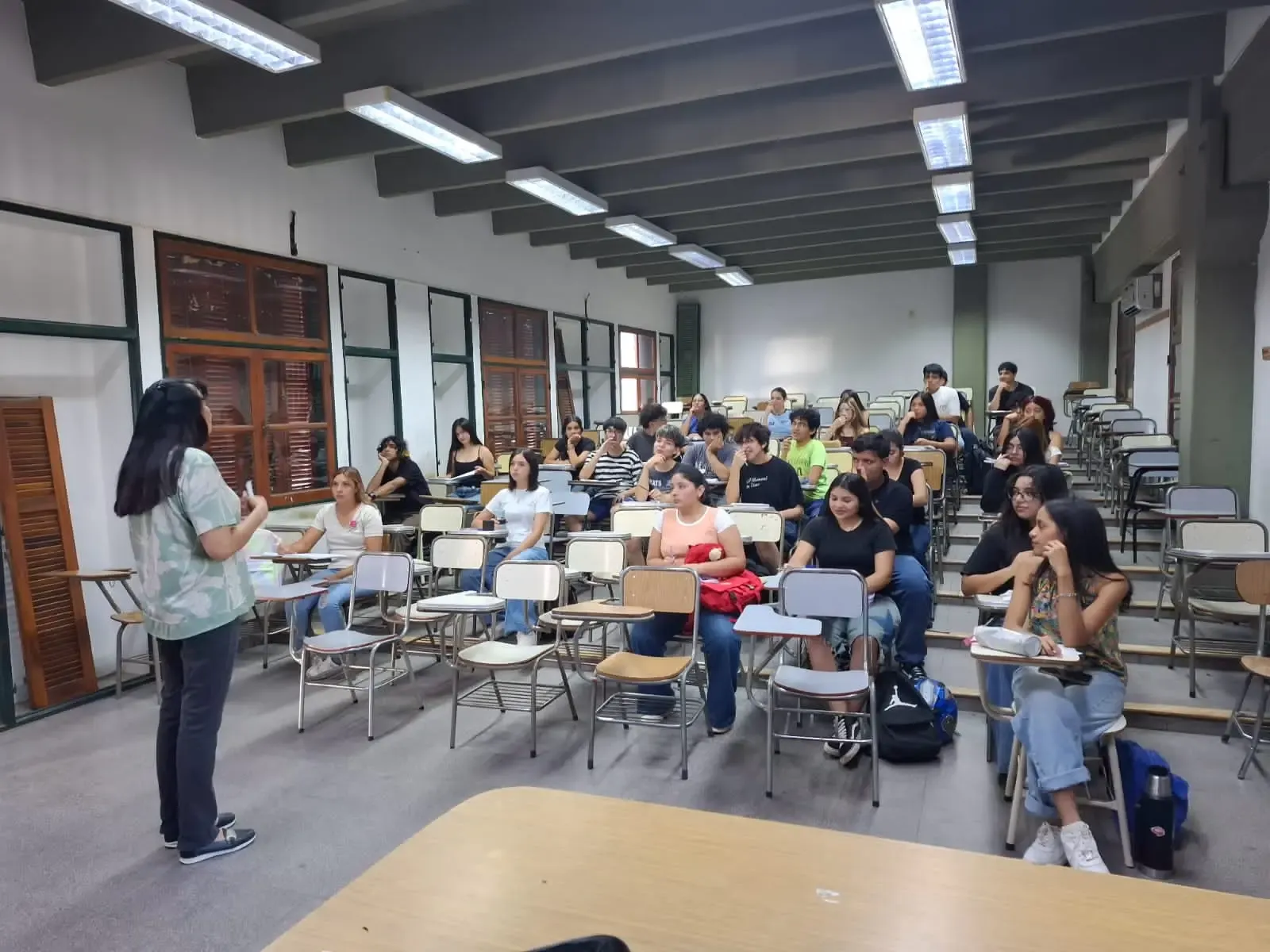
Interest in mining-related degree programs in Catamarca continues to rise. In this context, the Faculty of Technology and Applied Sciences (FTyCA) at the National University of Catamarca reported more than 1,600 enrollments this year, with a significant increase in Mining Engineering and the Technical Degree in Lithium Brine Processing.
By Panorama Minero
Dean Natalia Fernández confirmed that the lithium boom and mining activity in the province are strongly driving demand for these programs. She also highlighted the importance of agreements with mining companies that allow students to complete internships, while acknowledging that early job placement in some cases delays or prevents graduation.
“We observed since last year a very significant increase in Mining Engineering and in the Technical Degree in Lithium Brine Processing,” Fernández said. She explained that the Lithium Brine Processing program was created four years ago specifically “to respond to the productive sector’s demand related to lithium.”
Beyond enrollment growth, the dean underscored strong interest among women in these programs. “In Catamarca, which I know is not the national reality, we have a gender balance. Around 48–49% are women, and approximately the same percentage are men. There is no marked gender gap,” she said.
She added that academic performance is similar, although “women tend to be more persistent in staying within the training process.”
Retention Strategies
While highlighting strong enrollment levels, the dean acknowledged that many students do not complete their studies. “Approximately 30% drop out during the leveling course, either because they do not like the program or because the system differs from what they experienced in secondary education,” she explained. “After the first year, following the winter break, we observe an additional drop of roughly 20% among those who do not return to classes or exams.”
To address this, the faculty implemented mentoring programs led by advanced students, expanded virtual coursework and adopted hybrid learning formats.
“We retained resources from the pandemic related to virtualization of certain activities. We can offer hybrid classes so students who are studying and working simultaneously can still attend,” Fernández noted.
She also pointed to the challenge of retaining advanced students who are hired by companies before graduating. “By their fourth year, many students are already joining companies, not only in mining but also in the knowledge economy,” she said.
The faculty is working with companies to find agreements that allow students to complete academic requirements. Job placement occurs both within Catamarca and in other regions of Argentina and abroad. “Companies from southern Argentina and other regions are recruiting our students, which makes continuity of coursework more difficult,” she added.
Academic Offerings and Industry Partnerships
FTyCA currently offers Mining Engineering, the Technical Degree in Lithium Brine Processing, the University Technical Degree in Mining, a Bachelor’s Degree in Geology, Surveying Engineering, Electronic Engineering, Computer Engineering and Architecture. “In some way, all of them are transversal and connected to productive activity,” Fernández noted.
Regarding partnerships with companies, the dean emphasized their importance. “The ongoing relationship with companies is very positive. Many of our graduates now lead projects in mining firms and return to the faculty because they value the training they received and want students with that same profile,” she said, describing a “continuous feedback loop” between academic training and industry needs.
Looking ahead, Fernández said the faculty is working on new programs such as a Bachelor’s Degree in Occupational Health and Safety — “an area increasingly demanded by the mining sector” — and expanding postgraduate offerings.
With graduates working both in Argentina and abroad, FTyCA is positioning itself as a key institution in training the human capital required by mining and the knowledge economy in Catamarca and the broader region.